
Jason and the Argonauts are the crew of a Greek myth set around Iolcus, near modern Volos. Their voyage reaches Colchis on the Black Sea. Its cast includes the Argo, the Golden Fleece and Medea. Hylas, Hypsipyle on Lemnos, Phineus, the Clashing Rocks, Circe and Talos follow. Related stories appear under Greek heroes, Pelion tours and Greek mythology places. Trips with a host through the country sit under Greece tours.
Bookings made through the GetYourGuide widgets on this page earn Classical Greece Tours a commission, at no extra cost to the traveller.
Who were Jason and the Argonauts?
Jason and the Argonauts were a hero and his 49 crew-mates, who sailed together in Greek myth. Aeson and Alcimede were the parents of Jason, the captain of the ship. The centaur Chiron, a horse-man who trained heroes, raised him.
In the legend of Jason and the Argonauts, Alcimede staged a false burial for her baby. She then carried him in secret to Mount Pelion. Years later, the grown Jason lost a sandal in a river. He lost it while helping an old woman across, and she was the goddess Hera in disguise.
King Pelias then asked Jason what to do with a citizen fated to kill a ruler. Jason answered that such a man belonged on a hunt for the Golden Fleece. He did not know that Hera had placed this answer in his mouth. He later learned that a ghost, the spirit of Phrixus, was haunting Pelias.
Ancient writers disagreed over the full crew of Jason and the Argonauts. Philammon, a son of Apollo, appears in reports as one of the sailors. Early sources sometimes leave Heracles out altogether. Hellenistic accounts are later Greek writings, and a small group makes him the leader of the quest.
- Heracles: Stories of his departure blame clumsy rowing, his great weight or a trip for water.
- Other heroes: One crew list also names Meleager, Philoctetes, Admetus and Atalanta among the sailors.
- Screen: The myth reached cinemas as a 1963 film and television as a 2000 miniseries.
Jason and the Argonauts also had a divine ally, since Hera favoured Jason on the dangerous trip. The goddess was angry with King Pelias, who had killed his step-grandmother Sidero. Sidero had sought shelter in a temple of Hera herself.
Which ship carried Jason and the Argonauts, and what set it apart?
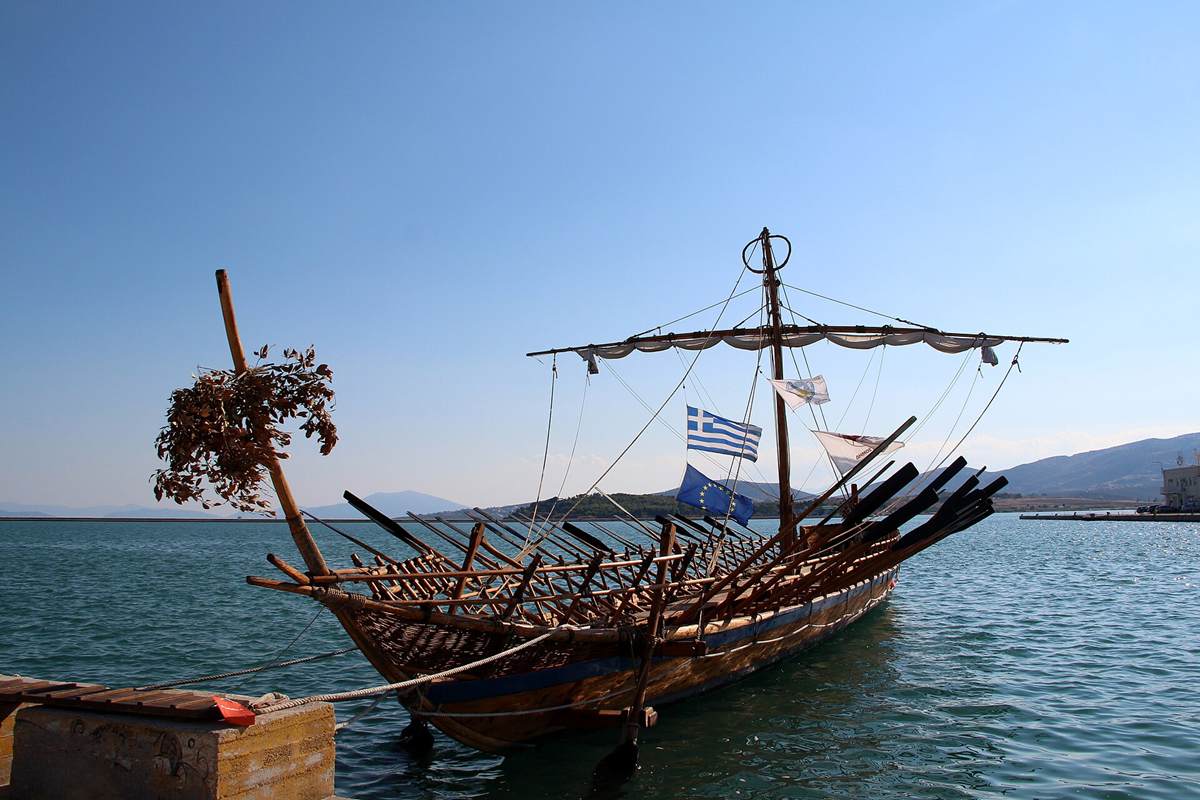
Jason and the Argonauts sailed on the Argo, whose prow held a special piece of oak. The timber came from Dodona, a district sacred to Zeus. Writers said this timber spoke with a human voice and delivered oracles, meaning messages from the gods.
Athena taught Tiphys, the steersman, how to attach the sails to the mast. Lynceus also helped to steer the vessel, thanks to his sharp eyesight by night and by day. The poem Argonautica gives the keel an enchanted beam of oak from Dodona. That beam lets the ship of Jason and the Argonauts call to its crew.
Herodotus claimed that the crew gave a bronze tripod, a three-legged stand, to Triton. The gift followed a spell when Jason and the Argonauts were lost in Lake Tritonis. Early observers had never seen a ship, according to one group of sources. Those observers therefore described the Argo as a monster.
Pliny and Philostephanus both debated the imagined shape of the hull. Dionysius Scytobrachion praised the Argo as well crafted, yet he denied that it was the first ship. Aristotle mentioned the vessel when discussing ostracism, the Athenian vote that sent a citizen into exile. He said the ship left Heracles behind because the hero was too heavy.
- Last home: After the voyage, Poseidon received the vessel as a gift at the Isthmus of Corinth.
- Night sky: Jason was later carried to the heavens and became the constellation Argo Navis.
- Cinema: A 1963 film modelled its Argo on a Greek warship, with shields along the side.
The 1963 version of Jason and the Argonauts gave the vessel a red sail. The sail showed the head of the golden ram. Its rowers kept time to the drumbeat of a leader. Painted eyes decorated the front of the hull at water level.
What was the Golden Fleece that Jason and the Argonauts set out to find?
Jason and the Argonauts hunted the fleece of Chrysomallos, a winged ram with golden wool. The Ancient Greek name for the prize means a golden-haired pelt, or animal skin. The treasure stood as a sign of authority and kingship.
The tale of Jason and the Argonauts was already known in the time of Homer. That period fell in the eighth century BC. Pindar used the quest in his Fourth Pythian Ode, a praise poem written in 462 BC. In that poem, Aeetes offers the fleece as the prize for yoking bulls that breathe fire.
The story drew little interest in Classical Athens, judging by its pottery. Only two painted vases from fifth-century Athens show it, and one is a cup by the painter Douris. Jason comes out of the mouth of the dragon on that cup. Behind the beast, an apple tree holds the fleece.
Scholars have also searched for a real object behind the treasure of Jason and the Argonauts. One widespread reading links it to washing gold from streams in the region of Georgia. Workers sank sheep fleeces in the water, and gold flecks collected in the wool. The geographer Strabo named this practice as the origin of the myth.
- Purple cloth: Another reading rests on mentions of purple-dyed cloth in certain versions of the story.
- Farming: Twentieth-century scholars suggested the tale recalled sheep farming reaching Greece from the east.
- Star sign: The sacrificed ram returned to Poseidon and became the constellation Aries in the sky.
The prize of Jason and the Argonauts still appears in modern Georgia, on the land of ancient Colchis. Heraldic designs, meaning badges on coats of arms and flags, show the fleece there. One example is the coat of arms of Kutaisi, the old capital of Colchis.
How does Medea change the story of Jason and the Argonauts?
Jason and the Argonauts won the fleece with help from Medea, whose Greek name means planner or schemer. Daughter of King Aeetes of Colchis, she first appears in Hesiod’s Theogony around 700 BC. Stories depict her as a high priestess of Hecate.
Medea gave Jason an ointment called the Charm of Prometheus. He rubbed it on himself and his weapons, and it shielded them from the fiery breath of bulls. She also warned him that the dragon’s teeth grew into soldiers. Her herbs later put the sleepless dragon to sleep, so Jason and the Argonauts gained the fleece.
Her powers also reached the crew on the way home. After a fight, the warrior Atalanta suffered a serious wound, and Medea healed it. She foretold that Euphemus, the helmsman in that account, was going to rule all of Libya. Pindar says the prophecy came true through Battus, a distant descendant of Euphemus by 17 generations.
The later tale of Jason and the Argonauts moves to Corinth, the city where the couple settled. She ended a famine there by offering sacrifices to Demeter and the nymphs. Euripides appears to have invented the deliberate killing of her children. Pausanias, writing in the late second century AD, recorded five different versions of their fate.
- Thebes: After leaving Jason, she cured Heracles of a curse sent by the goddess Hera.
- Athens: Euripides has her fly there in a golden chariot drawn by dragons from Helios.
- Crete: She called all Cretans liars after Idomeneus judged Thetis the fairer of the two.
Jason and the Argonauts lead to one more ending in the account of Herodotus. He says Medea and her son Medus flew from Athens on her chariot to the Iranian plateau. The Aryans living there then took the name Medes.
Why did King Pelias send Jason and the Argonauts on their voyage?
Jason and the Argonauts owed their mission to Pelias, the king of Iolcus. He was the son of Tyro and Poseidon. He sent Jason after the fleece. The prize lay in Colchis, in a grove sacred to Ares, the god of war.
Pelias had a twin brother named Neleus. Their mother Tyro left the two babies on a mountain, and a herdsman raised them in one telling. As adults, the twins killed Sidero, the stepmother of Tyro, for mistreating her. Sidero hid in a temple of Hera, so the killing brought Pelias the lasting hatred of the goddess.
Pelias banished Neleus and Pheres and locked Aeson in the dungeons at Iolcus, near modern Volos. During that imprisonment, Aeson married and had children. He sent his son away from Iolcus because he feared Pelias. Before the departure of Jason and the Argonauts, Pelias held a sacrifice by the sea to honour Poseidon.
While the crew was away, Pelias believed that the Argo had sunk. He told this to Aeson and Promachus, who then drank poison. When Jason and the Argonauts came home, the king still refused to hand over his throne. Medea then told his daughters that boiling an old ram turned it into a young one.
- Daughters: The girls of Pelias, among them Alcestis, are sometimes known together as the Peliades.
- Son: Acastus later banished Jason and Medea to Corinth and took back the kingdom.
- Games: Atalanta beat Peleus at wrestling during funeral games held to honour the dead king.
Jason and the Argonauts gained little from the death of Pelias. Jason was tied to the crime, so he was still not made king of Iolcus. The wrestling bout at the funeral games became a popular subject in Greek art.
What happened to Hylas on the voyage of Jason and the Argonauts?
Jason and the Argonauts lost Hylas in Mysia at the spring of Pegae. Naiads, the spirits of fresh springs, took him there. He was a youth who served Heracles as a companion and servant. He vanished into the water with a cry.
His father was King Theiodamas of the Dryopians. His mother was the nymph Menodice, a daughter of Orion. Other sources name Euphemus, King Ceyx of Trachis or Heracles as the father. Heracles killed Theiodamas in battle, then took Hylas as his arms-bearer. An arms-bearer is a servant who carries the weapons of a warrior.
Heracles brought Hylas on board, so the youth became one of Jason and the Argonauts. The poem Argonautica says a water nymph seized him as he filled an urn at her spring. His loss upset Heracles, who spent a long time searching with Polyphemus. The Argo soon left without the two men.
Writers ended his part in Jason and the Argonauts in different ways. Valerius Flaccus, a poet writing in Latin, says the searchers never found him. Antoninus Liberalis says the nymphs turned him into an echo, which repeated the calls of Heracles. In Apollonius, Polyphemus went back to that spot after the voyage and founded the city of Cius.
- New name: King Prusias I later renamed Cius, so the city became known as Prusias.
- Festival: Strabo describes the Prusians marching through the hills in procession and calling for Hylas.
- Literature: Oscar Wilde mentions the youth at least six times across his published works.
Jason and the Argonauts carried Hylas into later English writing. Edmund Spenser alludes to him in The Faerie Queene, and Christopher Marlowe names him in Edward II. His capture by water nymphs was also a theme of ancient art.
Which twin brothers sailed with Jason and the Argonauts?
Jason and the Argonauts counted Castor and Pollux among their crew, twin half-brothers known together as the Dioscuri. Castor was the mortal son of Tyndareus, king of Sparta. Pollux was a son of Zeus, so the pair had different fathers.
Both brothers were fine horsemen and hunters before they boarded the Argo. They joined the chase after the Calydonian Boar, a wild pig of legend. They then joined Jason and the Argonauts. Ancient sources name the horse of Castor, which was called Cyllarus. In one group of myths, Poseidon gave them horses.
On the voyage, the crew reached the land of the Bebryces, a fierce people of Bithynia. King Amycus challenged every stranger to a boxing match and killed those who lost. Pollux accepted the challenge and defeated him with a blow on the elbow. The Bebryces then rushed at Pollux and forced Jason and the Argonauts to flee.
Greeks honoured the brothers as patrons of travellers, and sailors called on them for favourable winds. The twins appeared to those crews as St. Elmo’s fire, a glowing light at sea. Their skills as riders and boxers also made them patrons of athletes. Tales show them stepping in at moments of crisis to aid their followers.
- After the voyage: The twins helped Jason and Peleus destroy Iolcus to punish the treachery of Pelias.
- Stars: Gemini, meaning the twins, has Castor and Pollux as its two brightest stars.
- Shared fate: Pollux gave half of his immortality to Castor, and the pair alternated between Olympus and Hades.
Jason and the Argonauts are not their only link to ancient writing. Cicero tells how the poet Simonides praised the twins in an ode for Scopas, his patron. Simonides left the banquet when two young men asked for him, and the roof crushed the guests.
Where did the winged sailors among Jason and the Argonauts come from?
Jason and the Argonauts had two winged sailors in Zetes and Calais. Together they are the Boreads, a Greek name meaning sons of the north wind. Their home was Thrace, the land of their father Boreas, the North Wind.
Their mother was Oreithyia, daughter of King Erechtheus of Athens. Accounts of these flyers among Jason and the Argonauts differ. One credits their delicate, graceful hair with lifting them off the ground. Another gives them dusky wings that shone with golden scales. Ovid says the wings sprouted from their backs in manhood.
Their sister Cleopatra married Phineus, the king of Thrace, which tied the brothers to the old man. Jason and the Argonauts relied on the pair when Phineus needed rescue from the Harpies. They drove the monsters away but spared them at a request from Iris, the goddess of the rainbow. She promised Phineus peace.
The chase named a group of islands. Iris turned the brothers back at the Strophades, and that name means Islands of Turning. Other sources say the pair died in the chase, as fate tied their lives to catching their quarry. In one version, the tired Harpies dropped into the sea, and the brothers fell too.
- Deaths: One account says Heracles killed them on Tenos for leaving him behind in Mysia.
- Founder: Tradition makes Calais the founder of Cales in the land of Campania.
- Speed: Their descent from the north wind made them as fast as the wind in certain tellings.
Phineus thanked Jason and the Argonauts for the rescue by explaining how to pass the Symplegades. Zetes also appears in one separate tale as the husband of Aedon. Scholars suspect a mix-up with Zethus, the usual husband of Aedon.
Which queen welcomed Jason and the Argonauts on Lemnos?
Jason and the Argonauts met Queen Hypsipyle on Lemnos, their first port of call on the voyage. Her name means high gate in Ancient Greek. She was a daughter of King Thoas and a granddaughter of Dionysus and Ariadne.
Lemnos already had a dark story when Jason and the Argonauts arrived. Its women had killed all the men, after neglecting the worship of Aphrodite for a long time. Herodotus knew the proverb Lemnian crime, a phrase for any cruel deed. With the men gone, the women took over herding cattle, ploughing the land and fighting wars.
A harbour watcher, Iphinoe, saw the ship of Jason and the Argonauts and told the queen. An older woman, Polyxo, advised a friendly reception in the name of the gods of hospitality. The poem Argonautica says Jason went into town in a fine cloak made by Athena. The crew stayed until Heracles scolded them for unheroic behaviour.
The other women later learned that she had spared her father, King Thoas. She became a slave of King Lycurgus of Nemea and nursed his infant son Opheltes. A serpent killed the boy while he was in her care. Her own sons finally freed her from that servitude.
- Thoas: In Apollonius, fishermen pulled the old king to land on the island of Sicinus.
- Euneus: Her son later ruled Lemnos and ordered its hearth fires put out for nine days.
- New fire: A ship then brought fresh flame from the altar of Apollo on Delos.
Jason and the Argonauts gave their names to the next generation on Lemnos. Mothers there named their children after the visiting sailors. Those descendants, called Minyans, were later driven out and moved to Lacedaemon, the region around Sparta.
How did a friendly welcome turn deadly for Jason and the Argonauts at Cyzicus?
Jason and the Argonauts landed among the Dolionians, a tribe on the southern Propontis shore. The Propontis is now the Sea of Marmara. Their ruler, King Cyzicus, gave the crew a generous welcome and lent his name to his capital city.
Their stop was Bear Mountain, an island in the Propontis with the shape of a bear. The locals were all said to descend from Poseidon. One tradition calls Cyzicus a migrant from Thessaly. That link explains his warmth towards Jason and the Argonauts, as Jason himself came from that same region.
After the crew sailed, a storm pushed the ship back to the same coast at night. Neither side recognised the other in the dark. The Doliones took the strangers for a Pelasgian army, meaning a band of raiders who kept harassing them. A battle broke out, and the Argonauts killed Cyzicus and others of his tribe.
Valerius Flaccus gives the disaster a divine cause. Cyzicus had killed a lion belonging to Cybele, a mother goddess of Phrygia, while hunting on horseback. In revenge, Cybele arranged the night fight with help from the gods Pan and Bellona. Jason and the Argonauts discovered their tragic error only at daybreak.
- Killer: Sources name either Jason or Heracles as the man who struck down the king.
- Mourning: The crew lamented for three days, tore their hair and marched thrice around the grave in armour.
- Succession: Before leaving, the Argonauts handed the kingdom over to the sons of Cyzicus.
Jason and the Argonauts also staged games in honour of the dead king. They raised a mound over his grave. The people of Cyzicus kept pouring libations, or drink offerings, at that mound every year. His young bride, Cleite, took her own life in grief.
What did the blind seer Phineus tell Jason and the Argonauts?
Jason and the Argonauts received their route from Phineus, a blind king of Salmydessus in Thrace. He was also a seer, someone who foretells events. He told the crew how to pass safely through the Symplegades, the deadly moving rocks.
Versions of Jason and the Argonauts set his throne in Arcadia or Paphlagonia instead. Apollo gave him the gift of prophecy, but the source of his blindness varies. The Argonautica, the best-known version, says he lost his sight for revealing the future to humans. Another tale says Zeus offered him death or blindness, and he chose blindness.
Helios, god of the sun, then sent the Harpies against him in that account. These winged thieves stole or spoiled whatever food he had. When Jason and the Argonauts landed, he named his brothers-in-law, the Boreads, as fated to free him. A trap followed: he sat down to eat while the brothers stood guard.
The Harpies swept down on the food and fled, with the two brothers in pursuit. Iris stopped the chase. She swore an oath by the Styx, a river of the underworld, that the torment was over. Phineus then did for Jason part of what Circe did for Odysseus in the Odyssey.
- Family: His first wife was Cleopatra, a daughter of Boreas, the north wind, and of Oreithyia.
- Parentage: The Hesiodic Catalogue of Women calls him a son of Phoenix and Cassiopeia.
- Stage: Aeschylus wrote a lost play about him, staged in 472 BC alongside The Persians.
Jason and the Argonauts left the seer behind, and his tale ended with a strange change. Helios finally turned Phineus into a mole, a blind creature, over an unspecified insult. Sophocles later mentions the story of Phineus and Cleopatra briefly in his play Antigone.
Where are the Clashing Rocks that Jason and the Argonauts rowed through?
Jason and the Argonauts faced the Symplegades, also called the Clashing Rocks, at the Bosphorus strait. This deadly pair of rocks slammed together whenever a vessel went through them. Phineus, a blind seer, gave the crew the advice that saved them.
The crew released a dove between the rocks to judge the speed needed. The bird got through but lost its tail feathers. Jason and the Argonauts then rowed with all their strength. They lost only part of the ornament at the stern, the rear of the ship. After that passage, the rocks never moved again.
The tale of Jason and the Argonauts has real locations. The European rock matches an islet about 20 metres wide and 200 metres long. It stands near the shore of a village called Rumelifeneri, whose name means Lighthouse of Rumeli. An ancient altar on top is called the Pillar of Pompey, despite having no link with him.
The Asian rock appears to be a reef off Yum Burnu, north of Anadolu Feneri. That name means Lighthouse of Anatolia. Petrus Gyllius, a French traveller of the 16th century, described its four rocks joined under the water. He thought the altar on the European rock was a remnant of a Roman shrine to Apollo.
- Roman name: The Romans knew them as Cyaneae Insulae, a Latin phrase meaning the Blue Islands.
- Turkish name: Turkish speakers call them Öreke Taşı, which translates as Distaff Rock or Midwife’s Stool.
- Novel: Henry Treece made them icebergs drifting into the Black Sea in his 1961 book Jason.
Jason and the Argonauts met a second danger on the way home, according to Apollonius of Rhodes. His poem places the Planctae, or Wandering Rocks, on the return voyage. Lord Byron also refers to the Symplegades in the closing stanzas of Childe Harold’s Pilgrimage.
What role did King Aeetes play against Jason and the Argonauts?
Jason and the Argonauts had to bargain with Aeetes, ruler of a realm called Aea. From the fifth century BC, Greeks linked Aea with the kingdom of Colchis. His name derives from an Ancient Greek word for eagle. His father was Helios, the sun.
The opponent of Jason and the Argonauts also had roots in Greece itself. The poet Eumelos says Helios gave Aeetes the district of Ephyra, which is Corinth. Aeetes later passed that kingdom to Bounos, a son of Hermes. He then moved to Colchis, in the western Caucasus. He built a new colony near the mouth of the river Phasis.
The fleece reached him through Phrixus, who arrived in Colchis on a golden ram. Aeetes took him in and gave him his daughter Chalciope as a wife. Phrixus handed over the golden fleece, and the king dedicated it to Ares, god of war. Hyginus says an oracle later turned Aeetes against his guest.
When Jason and the Argonauts reached his palace, Aeetes set the price for the prize. The bulls for the first task came from Hephaestus, and they had bronze feet and breathed flames. Half of the dragon’s teeth for the second task came from Athena. Cadmus had sown the other half in Thebes.
- Oracle: One prophecy said he kept his kingdom only while the fleece stayed at the shrine.
- Broken deal: Even after the ploughing, he refused the fleece and planned to burn the Argo.
- Later fate: His brother Perses deposed him, and Medea restored the kingdom to her father.
Jason and the Argonauts saw him give chase in his own ship after they fled with Medea. Circe was his full sister, and Pasiphae was his full or half sister. One version makes him a native of Corinth, as a son of Ephyra.
How did Absyrtus, brother of Medea, affect the escape of Jason and the Argonauts?
Jason and the Argonauts escaped Colchis at the cost of Absyrtus, a Colchian prince. He was the brother or half-brother of Medea. Ancient accounts differ on his death, yet each ties it to the flight with the golden fleece.
His very name varied in the old sources. A tradition followed by Pacuvius, Justin and Diodorus calls him Aegialeus instead. Young Colchians called him Phaethon because he outshone all the other youths. Even his mother is disputed, with Apollonius naming Asterodeia, a sea nymph of the Caucasus. Hyginus names Ipsia, and Hesiod names Idyia.
A civil war shook Colchis when Perses, the brother of Aeetes, arrived with a Scythian army. Jason and the Argonauts fought on the side of the king, who promised them the fleece. Absyrtus fought at the front in golden armour and drove the golden cart of Helios. His shield reflected the rays of the sun.
The flight of Jason and the Argonauts cost him his life. One account says Medea took him along, killed him and scattered his body to slow her father. Tomi, the spot, was believed to owe its name to temno, Greek for cut. Another tradition says he chased her to Corcyra, where King Alcinous refused to surrender her.
- Apollonius: In the Argonautica, Jason kills him on one of the Brygean Islands, sacred to Artemis.
- Islands: The Absyrtides carry his name, and the Brygean island lies in the modern Kvarner Gulf.
- Family curse: Aphrodite stayed hostile to the descendants of Helios, because Helios had once exposed her with Ares.
Jason and the Argonauts then suffered for the killing. Zeus, angered by the murder, sent a furious storm that drove the ship off course. The Argo itself spoke and said his anger lasted until the crew received purification from Circe.
Why did Jason and the Argonauts stop at the island of Circe?
Jason and the Argonauts stopped at Aeaea for purification, a ritual cleansing, after the murder of Absyrtus. The island belonged to Circe, who was both a witch and a goddess. Helios, the sun god, was her father, and Medea was her niece.
Apollonius of Rhodes placed the island south of Aethalia, the ancient name of Elba. It lay within sight of the western coast of Italy. Aeetes tells how he rode in the chariot of Helios when Circe moved there. Valerius Flaccus says winged dragons carried her away. Roman poets put her home on the headland of Circeo.
In the poem, the visitors found Circe bathing in salt water. Beasts with a jumble of limbs stood around her, unlike either wild animals or men. She led Jason and the Argonauts into her mansion. They showed her the bloody sword in silence, and she knew at once why they had come.
Circe cleansed Jason and the Argonauts with a suckling pig, meaning a very young piglet. She slit its throat and let the blood drip on them. Medea then told the whole tale but left out the murder of her brother. Circe was not fooled. Out of pity and kinship, she promised not to block their way.
- Departure: Circe then ordered Jason and Medea to leave her island without any delay.
- Eyes: Apollonius gives her flashing golden eyes, a mark of every descendant of Helios.
- Hair: The author of the Orphic Argonautica says her hair looked like rays of fire.
Jason and the Argonauts are only one part of her legend. The best-known tale is in the Odyssey of Homer. Dionysius Scytobrachion and Diodorus Siculus tried to remove the magic from her story. They called her the daughter of a mortal woman named Hecate.
Who guarded Crete against Jason and the Argonauts?
Jason and the Argonauts met Talos, the bronze man of Crete, on the homeward leg of the voyage. Medea defeated him from the Argo by calling on the keres, female spirits of death. These spirits made him graze his ankle.
The wound let out the ichor, the fluid that filled his body, and he died. Apollonius compares his fall to the felling of a monstrous pine tree. That image suggests a size larger than a human. A second report has Medea hypnotise him until he went mad and dislodged the nail in his ankle.
Pseudo-Apollodorus, a collector of myths, records three endings to the story of Jason and the Argonauts on Crete. In two, Medea acts, either with drugs that cause madness or with a false promise of immortality. In the third, the Argonaut Poeas shoots an arrow into the ankle of Talos and kills him.
Three kraters, large bowls for mixing wine, show Jason and the Argonauts killing him around 400 BC. One vase in the Jatta National Archaeological Museum shows him falling back into the arms of the Dioskouroi. That is another name for Castor and Pollux. Two seated figures on the Argo carry inscriptions naming Zetes and Calais.
- Caudium vase: A bearded Talos, slightly larger than the others, falls to the right on this pot.
- Spina vase: This damaged vase labels a crouching Medea, who holds a blade and a box.
- Death spirit: A small winged figure hovering near his ankle is read as Thanatos, the spirit of death.
Jason and the Argonauts are not the only setting for this bronze figure. Zenobius, a writer of proverbs, says Talos lived in Sardinia before going to Crete. The surviving text of Simonides is too thin to show whether he linked Talos with the crew.
Where did Jason and the Argonauts set sail from?
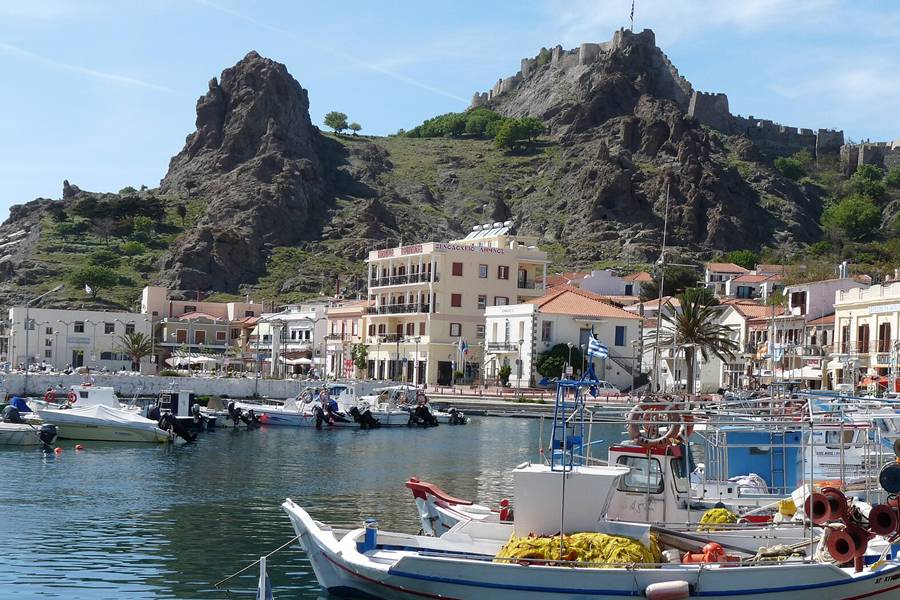
Jason and the Argonauts set out from Iolcus, an ancient city in Magnesia, Thessaly. It is now a village and part of Volos. It lies north of the Pagasitic Gulf. The ship left with fifty princes and demigods, who were part divine.
Since a reform in 2011, the starting point of Jason and the Argonauts has been part of Volos. It covers three communities: Anakasia, Agios Onoufrios and Ano Volos. The 2021 census recorded 2,008 people in total. The old municipal government sat at Ano Volos. Ancient Iolcus is placed at the Volos Kastro, the castle area.
Homer names the departure point of Jason and the Argonauts in the Iliad’s Catalogue of Ships. He names it again in the Odyssey. He gives it two epithets, or fixed descriptions, meaning well built and spacious. The Bibliotheca, a book of myths, says that Cretheus founded it. It adds that Minyans from Orchomenos colonised the place.
Iolcus appears rarely in later history. The Thessalians offered it to Hippias on his expulsion from Athens in 511/510 BC. He rejected it. Demetrius Poliorcetes ruined the town in 294 BC by founding Demetrias and moving its people there. The place seems to have vanished by the time of Strabo.
- Setting: Pindar places Iolcus at the foot of Mount Pelion, which puts it a little inland.
- Distance: Strabo sets the site above the sea, 7 stadia, an old unit of length, from Demetrias.
- Medea: Later sources call her a queen of Iolcus, Corinth and her homeland of Aea.
Jason and the Argonauts aimed for Colchis in Aea, on the eastern shore of the Black Sea. Their task was to reclaim the Golden Fleece. Jason returned to this city with the prize and with a wife, the sorceress Medea.
Which surviving epic poem tells of Jason and the Argonauts?
Jason and the Argonauts fill the Argonautica, a long Greek poem of heroic deeds. Apollonius of Rhodes wrote this epic in the 3rd century BC. It is the only complete surviving epic from the Hellenistic age, a later Greek period.
Apollonius went beyond plain storytelling, since readers already knew Jason and the Argonauts. He worked in research on geography, ethnography, the study of peoples, and comparative religion. One survey counts eighty aitia in the poem, meaning stories that explain the mythical origins of later things. His treatment of love is seen as his main contribution to epic.
The first book of the poem opens with a vote among Jason and the Argonauts. All choose Heracles, but he insists on Jason, and the others accept. At a farewell feast, Idas accuses Jason of cowardice, and a fight almost starts. Orpheus calms the crew with a song about the cosmos and the gods.
The reception of the poem was not always warm. One set of accounts says a hostile response led to the exile of Apollonius to Rhodes. Ancient sources also report a bitter feud with Callimachus, though modern scholars dismiss those sources as unreliable. Jackie Murray argues from astronomy that the poem commemorates the year 238 BC.
- Latin poets: Varro Atacinus translated the work, and Valerius Flaccus imitated it in his own epic.
- Virgil: The poem gave the Roman poet a model for his own epic, the Aeneid.
- Love: Apollonius seems the earliest storyteller in verse to examine love as a kind of illness.
Jason and the Argonauts had appeared in writing long before him. The Odyssey calls the Argo the only ship ever to pass the whirling rocks. The Iliad names Jason without calling him the leader. Pindar left the oldest detailed account that still exists.
What do travellers ask about Jason and the Argonauts, and what are the answers?
Jason and the Argonauts raise questions about four other figures of the myth. Phrixus first brought the fleece to Colchis. Aeson was the father of Jason. Tiphys steered the Argo. Glauce, a princess of Corinth, gave her name to a well.
In the tale of Jason and the Argonauts, who was Phrixus?
Phrixus was the son of Athamas, king of Boeotia, and the cloud goddess Nephele. His stepmother Ino roasted the crop seeds of Boeotia so they failed to grow. She then bribed messengers to say an oracle demanded his sacrifice. A flying or swimming ram with golden wool rescued him and his sister Helle.
Who was Aeson in the story of Jason and the Argonauts?
Aeson was a king of Iolcus in Thessaly and the son of Cretheus and Tyro. One version says he drank a poison called bull’s blood when Pelias intended to kill him. In another story, Medea slit his throat and placed his body in a pot. He came back to life as a young man.
What did Tiphys do for Jason and the Argonauts?
Tiphys was the helmsman, the sailor who steers a ship, and he came from the Thespians. The crew chose him to steer the long ship Argo. Apollonius praises his skill at foreseeing rising waves and at reading stormy winds from the sun and stars. Athena herself urged him to join the chiefs.
Which Corinthian well is tied to Jason and the Argonauts?
The Well of Glauce recalls a Corinthian princess, the daughter of King Creon, who married Jason. Medea killed her and her father, and one account says Medea set fire to the royal palace. Local tradition says Glauce jumped in, trying in vain to wash off the poison of Medea.
Featured photo: Tevfik Teker, CC BY 3.0, via Wikimedia Commons.