
Largest cities in Greece range from the capital, Athens, down to regional capitals such as Ioannina. Outings with a host run through Greece, from the mainland to the islands. The sections trace Athens and its suburbs, Thessaloniki, Patras, Larissa, Heraklion and Volos. Four short answers then cover Athens, Piraeus, Ioannina and Kallithea. Further planning covers day trips from Athens, Greece tour packages and the best time to visit Greece. Trip ideas for the whole country sit on the page about Greece tours.
Bookings made through the GetYourGuide widgets on this page earn Classical Greece Tours a commission, at no extra cost to the traveller.
What are the largest cities in Greece?
The largest cities in Greece start with Athens, with 643,452 people in its municipality in 2021. Thessaloniki follows with 319,045, then Patras with 215,922 and Heraklion with 179,302. Larissa ranks fifth with 148,562 people in its city proper.
Two thirds of the Greek people live in urban areas. Athens and Thessaloniki are the leading metropolitan centres, with about 4,000,000 and 990,000 inhabitants. Official census results from 1991, 2001, 2011 and 2021 rank the largest cities in Greece. Patras holds third place, with a metropolitan area near 250,000.
Peristeri, whose name means pigeon or dove, counts among the largest cities in Greece at seventh place. It had 133,630 inhabitants in 2021, in the western part of the Athens built-up area. Acharnes, just north of that area, has 108,169 inhabitants. Kallithea, a suburb in south Athens, has 97,616.
The lowest census places in Greece are called oikismoi, meaning settlements. They are the smallest continuous built-up areas that carry a name. The 2021 list covers urban settlements above 10,000 permanent residents. The majority of those are central districts or suburbs of greater Athens and Thessaloniki. A minority form separate cities and towns.
- Whole country: The official 2011 census put the population of Greece at 10,816,286.
- Capital: Athens also serves as capital of Attica and lies further south than any other capital of mainland Europe.
- North: Thessaloniki is the largest city of Northern Greece, with over 300,000 in the city proper.
The municipality of Athens covers 38.96 square kilometres, a small unit inside its urban area. Recorded history there spans over 3,400 years. The city leads the largest cities in Greece as the capital and the biggest population centre.
Why do the largest cities in Greece rank Thessaloniki second?
The largest cities in Greece place Thessaloniki second, with 319,045 people in its municipality in 2021. Its metropolitan area had 1,006,112 inhabitants. Greeks also call it the Symprotevousa, literally the co-capital, after its Byzantine standing beside Constantinople.
The Thessaloniki International Fair and the International Film Festival run every year. Each year the Prime Minister of Greece uses the fair’s opening night to announce policy. Aristotle University tops Greece and the Balkans for size. The city was European Youth Capital in 2014 and hosts the largest student population in Greece.
Among the largest cities in Greece, this one is the second major economic and commercial centre. Its port ranks high in the Aegean and acts as a free port for the Balkan hinterland. More than 15.8 million tons passed through it in 2010. Only Piraeus handles more containers, with this port at 273,282 standard units.
From 1870 to 1917 the population rose by 70%, reaching 135,000. The Great Thessaloniki Fire of 1917 destroyed the historic centre and left 72,000 people homeless. Planners including Thomas Mawson and Ernest Hebrard based its new centre on the Byzantine era. Today the city stays among the largest cities in Greece.
- White Tower: The city’s flag shows the White Tower, its main landmark, beside a coin of Alexander the Great.
- Opera: The European Capital of Culture title of 1997 brought the city’s first opera.
- Concert Hall: Japanese architect Arata Isozaki designed a second building for the Thessaloniki Concert Hall.
Among the largest cities in Greece, this municipality covers just 19.307 square kilometres. Its central district is called the Kentro, meaning centre or downtown. On 26 October 2012 the city marked a full centenary since joining Greece.
What keeps Patras on the list of the largest cities in Greece today?
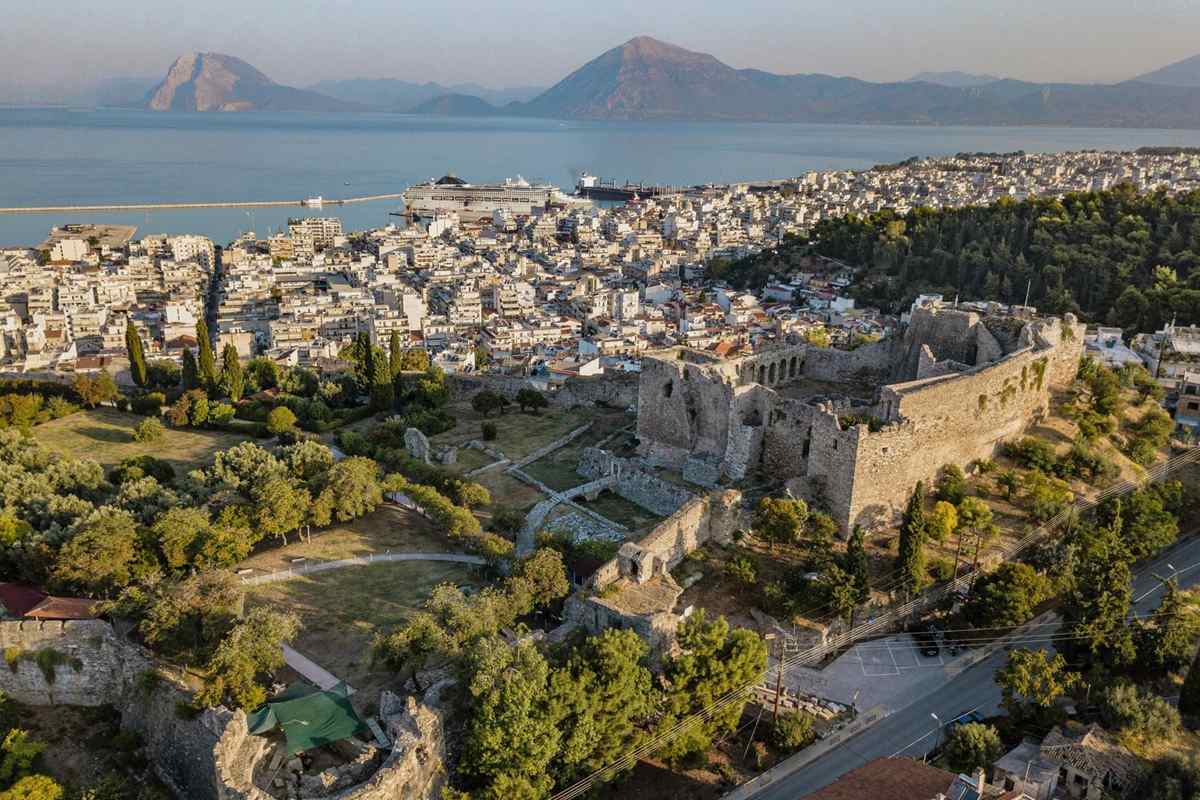
The largest cities in Greece name Patras third. Its municipality had 215,922 people in 2021, with an urban population of 173,600. Its busy port carries trade with Italy and Western Europe. Three public universities give it a large student population.
The Greek Revolution of 1821 broke out early in Patras, among the first cities to rise. The Ottoman garrison held out in the citadel until 1828. The war left the city almost wholly destroyed. Patras then climbed fast, reaching second place among Greek urban centres by the late 19th century. It remains among the largest cities in Greece.
The Mycenaean cemetery of Voudeni lies 8 km from the centre. Its active use ran for nearly five hundred years. A Roman amphitheatre from the 1st century AD survives on Ifestou Street. A Roman aqueduct measured 6.5 km. The municipal Theatre Apollon dates from 1872, to a design by Ernst Ziller.
Services drive the economy of this city, one of the largest cities in Greece. The European Capital of Culture title came to Patras in 2006, around the themes of bridges and dialogues. The largest wind park in Greece stands on the Panachaiko mountain. Its new Archaeological Museum, with a globe-like roof, was completed in 2009.
- Saint Andrew: The church cupola rises 46 metres and carries a gold-plated cross of 5 metres.
- Ottoman baths: These 16th-century baths still serve their first purpose and rank among Europe’s oldest survivors.
- Rio-Antirrio Bridge: This bridge joins the eastern suburb of Rio to the town of Antirrio on the mainland.
Among the largest cities in Greece, Patras keeps a medieval castle on its old acropolis. The current outline dates from Venetian rule of 1687 to 1715. Its interior now serves as a public garden. The Ottoman name Baliabadra came from the Greek for Old Patras.
Where do the largest cities in Greece place Larissa?
The largest cities in Greece include Larissa, fifth with 148,562 city-proper residents in 2021. The municipality has 164,095 inhabitants. This capital of Thessaly works as a national transport hub. Road and rail join it to Volos, Thessaloniki and Athens.
The name Larissa, now one of the largest cities in Greece, comes from a Pelasgian word for fortress. Larissa is thought to be where the physician Hippocrates and the philosopher Gorgias died. Its coins of the late fifth century BC showed the nymph Larissa and a horse in different poses.
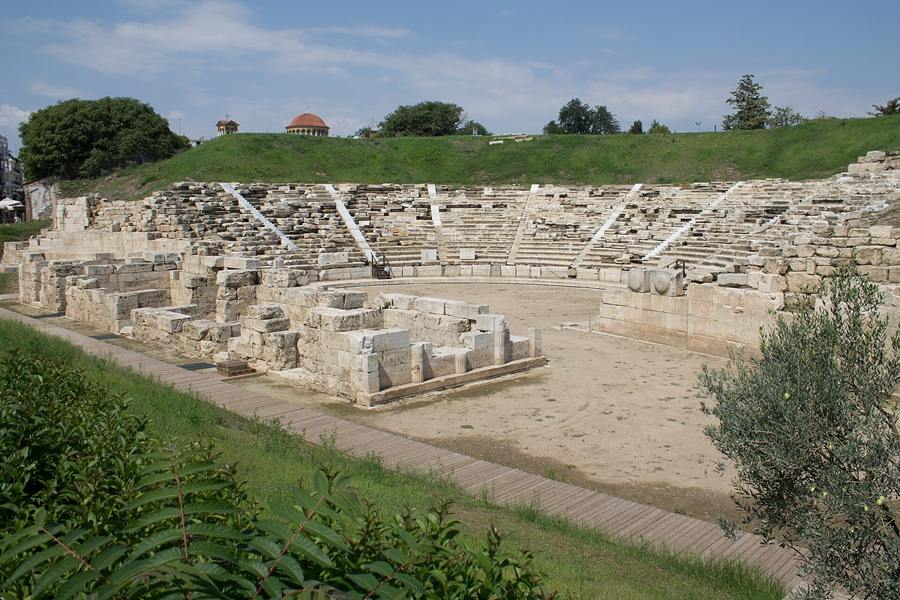
Among the largest cities in Greece, Larissa holds a First Ancient Theatre from the 3rd century BC. A Second Ancient Theatre followed in the 1st century BC. The Bezesten, a 15th-century Ottoman covered market, later served as a gunpowder store and fort. The Yeni Mosque, a rare 19th-century mosque in neoclassical style, is now a museum.
The Pineios river crosses the city centre near Alkazar Park. Early Byzantine basilica ruins honour Saint Achillios, the city’s patron saint. Mount Olympus and Mount Kissavos rise to the north-northeast. The Diachronic Museum of Larissa holds finds from every period since antiquity. Larissa also ranks first in Greece for bars, taverns and restaurants per person.
- Local food: Batzina is a pie baked in the oven, and lahanopsomo is a cabbage bread.
- Farming: The plain of Thessaly makes Larissa a major agricultural centre of Greece.
- Charokopos Tower: Architect Anastasios Metaxas built this architecturally preserved tower in 1902.
Philip V of Macedon signed a treaty with the Romans here in 197 BC. A year later it allied with Rome and became headquarters of the Thessalian League. Pompey sought refuge here after his defeat at Pharsalus. Today Larissa stays among the largest cities in Greece.
How do the largest cities in Greece rank Heraklion?
The largest cities in Greece place Heraklion fourth, and its municipality counted 179,302 people in 2021. No Greek island city is bigger, and it serves as the administrative capital of Crete. Its port area grew from the old harbour of Knossos.
Its name recalls an ancient port of Heracleium, which honoured the hero Heracles. Arab exiles from al-Andalus arrived in 824 and built a new castle called the Castle of the Moat. Its Greek form Chandax became Candia under the Venetians. Locals later used Megalo Kastro, meaning Big Castle, and its people were called Kastrinoi.
Venice bought the city in 1204. Its giant wall, in places 40 metres thick, had seven bastions and a fortress in the harbour. Those defences faced an Ottoman siege from 1648 to 1669, unmatched in length up to then. The walls still ring the old centre, inside one of the largest cities in Greece.
An earthquake on 12 October 1856 left only 18 of over 3,600 homes intact. This entry among the largest cities in Greece joined the Kingdom of Greece in 1913. In 1971 it took back the role of Cretan capital from Chania. Tourism to the city and Crete grew large from the 1980s.
- Lions Square: The Morosini fountain there dates from 1628, and a Renaissance loggia stands nearby.
- Agios Minas: This cathedral took shape between 1862 and 1895, in the city’s 19th-century architecture.
- Koules Fortress: Also called Castello a Mare, it dominates the port area with the ramparts and arsenal.
People have lived around Heraklion, now among the largest cities in Greece, since at least 7000 BC. In Minoan times, Knossos was the largest centre of population on Crete. Its port stood at Poros-Katsambas, a neighbourhood of the modern city.
What does Volos bring to the largest cities in Greece as a port?
The largest cities in Greece take in Volos, a coastal port city of 85,803 people in 2021. It is the capital of the Magnesia regional unit. It also gives Thessaly, the largest farming region in Greece, its only outlet to the sea.
Modern Volos, one of the largest cities in Greece, stands on ancient Demetrias, Pagasae and Iolcos. Demetrius Poliorcetes, King of Macedon, founded Demetrias in 293 BC. West of the city, Sesklo keeps the remains of an acropolis from 6000 BC, the oldest in Greece. Western Volos holds Kastro, a Bronze Age settlement with a Mycenaean palace.
Byzantine general John Monomachos took it in 1333, when the name Golos reappeared in the record. The modern form of the name dates from 1540. Thessaly and Volos together became part of the Greek Kingdom in November 1881. Severe earthquakes in 1955 explain the large share of modern buildings.
Among the largest cities in Greece, Volos runs the third-largest cargo port, after Piraeus and Thessaloniki. Volos is the administrative base of the University of Thessaly, set up in 1984. Its twelve departments cover engineering, humanities, social sciences and agricultural sciences. One of the largest cement plants in the world stands next to the city.
- Museums: The city holds a Natural History Museum, a Railway Museum and an Entomological Museum.
- Schools: The city counts 56 kindergartens, 51 primary schools, 18 junior high schools and 13 senior high schools.
- Rostov-on-Don: This sister city has a street named the Street of the Greek City of Volos.
Refugees reached this port city, now among the largest cities in Greece, in the 1920s. Its Jewish community rose to about 2,000 in 1930. Rabbi Moshe Pesach and Greek officials acted during the Axis occupation. They saved about 700 Jews from deportation.
What do travellers ask about the largest cities in Greece, and what are the answers?
Largest cities in Greece run from Athens to smaller regional capitals such as Ioannina. Piraeus sits inside the Athens urban area, and so does Kallithea. The official 2021 census gives the population counts for each one of them.
Which of the largest cities in Greece has the biggest population?
Athens tops the population table in Greece, with more than 600,000 people. The name can mean the municipality, Greater Athens or the wider metropolitan area. It became capital of Greece in 1834, after Nafplion. A global cities research network rates it a Beta plus city, a measure of world standing.
How does Piraeus relate to the largest cities in Greece?
Piraeus had 168,151 people at the 2021 census, second only to Athens within its urban area. It is the chief port in Greece, and only four European ports carry more passengers. Passengers numbered about 4.37 million in 2020. It was founded in the early 5th century BC, as the new port of Athens.
Where does Ioannina sit among the largest cities in Greece?
Ioannina had a city population of 64,896 and a municipality of 113,978 at the 2021 census. The Balkan Wars brought it into Greece in 1913. The city’s university dates from 1970. Its green spaces include the Molos lake front and Litharitsia Park. Two hospitals also serve the city.
Which suburb among the largest cities in Greece has a very dense population?
Kallithea, in the south of the Athens area, ranks second in Greece for population density. It holds 20,240 people per square kilometre across an area of 4.749 square kilometres. It also ranks among the densest cities in the world. It follows Athens, Piraeus and Peristeri in the Athens urban area by size.