
Greek Titans are the twelve older gods of Greek myth. Their stories reach real places such as Mount Othrys, Crete, Rhodes and Delos. Expert-led trips run through both mainland Greece and the Aegean. Topics include the Titanomachy, Cronus, Rhea, Prometheus, Atlas, Mnemosyne, Helios and Leto, then Oceanus, Tethys, Iapetus and Hyperion. Related pages cover the Greek gods, Greek heroes and Greek mythological creatures. Further outings with a host are listed under Greece tours.
Bookings made through the GetYourGuide widgets on this page earn Classical Greece Tours a commission, at no extra cost to the traveller.
Who were the Greek Titans?
Greek Titans were the twelve children of Uranus, the Sky, and Gaia, the Earth. The Theogony, a poem by Hesiod on the birth of the gods, lists them. Their generation came before the Olympians, the younger gods who replaced them as rulers.
The six male Greek Titans in Hesiod’s list were Oceanus, Coeus, Crius, Hyperion, Iapetus and Cronus. The six female Titans, known as Titanesses, were Theia, Rhea, Themis, Mnemosyne, Phoebe and Tethys. Apollodorus, an ancient collector of myths, added a thirteenth Titan named Dione, mother of Aphrodite by Zeus.
Four marriages joined brothers to sisters among these gods. The couples were Oceanus and Tethys, Coeus and Phoebe, Hyperion and Theia, and Cronus and Rhea. Iapetus married his niece Clymene, a daughter of Oceanus and Tethys. Crius took his half-sister Eurybia. Themis and Mnemosyne both married their nephew Zeus, the son of Cronus and Rhea.
Hesiod used the phrase “the former gods” for this group and also called them “earth-born”. An old theory saw the Greek Titans as gods of an early local people displaced by invaders. That view has been dropped. Their myths now appear to be borrowed from the Near East, the lands of western Asia.
- Homer: The epic poet names only two gods as Titans, namely Cronus and Iapetus.
- Later generation: Prometheus, Atlas, Helios and Leto, all children of Titans, sometimes carry the same title.
- Worship: As a group, the Greek Titans play no part in Greek cult, meaning public religious rites.
Hesiod’s total of twelve possibly mirrored the twelve Olympian gods. Apart from Cronus, these gods take no part in the fall of Uranus in his poem. Their one shared action there is the Titanomachy, the war against the Olympians.
How did the Titanomachy end the rule of the Greek Titans?
Greek Titans lost their rule in the Titanomachy, a ten-year war fought in ancient Thessaly. The name means “battle of Titans”. The prize was power over the universe, and the younger Olympian gods won it after the long struggle.
Zeus led his freed brothers and sisters, Hestia, Demeter, Hera, Hades and Poseidon, against the older gods. He also freed the Hecatoncheires, giants with 50 heads and 100 arms, and the one-eyed Cyclopes. The Cyclopes then forged thunderbolts for Zeus, a trident for Poseidon and a helmet of darkness for Hades.
Not every one of the Greek Titans joined Cronus. Themis and Prometheus took the Olympian side, while Atlas served as second in command to Cronus. Zeus promised honours to any god who joined him. Styx came first, with her children Nike, Zelus, Kratos and Bia. He then named her “the great oath of the gods”.
Zeus locked the defeated gods in Tartarus, a deep place below the earth. The Hecatoncheires stood watch as guards. Atlas received a separate sentence, which was to hold up the sky. Arke, a messenger goddess who changed sides, lost her wings and joined them below. In certain accounts Zeus later relented and set the Greek Titans free.
- Campe: Zeus killed this she-monster, the jailer of the Hecatoncheires and the Cyclopes, to release them.
- Division: After victory, the Iliad gives the sky to Zeus, the sea to Poseidon and the underworld to Hades.
- Earth: The same division left the earth common to all the gods.
Greeks of the classical age knew more than one poem about this war, yet only Hesiod’s Theogony survives. A lost epic named Titanomachy was traditionally credited to Eumelus of Corinth, a half-legendary poet. It told the story of the Greek Titans differently.
Why did Cronus become king of the Greek Titans?
Greek Titans gained a king when Cronus, the youngest of them, overthrew his father Uranus. Gaia, the Earth, made a sickle of adamant, a fabled hard metal, and urged her children to act. Only Cronus agreed to do the deed.
Uranus and Gaia warned Cronus that one of his own children was to overthrow him. He therefore swallowed Hestia, Demeter, Hera, Hades and Poseidon in turn. Rhea then gave him a huge stone wrapped in baby’s clothes in place of Zeus. Cronus later brought up that stone first, followed by the other children.
The Sibylline Oracles, ancient prophecies, give this leader of the Greek Titans a third of the Earth. They also name him king overall. Lucian of Samosata, a satirical writer, let Cronus reject Hesiod’s story in his Saturnalia. Cronus there says he gave up the throne peacefully to Zeus. He claims to rule again for seven days each year.
Plato gave two readings of the name in a dialogue called Cratylus. One points to the pure nature of his mind, the other to the word for time. Later readers saw his swallowing of the children as the past consuming the future. H. J. Rose wrote in 1928 that every Greek origin proposed for the name had failed.
- Milky Way: One ancient tale says milk from Rhea, sprayed across the heavens, created this galaxy.
- Lions: Cronus turned the Curetes, armoured dancers, into lions, and Rhea yoked them to her chariot.
- Family of the Greek Titans: Plato made Cronus, Phorcys and Rhea children of Oceanus and Tethys instead.
Ancient accounts of the fate of this king of the Greek Titans differ. The Iliad, the Theogony and Apollodorus all hold him prisoner in Tartarus. An Orphic fragment, from a set of mystical poems, has Zeus put him to sleep with honey.
Which places in Greece remember Rhea among the Greek Titans?
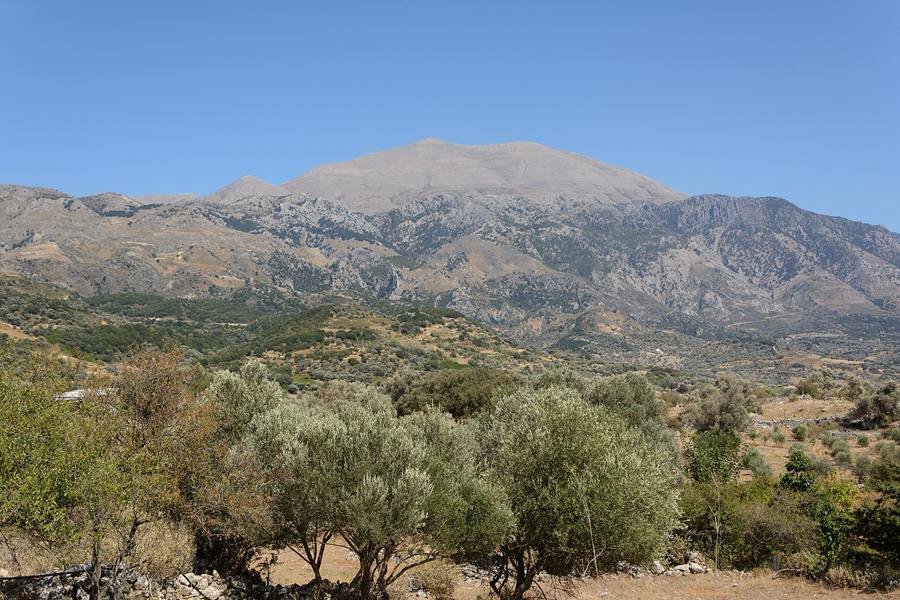
Greek Titans include Rhea, who bore Hestia, Demeter, Hera, Hades, Poseidon and Zeus to Cronus. Early tradition calls her “the mother of gods”. Crete stood at the centre of her worship, with Mount Ida named as the birthplace of Zeus.
Pausanias, an ancient traveller, listed her temples under the title Meter Theon, or Mother of the Gods. They stood at Anagyros in Attica, Megalopolis in Arcadia and on the Acropolis of Corinth. Sparta held a sanctuary to the Great Mother. Olympia kept both an altar and a temple. Damophon carved her statue at Messene in marble from Paros.
Knossos reportedly held a “House of Rhea” and a cypress grove for her. One ancient account places the Greek Titans in the land around Knossos. A cave on Mount Ida, full of sacred bees, was forbidden to gods and mortals alike. Each year, storytellers said, a great blaze came out of that cave.
Arcadia told a rival story through the Methydrians, a local people. They claimed that Cronus was deceived with the stone on Mount Thaumasios. The birth itself they placed on Mount Lykaios. Rhea gathered allies on Thaumasios, Hopladamos and his band of Giants, in case of attack. Its summit cave was open only to women sacred to the goddess.
- Arcadia: Petrakhos Mountain also claimed the scene in which Rhea handed Cronus the stone.
- Lagina: A temple frieze there shows Hecate presenting the swaddled stone to Cronus on behalf of Rhea.
- Art of the Greek Titans: Rhea enters Greek art only from the fourth century BC, borrowing images of the goddess Cybele.
The linguist Hjalmar Frisk finds no convincing origin for the name of this figure among the Greek Titans. Ancient writers linked it to the word for earth, while Plato tied it to a word for flowing. A Pre-Greek or Minoan source remains possible.
What ties Mount Othrys to the Greek Titans?
Greek Titans fought from Mount Othrys in the old myth, while the Olympians fought from Mount Olympus. Othrys is a real range of central Greece. Its highest summit, Gerakovouni, rises 1,726 metres on the border between Phthiotis and Magnesia.
Population density across this home of the Greek Titans remains low. Small villages dot the range, with Anavra to the northwest and Kokkotoi to the northeast. Palaiokerasia lies southward, and Neraida sits to the southwest. A protected area covers the eastern range. One spur runs south to Palaiokerasia Gorge and another north to Gkouras Hill.
Gaia hid her great sickle, forged from adamantine, in a crevice on Othrys. Uranus later came to meet her on the mountain, and Cronus ambushed him from that crevice. During the war, the six children of Cronus and Rhea led the assault here. The defenders on this stronghold of the Greek Titans are called the Othrysians.
Modern engineers have cut through the same mountain for the A3 motorway. The Othrys Tunnel runs 2.9 km between Lamia and Xyniada, passing under the range. Work began in 2008 and stopped in 2011 because of the Greek debt crisis. Construction resumed in 2019, and no road tunnel on the A3 is longer.
- Name: Greek speakers call the range Othrys and also Othri, two forms of one name.
- Protected site: The area’s formal name is Oros Othrys, Vouna Gkouras kai Farangi Palaio Kerasias.
- War’s end: The Olympians later overthrew the Othrysians, then restored them, and both held power over heaven and earth.
Hesiod’s version turns in the tenth year, when Gaia advised Zeus to release the Hundred-Handers. Those allies helped him gain the upper hand over the Greek Titans. Zeus then struck them with his thunderbolt and threw them into Tartarus.
Where does Prometheus fit in the family of the Greek Titans?
Greek Titans count Prometheus in their younger branch, as a son of Iapetus by Clymene or Asia. That is the first recorded account of his myth, in the Theogony of Hesiod. Hesiod was a poet of the late eighth century BC.
Certain versions credit Prometheus with making humans from clay. He is also viewed as the parent of human crafts and sciences. Other stories name Deucalion, the flood hero, as his son. Hesiod names his brothers as Menoetius, Atlas and Epimetheus. Among the Greek Titans, his name stays tied to intelligence and to the defence of humankind.
Prometheus Bound is a tragedy traditionally credited to Aeschylus of the fifth century BC. There he claims to have taught writing, mathematics, agriculture, medicine and science to humans. He also says Zeus wanted to wipe out the human race, and that he stopped it. The play gives him a decisive part in the victory over the Greek Titans.
In the same drama his mother Themis, identified with Gaia, tells him of a marriage threatening Zeus. A son of that marriage is fated to overthrow him. Fragments suggest Heracles frees him in the second play, Prometheus Unbound. Zeus and the Titan apparently reconcile in the last play.
- Four plays: Four tragedies on Prometheus carry the name of Aeschylus, and the greater number are lost.
- Lost titles: The other three are Prometheus Unbound, Prometheus the Fire Bringer and Prometheus the Fire Kindler.
- Pandora: Aeschylus leaves out her full story and mentions her jar in one brief line.
M. L. West, a modern scholar, suggests the changes in Prometheus Bound possibly came from the lost epic Titanomachy. That poem told of the struggle between the gods and the Greek Titans, their parents. No direct proof places Prometheus in the epic, however.
What punishment did Atlas receive among the Greek Titans?
Greek Titans counted Atlas, a son of Iapetus, on their losing side in the war with the Olympians. Zeus then sentenced him to carry the sky on his shoulders for all time. His post lay at the far western rim of the earth.
A common error today has him holding up the Earth. Classical art instead shows him with the celestial spheres, the globes of the heavens. The marble globe of the Farnese Atlas, a famous statue, possibly fed the confusion. The word atlas for a set of maps reinforced it from the 16th century.
Atlas had a second reputation as a scholar. The myths call him skilled in philosophy, mathematics and astronomy, and credit him with the first celestial sphere. Certain texts even make him the inventor of astronomy. Gerardus Mercator, a Flemish mapmaker, named him the founder of geography. Mercator’s own map collection honoured this member of the Greek Titans.
One Labour, or set task, of Heracles required golden apples from the garden of Hera. Heracles agreed to bear the heavens while Atlas fetched the fruit from his daughters, the Hesperides. Atlas returned and tried to leave him with the load. Heracles asked him to take the sky back for a moment, then ran off with the apples.
- Perseus: The poet Polyidus, around 398 BC, has Perseus turn the shepherd Atlas to stone.
- Daughters: His children include the Hesperides, the Hyades, the Pleiades and the nymph Calypso of Ogygia.
- Greek Titans on the map: The Atlantic Ocean takes its name from the phrase “Sea of Atlas”.
Hesiod placed this kinsman of the Greek Titans in the far west of the earth. Later tradition tied him to the Atlas Mountains of northwest Africa. Ovid has Perseus turn him into a whole mountain range, with his head as the peak.
How do the Muses descend from the Greek Titans through Mnemosyne?
Greek Titans gave the ancient world a goddess of memory in Mnemosyne. Her name comes from the Greek word mneme, meaning remembrance. By Zeus she became the mother of the nine Muses, the patrons of poetry, music, history and dance.
Calliope held epic poetry, Clio history, Euterpe music and Erato love poetry. Melpomene held tragedy, Polyhymnia hymns, Terpsichore dance, Thalia comedy and Urania astronomy. Zeus, disguised as a mortal shepherd, spent nine nights running with their mother. Hyginus, a Roman writer, gave Mnemosyne other parents, Zeus and Clymene.
Poets called on her in the opening lines of oral epics, including the Iliad and the Odyssey. They asked for her help in recalling the poem. Memory was so basic to Greek oral culture, scholars think, that she joined the Greek Titans. Hesiod says kings and poets gain their authoritative speech through her.
Plato recalled the old custom in his Euthydemus. Socrates there begins a story by calling on the Muses and Memory. Aristophanes also used it in his play Lysistrata. There a drunken Spartan ambassador calls her name while pretending to be a bard. The Temple of Athena Alea held her statue alongside her daughters the Muses.
- Helicon: She was worshipped as a Muse herself at the sanctuary on Mount Helicon in Boeotia.
- Greek Titans at Athens: A statue of her stood in the shrine of Dionysos beside the Muses, Zeus and Apollo.
- Older Muses: Early myth at Helicon named three Muses, called Melete, Mneme and Aoide, or Practice, Memory and Song.
Greek Titans in general drew hardly any worship, but she received minor cult honours. Pieros, a Macedonian, is said to have set the number of Muses at nine at Thespiae. Mimnermos, an epic poet, made older Muses daughters of Uranus.
Why did Rhodes belong to Helios, a son of the Greek Titans?
Greek Titans Hyperion and Theia were the parents of Helios, the Sun. Pindar tells how Helios missed the day when the gods divided the earth, so he received no land. He then chose a new island rising from the sea.
Zeus offered to repeat the division, but this son of the Greek Titans asked for the island. Lachesis, one of the three Fates, lifted her hands to seal the oath. Helios named the place Rhodes after his lover Rhode, a daughter of Poseidon. It became his sacred island, and there he ranked above every other god.
With Rhode he fathered seven sons, the Heliadae, or “sons of the Sun”, and one daughter, Electryone. The sons were the island’s first rulers. Three of their grandsons established Lindos, Ialysos and Camiros, giving each city its founder’s name. Local people claimed descent from this line, which links Rhodes to the family of the Greek Titans.
The Rhodian rite sent a quadriga, a chariot drawn by four horses, over a cliff into the sea. This recalled the myth of Phaethon. A novel by Xenophon of Ephesus has its heroine dedicate her hair at his Rhodian festival. Horse sacrifice to Helios took place in a number of regions, but only Rhodes offered teams of four.
- Colossus: The Colossus of Rhodes, a giant statue, was dedicated to this god.
- Haleion: Rhodians used this name for the shrine of Helios on their island.
- Children: The sea nymph Perse bore him Circe, Aeetes and Pasiphae, who married King Minos.
The Greek Titans lost their war, but Helios stayed free after it, unlike those sent to Tartarus. For the Rhodians he meant what Athena meant for the Athenians. They revered him as the founder of their people and civilisation.
Which island sheltered Leto, the daughter of two Greek Titans?
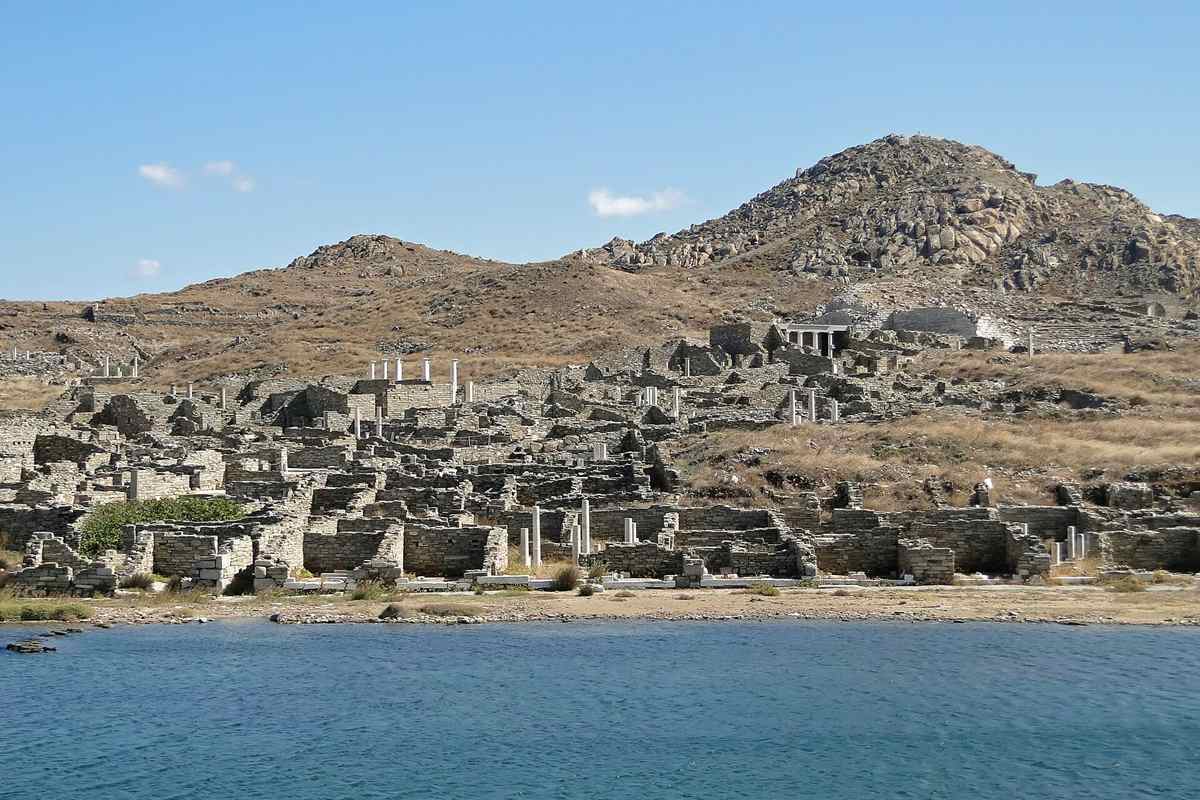
Greek Titans Coeus and Phoebe were the parents of Leto, who bore Apollo and Artemis to Zeus. Hera ordered all lands to deny her shelter during her pregnancy. She finally reached Delos, an island not joined to the mainland.
Delos then carried the old name Asterios and floated as a barren island. Leto promised it wealth from worshippers of her future son. As thanks, four pillars fixed Delos in place, and the island later became holy to Apollo. Her sister Asteria had changed into a bird and then a drifting island, later renamed Delos.
Hera kept back Eileithyia, the goddess of childbirth, so Leto suffered for days. Rhea, one of the Greek Titans, attended. On the ninth day Iris, the messenger goddess, won Eileithyia over with a necklace. She then brought her to the island. The Bibliotheca, an ancient book of myths, says Artemis came first and helped her mother.
Kos, in the southeast Aegean, claimed this daughter of the Greek Titans and named itself her birthplace. Diodorus Siculus instead says she was born in Hyperborea, a far northern land of myth. A local tradition in Boeotia places the birth of Apollo at Tegyra rather than Delos. He was worshipped there as Apollo Tegyraeus.
- Dreros: Spyridon Marinatos found brass figures of Apollo, Artemis and Leto in a Cretan temple there.
- Phaistos: Leto appears in this Cretan city in connection with an initiation cult, a rite of passage.
- Dialect: Doric Greek speakers in Sparta spelled her name Lato, with an alpha instead.
Hesiod describes this child of two Greek Titans as “always mild”, the gentlest goddess on Olympus. Plato linked her name to the Greek word for mild. Among the celebrated mothers of the ancient world, only Demeter stood above her.
What do travellers ask about Greek Titans, and what are the answers?
Greek Titans such as Iapetus and Hyperion appear in myth mainly as parents of better-known figures. Aside from Cronus, these gods have little separate identity. Crius, for example, seems to exist only to father Astraeus, Pallas and Perses.
Which waters did Oceanus rule among the Greek Titans?
Oceanus was the god of the great river encircling the whole world. He counted as the eldest of the twelve siblings and married his sister Tethys. Their sons, the three thousand river gods, include Achelous, god of the largest river in Greece. Hesiod’s figure of three thousand stands for a number beyond counting.
What role did Tethys play among the Greek Titans?
Tethys played no active part in myth and had no established cults. Her one early story comes from the Iliad. Hera says there that Tethys nursed her during the fall of Cronus. Later Greek and Roman poets used her name as a word for the sea. Mosaics in baths and pools also showed her.
Who were the sons of Iapetus among the Greek Titans?
Iapetus fathered Atlas, Prometheus, Epimetheus and Menoetius, with Clymene named as his wife in Hesiod and Hyginus. Apollodorus names her Asia. The Iliad places Iapetus in Tartarus alongside Cronus. Hesiod and other Greek scholars saw his four sons as ancestors of humankind. Zeus punished each one for a moral failing.
What does the name Hyperion mean among the Greek Titans?
Hyperion comes from the Greek word hyper, meaning above, so the name roughly means “the one above”. A broken Linear B tablet possibly carries his name, although it can also read Apollo. Linear B is the early Greek script of the Mycenaean age. John Keats left an unfinished epic poem with the same title.
Featured photo: Bernard Gagnon, CC BY-SA 3.0, via Wikimedia Commons.