
Ancient Greek historians turned the past of Greek cities into prose, from Ionia to Arcadia and Boeotia. Hosted trips across Greece take place in the lands these writers described. The line runs from Hecataeus through Herodotus, Thucydides, Xenophon and Polybius to Plutarch and Arrian. Their world connects with Ancient Greek philosophers, the Battle of Thermopylae and Ancient Athens. More trips appear under Greece tours.
Bookings made through the GetYourGuide widgets on this page earn Classical Greece Tours a commission, at no extra cost to the traveller.
Who were the ancient Greek historians?
Ancient Greek historians were writers who set out to track and record past events. By the 5th century BC, their work had become a core part of Greek literature. Their first steps came in Ionia, a Greek region later ruled by Lydia and Persia.
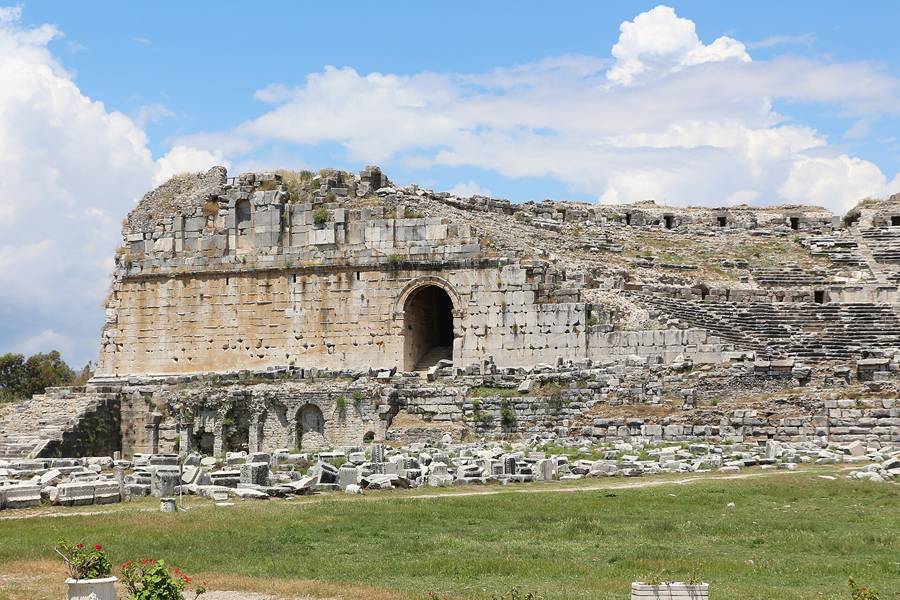
According to Moses Finley, the earliest Greek history writing began in Ionia. Greeks there lived in the closest contact with foreign peoples. Wishing to understand their rulers, Ionian authors gathered notes on Lydian and Persian lands, customs and past events. Only scattered quotations from those early works survive today.
Writers before Herodotus are known as logographers. The Greek term joins the words for story or prose and for writing. These forerunners of the ancient Greek historians came mainly from Ionia and its islands. They used the Ionic dialect, a regional form of Greek. Their prose tried to explain legends about city foundings and ruling families.
Thucydides and Xenophon followed Herodotus, and this wider group of authors was mainly Athenian or pro-Athenian. For that reason, far more is known about Athens than about other cities of the time. These ancient Greek historians kept to politics, warfare and diplomacy. Economic and social life received little attention in their books.
- Hellenistic age: Polybius, who saw Greeks fall under Roman power, ranks as that period’s leading writer of history.
- Roman heirs: Rome’s earliest historians used the Greek language, and Greek models shaped Latin history writing too.
- Final peak: Procopius of Caesarea marks the last high point in late antiquity, the final stretch of the ancient era.
The line of ancient Greek historians closes with Theophylact Simocatta, active early in the 7th century AD. Scholars count him as the last of their number. Their influence also reached Latin authors, since Sallust and Tacitus drew heavily on Thucydides.
Why does Hecataeus of Miletus open the story of ancient Greek historians?
Ancient Greek historians begin with Hecataeus of Miletus, the first known writer of Greek history. Born about 550 BC, he also worked as a geographer. He lived in Miletus, a city then under Persian rule, and died about 476 BC.
He came from a very wealthy family and settled in his native city after long travels. There he held a high position and wrote on geography and history. He was active during the Greco-Persian Wars between Greek cities and the Persian Empire. Among ancient Greek historians, he is known as the Father of Geography.
Aristagoras, the acting tyrant of Miletus, called Ionian leaders together to plan a revolt. Hecataeus tried in vain to talk them out of it. In 494 BC, after the Ionian defeat, he went as an ambassador to Artaphernes. This Persian satrap, or provincial governor, then brought back the constitutions of the Ionic cities at his urging.
Among ancient Greek historians, Hecataeus is known for two works. Periodos ges, meaning Journey round the Earth, filled two books, one on Europe and one on Asia. It follows the coast of the Mediterranean and Black Sea, with notes on peoples and places. Over 300 fragments remain, mainly through Stephanus of Byzantium.
- Genealogies: This four-book work on myth doubts families who claimed descent from gods, and under forty fragments remain.
- Famous opening: One fragment calls the countless stories of the Greeks ridiculous and promises to write what he deems true.
- World map: He gets credit for refining the map drawn by Anaximander, a disc encircled by Oceanus.
Among later ancient Greek historians, Herodotus took from him the concept of a prose history. He contradicts Hecataeus at least once. Even so, Hecataeus is the one source that Herodotus cites by name. Herodotus also retells his visit to an Egyptian temple at Thebes.
What did Hellanicus of Lesbos add to the work of ancient Greek historians?
Ancient Greek historians met an early attempt at scientific dating in Hellanicus of Lesbos. Born in Mytilene in 490 BC, he worked in chronology, geography and history. Attica, the region around Athens, drew his special interest. He is reputed to have reached the age of 85.
The Suda, a Byzantine encyclopaedia, places him for a while at the court of a Macedonian king. He died at Perperene, a city in Aeolis near Pergamon, opposite Lesbos. Hellanicus joined the ancient Greek historians as a highly prolific early writer. His books are now lost, but other authors preserve fragments of them.
He tried to lay the base of a scientific chronology, meaning an ordered system of dates. Its main support was the list of the priestesses of Hera at Argos. Genealogies, lists of Athenian magistrates called archons and eastern dates came next. This replaced the old counting by generations, but his materials fell short.
About thirty works are credited to him. Carneonikae listed the winners of the Carnean games, the chief Spartan music festival. Atthis told the story of Attica from 683 BC to the end of the Peloponnesian War. Thucydides, also among ancient Greek historians, judged its account of 480 BC to 431 BC superficial.
- Rome: His pages hold the first mention of Aeneas founding Rome, on a journey with Odysseus.
- Etruscans: He backed the idea that arriving Pelasgians gave rise to the Etruscan people.
- Local records: He wrote down traditions as locals told them and used available priestly registers.
Among ancient Greek historians, he left a strong mark on the writing of Athenian history. That influence on Athens held firm until the time of Eratosthenes, in the 3rd century BC. Dionysius of Halicarnassus later cited him as a source on the Etruscans.
How did Herodotus of Halicarnassus shape the craft of ancient Greek historians?
Ancient Greek historians left no older intact prose than the book of Herodotus. He was born around 485 BC in Halicarnassus, then inside the Persian Empire. That made him a Persian subject from birth. The Suda names his parents as Lyxes and Dryo.
Scholars of ancient Greek historians rely on his own writing and on the Suda, a Byzantine encyclopaedia. It adds a brother named Theodorus and a family link to the epic poet Panyassis. It also says the family fled to Samos from Lygdamis, a tyrant. Inscriptions now show Ionic Greek in official documents at Halicarnassus.
His eyewitness accounts place him in Egypt in the company of Athenians, after 454 BC or earlier. He then seems to have reached Tyre and followed the Euphrates down to Babylon. Halicarnassus was an outward-looking port that had helped pioneer Greek trade with Egypt. He later grew unpopular at home, for reasons unclear.
Authors of his day, ancient Greek historians included, published by reciting at popular festivals. According to Lucian, Herodotus read the entire Histories to the crowd at the Olympic Games in one sitting. Another account has him wait for cloud shade until the crowd had gone. The saying Herodotus and his shade, for a missed chance, comes from it.
- Harsh nickname: His strange stories and folk tales led critics to brand him The Father of Lies.
- Stage mockery: Aristophanes, the Athenian comic dramatist, mocked his account in The Acharnians of 425 BC.
- Last trace: Nothing in the Histories can be dated with certainty to later than 430 BC.
Accounts of the ancient Greek historians disagree over the exact place of his grave. Marcellinus placed him in the tomb of Thucydides at Athens. The Suda names Macedonian Pella and also the agora of Thurii, a colony in modern Calabria.
Where does Thucydides stand among ancient Greek historians?
Ancient Greek historians reach a stricter method in Thucydides, who valued eyewitness testimony and read written documents. He also interviewed people who took part in the events he recorded. Unlike Herodotus, he left the gods out of his account of human affairs.
He took part in the war he described, and he caught the plague but survived it. The Plague of Athens killed Pericles along with other citizens. His account holds a first observation of acquired immunity, meaning protection left in the body after an illness. Exile from Athens followed his command at Amphipolis and lasted twenty years.
Among ancient Greek historians, Thucydides started writing at the onset of his war in 431 BC. His stated aim was a possession for all time. The narrative stops in the middle of 411 BC, traditionally explained by his death while writing. Later archivists, thought to work at the Library of Alexandria, divided it into eight books.
His speeches differ from the habits of modern writers. He presents them as literary reconstructions, not as quotations of actual words. Readers of ancient Greek historians still study his version of the Funeral Oration of Pericles. That speech praises the dead and defends democracy, and political theorists and classics students read it widely.
- Political realism: He is called the father of this school, which ties state behaviour to fear and self-interest.
- View of Pericles: He admired Pericles and showed clear dislike for the popular leaders who followed him.
- Late biography: Marcellinus wrote his life story about a thousand years after the historian died.
The influence of Thucydides reached later ancient Greek historians in the Hellenistic and Roman worlds. Readers in antiquity saw Xenophon as his heir in style. After exile, he is said to have settled on a family estate in Thrace. Its gold mines paid for his research.
Which life story does Xenophon bring to ancient Greek historians?
Ancient Greek historians include Xenophon of Athens, a soldier born about 430 BC in the district of Erchia. At 30, he was elected a leader of the retreating Ten Thousand, a force of Greek mercenaries. His book Anabasis records that march home.
Among ancient Greek historians, he describes his own adventures in Anabasis, a title meaning going up. It tells of the campaign of Cyrus the Younger against the Persian king Artaxerxes II. Socrates sent him to the Pythia, the priestess of the Delphic oracle. Xenophon asked only which gods to pray to, and Socrates rebuked him.
Although born an Athenian citizen, Xenophon came to be linked with Sparta. He joined the campaign of the Spartan king Agesilaus for Ionian Greek independence. Athens banished him for fighting on the Spartan side. Among ancient Greek historians, he is a chief witness for Sparta. Modern knowledge of its society owes much to his biography of Agesilaus.
He then received an estate at Scillus and lived there for the next twenty-three years. The Elians took it in 371 BC, after the Spartan defeat at Leuctra. According to Diogenes Laertius, he moved to Corinth and died there in 354 BC. Pausanias, a later traveller, mentions a tomb of Xenophon at Scillus.
- Hellenica: This history picks up at the last sentence of Thucydides and runs on to 362 BC.
- Cyropaedia: This book gives a fictional Cyrus the Great the qualities of an ideal ruler.
- Language: His plain Attic Greek, the dialect of Athens, served students in translation exercises.
Readers of ancient Greek historians knew Xenophon as the Attic Muse, for the sweetness of his wording. For much of the past two thousand years, he was seen first as a philosopher. Quintilian placed him next to Plato in that role.
Why did ancient Greek historians argue over Ctesias of Cnidus?
Ancient Greek historians and their readers split over Ctesias of Cnidus, a Greek physician from Caria. He served the Persian king Artaxerxes II as a doctor. His Persica, a history of Assyria and Persia opposing Herodotus, ran to 23 books.
Ctesias travelled with Artaxerxes II in 401 BC on the march against his brother, Cyrus the Younger. At the Battle of Cunaxa, the doctor treated a flesh wound of the king. He reportedly joined the talks with the Greek mercenaries after the fighting. Clearchus, their Spartan general, received his help before being executed at Babylon.
Among ancient Greek historians, Ctesias used papers held in the Persian royal archives for his Persica. He wrote it in the Ionic dialect. Its first six books cover Assyria and Babylon to 550 BC, when Persia became an empire under Cyrus. The other 17 books run to 398 BC. Photius made abridgments of it.
Indica, his account of India, records the view the Persians held of that land. It rests on reports from travellers to Persia, not on his own observation. It speaks of artisans, philosophers and gold beyond counting. It says the Indus varies between 40 and 200 stades, a stade being an ancient length. Only fragments remain.
- Other treatises: He also wrote on rivers and on Persian revenues, meaning the income of the royal state.
- Later ancient Greek historians: Diodorus Siculus based his second book mainly on the pages of Ctesias.
- Satire: Lucian placed him on a story island where the wicked suffered for writing false histories.
Modern readers of ancient Greek historians find his account of Assyrian kings in conflict with cuneiform evidence. Cuneiform is the wedge-shaped writing of ancient Mesopotamia. In antiquity, by contrast, respected authorities valued his work highly and turned it against Herodotus.
What made Ephorus of Cyme stand out from other ancient Greek historians?
Ancient Greek historians credit Ephorus of Cyme with the first universal history, an account of world events. Polybius gave him that honour. The work is now lost. Ephorus was born about 400 BC in Cyme, a town in Aeolia.
He studied rhetoric, the art of public speaking, under Isocrates, with Theopompus beside him. He made little progress as a speaker. Isocrates himself then suggested writing and history instead. Plutarch reports that Ephorus later refused an offer from Alexander the Great. The post was official historian of the Persian campaign.
Among ancient Greek historians, his great work filled 29 books, each with its own prooimion, or preface. His son Demophilus edited it and added a 30th book. The story began in the days of the Heraclids, the legendary descendants of Heracles. It ended with the taking of Perinthus in 340 BC, over seven hundred years later.
Antiquity praised and read his history, and later ancient Greek historians drew freely on it. For Greece between 480 and 340 BC, he is believed to be the main source of Diodorus Siculus. Strabo quoted him at length in the Geographica. Strabo also praised him for keeping geography apart from history.
- Home town: A patriotic essay by Ephorus praised the traditions of Cyme, his place of birth.
- Other subjects: He also wrote a book about inventions and another work titled On Style.
- Comet report: He reported that a comet split apart during the winter of 372 to 373 BC.
Ancient Greek historians and critics judged him sharply. Polybius ridiculed his account of the Battle of Mantinea in 362 BC. Seneca called him a mere chronicler. Dionysius of Halicarnassus, by contrast, ranked Ephorus and Theopompus alone as historical writers of accurate and complete language.
Which moral voice does Theopompus of Chios add to ancient Greek historians?
Ancient Greek historians gain a severe moral voice in Theopompus. Chios, an Aegean island, was his birthplace in 378 or 377 BC. His Philippica ran to fifty-eight books on the rule of Philip II of Macedon. It judged the corruption of that court.
In his youth, he lived at Athens with his father, Damasistratus. The father was an exile for Laconian sympathies, meaning support for Sparta. There Isocrates taught rhetoric to Theopompus, who like Ephorus joined the ancient Greek historians. Isocrates reportedly said that Ephorus needed the spur but Theopompus the bit.
In 352 or 351 BC, he won the oratory prize of Artemisia II of Caria. Isocrates himself stood among the rival speakers. Back on Chios, he served as a leader of the aristocratic party. When Alexander the Great died, he was expelled and took refuge with Ptolemy in Egypt. He met a cold reception there.
Among ancient Greek historians, his Hellenica covers Greece in twelve books. It starts in 411 BC, where Thucydides ends, and stops at 394 BC. The Philippica was far longer, until Philip V of Macedon cut it from 58 to 16 books. In the 9th century, Photius read fifty-three of its books.
- The Marvels: This lengthy digression, or side story, fills books 8 and 9 of the Philippica.
- Athenian leaders: The 10th book attacks Athenian statesmen, and Plutarch is thought to have used it in the Lives.
- Praise and blame: He condemned the drinking and conduct of Philip but gave warm praise to the orator Demosthenes.
Among ancient Greek historians, Theopompus drew severe blame in antiquity for his censoriousness, a habit of harsh criticism. His love of romantic and unbelievable tales also drew complaint. Trogus Pompeius later took a large share of his material from the Philippica.
What did Timaeus of Tauromenium give ancient Greek historians?
Ancient Greek historians took a new dating system from Timaeus of Tauromenium: years counted by Olympiads. An Olympiad was the four-year gap between Olympic Games. He was born in 356 or 350 BC at modern Taormina, in eastern Sicily.
His father, Andromachus, was a ruler who refounded Tauromenium in 358 with former people of Naxos. Agathocles, the tyrant of Syracuse, is said to have banished Timaeus from Sicily. He then spent at least fifty years in Athens. Scholars disagree on whether he ever went home. Pseudo-Lucian says he reached the age of 96.
In Athens, he completed the Histories in thirty-eight books. The work ran from the earliest days of Greece to the First Punic War, between Rome and Carthage. The last five books treat the age of Agathocles in detail. Among ancient Greek historians, he also wrote a monograph, or single-subject study, on King Pyrrhus.
His dating method set lists side by side: Athenian archons, Spartan ephors and priestesses of Argos. Archons and ephors were senior state officials. Everyday life ignored the system, yet later ancient Greek historians used it widely. Timaeus also has a claim as the first to spot the growing strength of Rome in his pages.
- Fault-finder: His unfairness to earlier writers earned him the nickname Epitimaeus, meaning fault-finder.
- Old Ragwoman: Another nickname mocked his fondness for small details and for collecting old wives’ tales.
- Greek West: The scholar Lionel Pearson calls him the standard authority on that region for nearly five centuries.
Polybius, another of the ancient Greek historians, painted him as a bookworm with no military experience. Even Polybius admitted that Timaeus consulted every available authority and record. Cicero read Timaeus closely and praised his wealth of matter and variety of expression.
Which lessons did Polybius of Megalopolis leave for ancient Greek historians?
Ancient Greek historians left no fuller work from the Hellenistic period than the Histories of Polybius. That age began when Alexander the Great died. Living from about 200 to about 118 BC, he recorded how Rome rose to power across the Mediterranean.
His father, Lycortas, became commanding general of the Achaean League, an alliance of Greek states. Through his first 30 years, Polybius watched the politics and warfare of Megalopolis at first hand. In 182 BC, he carried the funeral urn of the statesman Philopoemen. He was elected cavalry officer in 170 or 169 BC.
In 167 BC, he joined 1,000 Achaean nobles sent to Rome as hostages for 17 years. There, Lucius Aemilius Paullus trusted him with the education of his sons. One of them, Scipio Aemilianus, remained a close friend. Polybius went with him to Africa and witnessed the Sack of Carthage in 146 BC.
Book VI sets out his theory of the cycle of constitutions, called anacyclosis, about how governments change. His ideas on checks and balances later influenced Montesquieu and John Locke. In Book XII he discusses how to write history and attacks Timaeus, another of the ancient Greek historians. He interviewed people who knew Hannibal, the Carthaginian commander.
- Task of ancient Greek historians: He defined it as studying documents, reviewing geography and drawing on political experience.
- Greek cities: After Corinth fell, he took on the hard task of organising government in those cities.
- Earlier book: His first work, a life of Philopoemen, later served Plutarch as a source and is lost.
Among ancient Greek historians, Polybius survives only in part. The first five books of the Histories remain whole. A large portion of the sixth and fragments of the rest also survive. Pseudo-Lucian says he fell from his horse and died at the age of eighty-two.
How did Diodorus Siculus preserve older ancient Greek historians?
Ancient Greek historians live on in part through Diodorus Siculus, a Sicilian author who wrote the Bibliotheca historica. Its forty books took shape between 60 and 30 BC. The title means Historical Library, and fifteen of the books survive intact.
He gives his own birthplace as Agyrium in Sicily, now called Agira. With one exception, antiquity adds nothing about his life beyond his writing. Jerome, under the year 49 BC, records that this writer of Greek history became illustrious. The last work linked to him dates from 21 BC.
His translator, Charles Henry Oldfather, noted a striking coincidence at Agyrium. One of just two known Greek inscriptions from the town is a tombstone. It names a Diodorus, son of Apollonius. The surviving books are 1 to 5 and 11 to 20. Fragments of the rest appear in Photius and in the Excerpts of Constantine Porphyrogenitus.
Among ancient Greek historians, his universal history falls into three sections. The first runs through mythic history to the destruction of Troy, moving by region from Egypt to Europe. The second runs from the Trojan War until Alexander the Great died. The third heads towards 60 BC, but its ending is lost.
- Older ancient Greek historians: He drew on Ctesias, Ephorus, Theopompus, Timaeus and Polybius, among others identified by scholars.
- Further sources: The list also names Duris of Samos, Hieronymus of Cardia, Philistus and Posidonius.
- Egypt first: Book I opens the survey with the history and culture of ancient Egypt.
The name Bibliotheca, meaning library, admits that he built the book from other authors. Readers of ancient Greek historians cannot tell if he reached the Gallic Wars as promised. Evidence suggests that he stopped at 60 BC, old and tired from his labours.
What does Plutarch of Chaeronea offer beside the ancient Greek historians?
Ancient Greek historians meet a biographer in Plutarch, whose leading family lived at Chaeronea, a small Boeotian town. He lived from before AD 50 to after 120. His Parallel Lives pairs Greek and Roman figures, and his Moralia gathers essays and speeches.
His father was named Autobulus and his grandfather Lamprias. Plutarch attended the games at Delphi in which the emperor Nero competed. Later, Lucius Mestrius Florus sponsored his Roman citizenship, and Plutarch took a new Latin name from him. He visited Rome about AD 70 in the company of Florus.
Among ancient Greek historians, he also served as a magistrate at Chaeronea and as archon there. As manager of the Amphictyonic League, a council of Greek states, he ran the Pythian Games. He held that post for at least five terms, from 107 to 127. Late in life, Hadrian reportedly made him nominal procurator of Achaea, an honorary post.
The surviving Lives form 23 pairs, matching a Greek subject with a Roman one. Plutarch differs from other ancient Greek historians in caring more about character than about history itself. His Life of Alexander is one of five surviving tertiary sources, meaning accounts built on older books. It includes anecdotes found nowhere else.
- Pyrrhus: His Life of Pyrrhus is the main account of Roman history from 293 to 264 BC.
- Delphi honour: An inscription records that Delphians and Chaeroneans together dedicated a portrait of Plutarch.
- Family letter: A surviving letter asks his wife not to grieve too deeply for their two-year-old daughter.
Plutarch himself left gaps for readers of ancient Greek historians. His lives of Heracles, Philip II of Macedon, Epaminondas and Scipio Africanus no longer exist today. Other Lives are cut short, hold obvious gaps or were tampered with by later writers.
How did Arrian of Nicomedia follow earlier ancient Greek historians?
Ancient Greek historians continued into the Roman period with Arrian of Nicomedia, also a public servant and philosopher. His Anabasis of Alexander ranks as the leading record of the campaigns of Alexander the Great. In Athens, people called him the young Xenophon.
Arrian, one of the later ancient Greek historians, was born in Nicomedia, capital of Bithynia and now Izmit. His family belonged to the Greek provincial aristocracy, and his full name shows Roman citizenship. While in Epirus, he attended the lectures of the philosopher Epictetus. Everything known about the life of Epictetus is due to Arrian.
The emperor Hadrian counted him as a friend and appointed him to the Senate about AD 126. Arrian became consul suffectus, a replacement consul, around AD 130. Hadrian then made him governor of Cappadocia, a post he kept for six years. In that office, his legions halted an invasion by the Alani people.
Arrian called himself the second Xenophon, tying himself to one of the earlier ancient Greek historians. His Anabasis of Alexander fills seven books. It takes as its basis the account by Xenophon of the March of Cyrus. Lucian saw Arrian as a Roman of the first rank, devoted to learning for life.
- Epictetus notes: He published the Discourses from his own notes after unauthorised copies began to spread.
- Later histories: Events after Alexander ran to ten books, and the lost Parthica ran to seventeen.
- Black Sea: His Periplus of the Euxine Sea, addressed to Hadrian, is his earliest work dated with confidence.
Eight works by Arrian survive, and the Indica and the Anabasis alone remain complete. Scholars of ancient Greek historians have long preferred him to other primary sources on Alexander. Modern studies of his method have changed that attitude somewhat.
What do travellers ask about ancient Greek historians, and what are the answers?
The ancient Greek historians kept writing in their own language under Roman rule. Pausanias recorded what he saw across Greece. Dionysius of Halicarnassus told the story of early Rome. Appian and Cassius Dio wrote long Roman histories in Greek.
Which travel writer do readers set beside ancient Greek historians?
Pausanias, who lived from about 110 to about 180, wrote the Description of Greece from firsthand observation. He aimed to set down all things Greek, panta ta hellenika in his words, in lasting form. Classicists once dismissed his writing as purely literary. Modern archaeological research has since revealed the accuracy of his information.
Among ancient Greek historians, who explained early Rome to Greek readers?
Dionysius of Halicarnassus lived from about 60 BC to after 7 BC and taught rhetoric. He moved to Rome after the civil wars and spent twenty-two years on Latin and literature. His Roman Antiquities filled twenty books, and the first nine survive. He aimed to give Greek readers basic knowledge of Roman history.
Which of the ancient Greek historians was born in Alexandria?
Appian of Alexandria was born there about AD 95. He went to Rome about AD 120 and pleaded cases before the emperors as a lawyer. His Roman History, written in Greek, filled 24 books. Its Civil Wars books give the one surviving full description of the end of the Republic.
Why is Cassius Dio named beside ancient Greek historians?
Cassius Dio, a Roman senator of Greek descent through his mother, wrote in Greek. His Roman history filled 80 volumes, written over 22 years in Koine, the shared Greek of the time. It runs from the arrival of Aeneas in Italy to AD 229. He called his home town, Nicaea, my home.
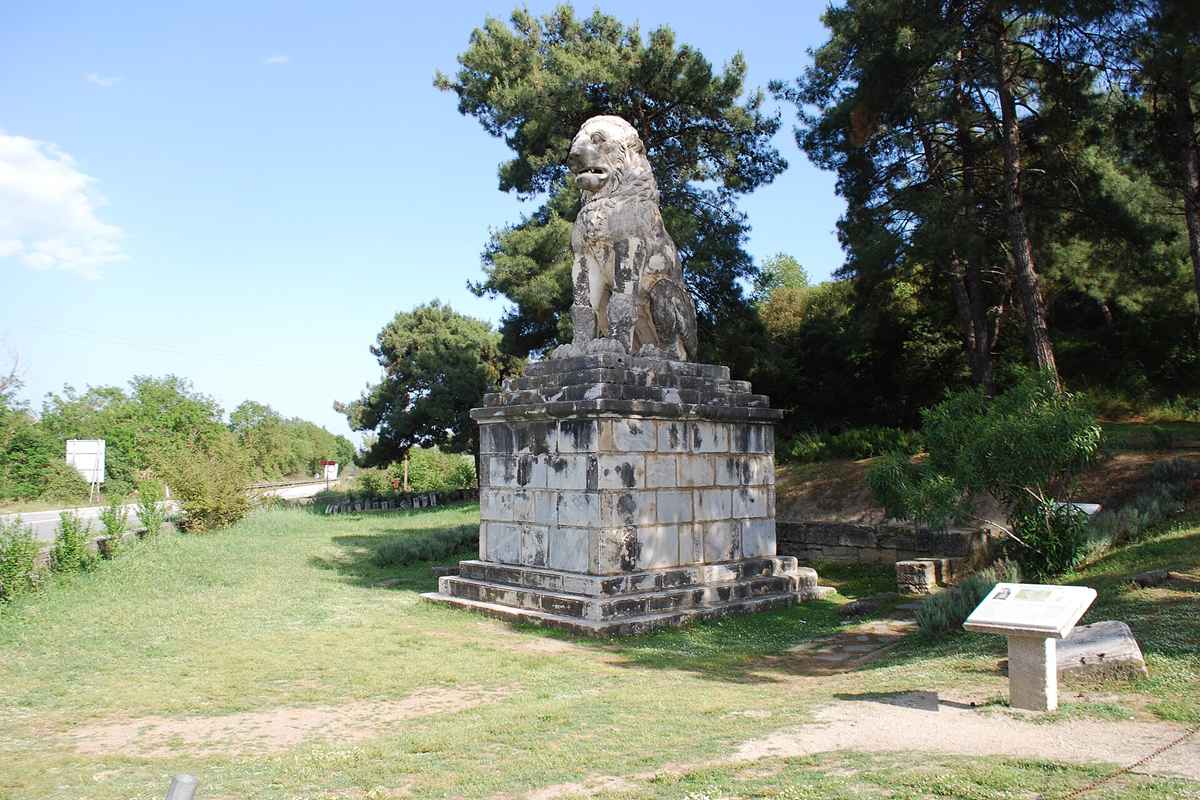
Featured photo: Jean Housen, CC BY-SA 4.0, via Wikimedia Commons (File:20160513 016 amphipolis.jpg).