
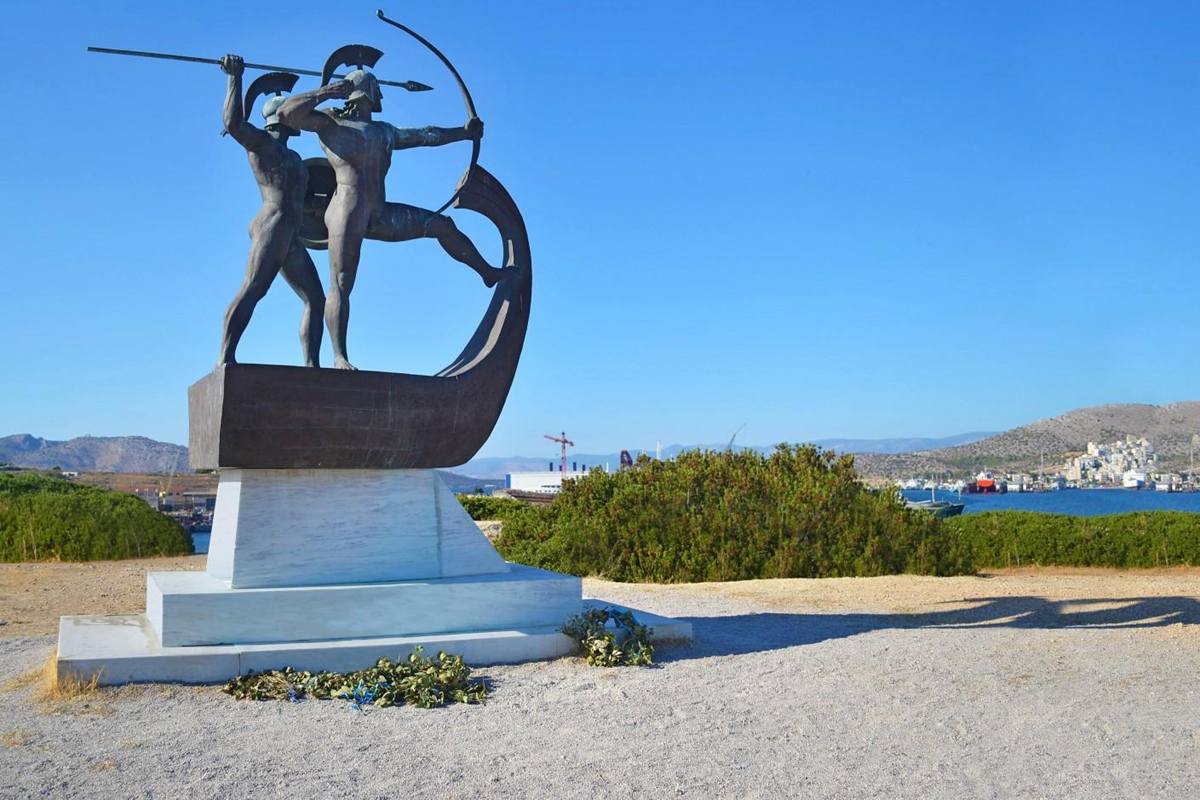
Persian Wars history spans 499 BC to 449 BC. Its battles touched Greece, the Aegean and Asia Minor. Outings with a host across Greece take place on this historic ground. Topics include the Ionian Revolt, Lade, Artemisium, Salamis, Plataea, Mycale, Themistocles, Mardonius, the Serpent Column and the Eurymedon. Related pages cover the Battle of Thermopylae, Ancient Athens and Ancient Sparta. More outings appear under Greece tours.
Bookings made through the GetYourGuide widgets on this page earn Classical Greece Tours a commission, at no extra cost to the traveller.
What were the Persian Wars?
The Persian Wars set Greek city-states against the Achaemenid Empire, the ruling Persian state. The fighting ran from 499 BC to 449 BC. Its roots lay in Ionia, a Greek-inhabited region that Cyrus the Great conquered in 547 BC.
The Persians placed a Greek tyrant, a sole ruler, over each city in Ionia. Before the Persian Wars opened, in 507 BC, an embassy from newly democratic Athens reached Artaphernes at Sardis. The envoys wanted Persian help against threats from Sparta. Artaphernes asked them for earth and water, a symbol of submission.
Two styles of land warfare met in the Persian Wars. Greek armies put their weight on heavier infantry, while Persian armies favoured lighter troops. Each hoplite, or Greek foot soldier, came from the middle classes and afforded his own equipment. Standard Persian kit was a bow, a short spear, a sword or axe, and a wicker shield.
Every navy in the eastern Mediterranean had switched to the trireme, a warship with three banks of oars. Persian squadrons came mainly from Phoenicians, Egyptians, Cilicians and Cypriots. During the Persian Wars, Darius sent ambassadors across Greece to demand submission, and almost every city gave it. Athens and Sparta refused and executed the envoys.
- Hellespont: Xerxes ordered this strait bridged to carry his army across into Europe.
- Mount Athos: A canal crossed this narrow neck of land after a fleet was lost nearby in 492 BC.
- Army size: Scholars reject the ancient figure of 2.5 million troops and settle near 200,000.
Preparing to march on Egypt, Darius died, and his son Xerxes I took the Persian throne. Xerxes put down the Egyptian rising and restarted plans for the Persian Wars in Greece. Herodotus lists 46 nations from which his troops were drawn.
Why did the Ionian Revolt start the Persian Wars?
The Persian Wars opened with the Ionian Revolt, a rising of Greek cities against Persian rule. It grew from a failed attack on the island of Naxos in 499 BC. Aristagoras, tyrant of Miletus, led that attack with the Persian governor Artaphernes.
The siege of Naxos failed when both the Persians and Aristagoras ran out of money. Expecting to lose his post, Aristagoras urged his own people in Miletus to rebel. That act began the first phase of the Persian Wars. Tyrannies fell across Ionia, and democracies, or governments by citizens, took their place.
Seeking allies on the mainland, Aristagoras got no help from Sparta, but Athens and Eretria agreed. Twenty Athenian triremes and five from Eretria sailed in the spring of 498 BC. The allies took lower Sardis, while Artaphernes kept the citadel, the fortified high point. Fire then spread through the lower city, by accident according to Herodotus.
After Sardis burned, Herodotus says, Darius swore revenge on the Athenians. A servant had orders to repeat “Master, remember the Athenians” three times each day. Persian forces caught the Greeks outside Ephesus and routed them, killing the Eretrian general Eualcides. The Athenians then left the alliance, yet the Persian Wars spread as Carians and Cypriots joined the rebels.
- Cyprus: All its kingdoms rebelled except Amathus, which the rebel leader Onesilus besieged.
- Marsyas River: Herodotus counts 10,000 Carian and 2,000 Persian dead in the battle on this river.
- Pedasus: A Carian night ambush on this road killed the Persian general Daurises and his officers.
Three sons-in-law of Darius, named Daurises, Hymaees and Otanes, led the Persian armies against the rebels. The ambush at Pedasus brought the land campaign of the Persian Wars to a stalemate. Little fighting followed in 496 BC and 495 BC.
How did the sea battle at Lade change the Persian Wars?
The Persian Wars saw a major sea fight at Lade, an island off Miletus, in 494 BC. An alliance of Ionian cities and Lesbians faced the fleet of Darius the Great. The Persians won, and that victory all but ended the Ionian Revolt.
In this phase of the Persian Wars, the Ionians met at the Panionium, their sacred meeting ground. They chose not to fight on land and left the Milesians to defend their own walls. Every available ship then sailed for Lade. Herodotus gives the Persian side 600 ships, with Phoenician crews the keenest to fight.
Fearing defeat, the Persians told the expelled tyrants to offer their own kin mercy for deserting. Dionysius, a general from Phocaea, offered to train the Greek force. He drilled the rowers in ramming and the marines, soldiers carried aboard, in combat every day. After seven days, the crews refused to go on.
Early in the fight, the Samian squadron hoisted its sails and left, as agreed with the Persians. Eleven Samian ships refused to go, and Samos later set up a pillar honouring their crews. The Lesbians fled next, so the whole western wing collapsed. Only the large Chian squadron held firm, at a heavy cost in lives.
- Miletus: Persian forces mined the walls of this city and finally captured it.
- Persian Gulf: Darius settled Milesian captives of the Persian Wars near the mouth of the Tigris.
- Sicily: Dionysius of Phocaea turned pirate here and preyed on Carthaginian ships.
The Persian Wars moved on in 493 BC, when the Persian fleet took Chios, Lesbos and Tenedos. Each remaining city of Ionia then fell. Darius next planned to punish Athens and Eretria, the two mainland states that had backed the revolt.
What did the fleet at Artemisium achieve in the Persian Wars?
The Persian Wars brought Greek and Persian fleets together off Euboea in 480 BC, at Artemisium. It was a chain of naval clashes over three days, fought alongside the land battle at Thermopylae. Allied ships faced the navy of Xerxes I.
For this stage of the Persian Wars, Themistocles proposed a double block on the Persian advance. One line was to hold the army at Thermopylae, and another the navy at Artemisium. An allied force of 271 triremes sailed north to wait there. Athens let Eurybiades of Sparta command the fleet for the sake of unity.
Ten Sidonian triremes came to Skiathos as scouts, and three struck a reef called Myrmex, or the Ant. A fire beacon on the island warned the main Greek fleet. A summer gale called the Hellesponter then drove the Persian fleet onto the Magnesian coast. That storm wrecked about a third of the ships.
On a signal, allied ships drew their sterns, or rear ends, together with rams facing out. A second signal sent them rowing outwards into the Persian line. The Persians lost 30 ships that day, and Antidorus of Lemnos brought his vessel over to the Greeks. Nightfall ended this clash in the Persian Wars.
- The Hollows: A night storm wrecked the Persian detachment of 200 ships on this rocky Euboean coast.
- Reinforcements: Another 53 ships came from Athens on the second day of the battle.
- Egyptians: Herodotus rates them best on the Persian side, with five Greek ships vanquished.
On the third day, both fleets fought until nightfall and suffered roughly equal losses. Half the Athenian ships, the largest group in the fleet, ended damaged or lost. News from Thermopylae then sent the allied fleet of the Persian Wars south to Salamis.
Why does Salamis matter so much in the story of the Persian Wars?
The Persian Wars swung toward the Greeks at Salamis, the sea battle of 480 BC. After it, the Peloponnese, the southern Greek peninsula, and Greece as a whole were safe from conquest. Persian prestige and morale also took a major blow.
Allied troops prepared to hold the Isthmus of Corinth, the land bridge into the Peloponnese. They tore up its single road and built a wall across it. Xerxes held his war council with the fleet at the harbour of Phalerum. He ordered ships to patrol off Salamis and block the southern exit of the straits.
Themistocles sent Xerxes a message claiming that the allied command was in-fighting. It said the Peloponnesians planned to leave that night. Xerxes believed it, and his fleet went out that evening to block the straits. In this stage of the Persian Wars, a trireme’s ram sank a ship or sheared off its oars.
Plutarch names Ameinias of Decelea and Socles of Paeania as the men who killed the Persian admiral Ariabignes. Phoenician squadrons were pushed back against the coast, and vessels ran aground. Modern estimates put Persian ship losses between 200 and 300. Xerxes had shipwrecked Phoenician captains beheaded after they blamed the Ionians for cowardice.
- Causeway: Xerxes tried to span the straits with a pontoon bridge or causeway, without success.
- Burnt city: The Athenians went home to their burnt city for the winter after the battle.
- Later losses: Thrace, the Aegean Islands and then Ionia left Persian control over the next 30 years.
Salamis has gained a legendary status in accounts of the Persian Wars, as have Marathon and Thermopylae. A sizeable group of historians counts it among the weightiest battles in human history. Athenian culture blossomed only after the Persian Wars were won.
How did Plataea close the land campaign of the Persian Wars?
The Persian Wars saw the last land battle of the second invasion at Plataea in Boeotia. It took place in August 479 BC. A Spartan-led alliance, with Athens, Corinth, Tegea and Megara among its members, faced the army of Mardonius.
When news came of the Spartan march, Mardonius tore down whatever still stood in Athens. He then built a fortified camp of around 1.9 square kilometres on the Asopos river in Boeotia. The Greek army of the Persian Wars crossed the passes of Mount Cithaeron and held high ground.
Persian cavalry under Masistius struck the Megarians, who stood at the foot of a cliff. Three hundred Athenian infantry and their archers took over that exposed spot. An archer hit the horse of Masistius, and he fell near the Athenian line. Scale armour under his clothes kept him alive until a stab to the eye.
Raids blocked the Gargaphian spring, the only Greek water source. Short of food and water, the Greeks planned a night move to a spot called the island. Units in the centre overshot it and reached the Temple of Hera. The historian Rahe dates the last land clash of the Persian Wars to 27 or 28 August.
- Mourning: Persians shaved their hair and cut their animals’ manes after the death of Masistius.
- Eleutheria: This festival race covered 3 kilometres, with runners carrying a shield and wearing full armour.
- Stoa of Zeus: Athens built this hall in its agora, the public square, and kept shields of the fallen there.
The Spartan dead lay in two graves. Helots, the Spartan underclass, lay in a third. A marble altar rose for Zeus at Plataea, and sacrifices to him continued there. Allied troops then besieged Thebes over its support for Persia in the Persian Wars.
Where did Mycale fit into the final year of the Persian Wars?
The Persian Wars reached Ionia again at Mycale, a mountain on the coast opposite the island of Samos. Greek troops fought on its slopes late in August of 479 BC. They then captured and burned the Persian ships.
The Greek fleet of 110 ships lay at Aegina in spring under the Spartan king Leotychides. Six exiles from Chios, after failing to overthrow their tyrant Strattis, asked Sparta to free Ionia. A delegation from Samos came under Hegesistratos, and Leotychides took his name, Army Leader, as a good omen.
The Persians dismissed their Phoenician ships before this battle of the Persian Wars. Tigranes commanded their land forces. They took the armour and weapons of the Samians in their ranks. They also sent the Milesians to the rear to watch the mountain passes. A stake-lined rampart gave the camp its later name, Skolopoeis.
As the Greeks neared the camp in this Persian Wars clash, a rumour of victory at Plataea spread. The Greek right wing, under heavy arrow fire, broke through the Persian shield wall by shoving. Disarmed Samians joined the attack, and other Ionian units switched sides against Persia. The Milesians misdirected fleeing troops back among the Greeks.
- Perilaus: This Sicyonian general died in the fighting, with heavy losses among his men.
- Hermolycus: An Athenian from Scambonidae, he was judged the bravest Greek soldier of the battle.
- Odeon of Pericles: Vitruvius says masts and spars from Persian ships went into the roof of this Athens theatre.
Stern decorations from the Persian ships went on display at Delphi, near the Temple of Apollo. After Mycale, the Persian Wars entered a new phase, with the Greeks on the offensive. Chios, Lesbos and Samos joined the Greek alliance.
What role did Themistocles play in the Persian Wars?
The Persian Wars made Themistocles, born around 524 BC in the Attic district of Phrearrhii, a naval leader. He commanded the Athenian navy at Artemisium and Salamis in 480 BC. Elected to the top Athenian office for 493 BC, he pushed his city toward sea power.
Before the Persian Wars reached Greece, Themistocles moved to the Ceramicus, a poorer part of Athens. The move marked him as a man of the people and let him meet ordinary citizens. He also practised law, the first Athenian to prepare for public life that way. Serving common people as an attorney won him further support.
In 483 BC, a rich silver seam appeared in the mines of Laurion. Themistocles wanted 200 triremes from it, while Aristides wished to share it among citizens. The ostracism of 482 BC, a vote to exile one politician, became their direct contest. Aristides lost, and the fleet for the Persian Wars grew.
After Salamis, allied admirals met at Corinth to award prizes. Each admiral voted for himself first and for Themistocles second, so nobody won the individual prize. Sparta then gave him a special prize for wisdom and cleverness. Plutarch says Olympic spectators ignored the contestants all day to gaze at him.
- Xanthippus: Sources suggest he took over the Athenian fleet from Themistocles in early 479 BC.
- Argos: Ostracised in 472 or 471 BC, Themistocles first went to live here in exile.
- Magnesia: Artaxerxes I made him governor of this district on the Maeander River in Asia Minor.
The Persian king Artaxerxes I granted him a year to learn the Persian language and customs. Themistocles, a commander of the Persian Wars, died in 459 BC. His reputation was later restored, and he became a hero of the Greek cause.
How did Mardonius lead the Persian side in the Persian Wars?
The Persian Wars gave Mardonius, son of the nobleman Gobryas, a command in two invasions of Greece. He also married Artozostra, a daughter of Darius the Great. He was killed during the Battle of Plataea, in late August of 479 BC.
In the Persian Wars, Darius sent Mardonius in 492 BC to strike Athens for helping the Ionians. On the way, he removed Greek tyrants in Ionian cities and set up democracies. He next attacked Thasos, a Greek island with gold mines, which then paid tribute. Macedonia then became a client kingdom, a state fully under Persian authority.
A storm near Mount Athos then destroyed his fleet. Herodotus puts the cost at 300 ships and 20,000 men. The loss forced a retreat to Asia Minor, and Darius removed him from command. Mardonius regained favour under Xerxes I, his cousin and brother-in-law, pressing him to avenge the defeat of Darius.
Another adviser in the Persian Wars, Artabanus, urged more caution. Herodotus writes that Mardonius simply wanted to govern Greece and loved mischief and adventure. After Salamis, he stayed in Greece as governor of the conquered areas, with 300,000 elite troops. He offered to rebuild Athens if its people accepted a truce, but they refused.
- Alexander I: This king of Macedon passed word of the plans of Mardonius to the Athenians.
- Artabazus: This Persian commander opposed the stand at Plataea, doubting an automatic win over the Greeks.
- Aeimnestus: Herodotus and Plutarch both name this Spartan as the man who killed Mardonius.
An Aeginetan urged Pausanias, the Spartan leader, to put the head of Mardonius on a pole. Pausanias refused and called such acts fit for barbarians rather than Greeks. The death of Mardonius broke up his army in the last land stage of the Persian Wars.
Why is the Serpent Column the best-known relic of the Persian Wars?
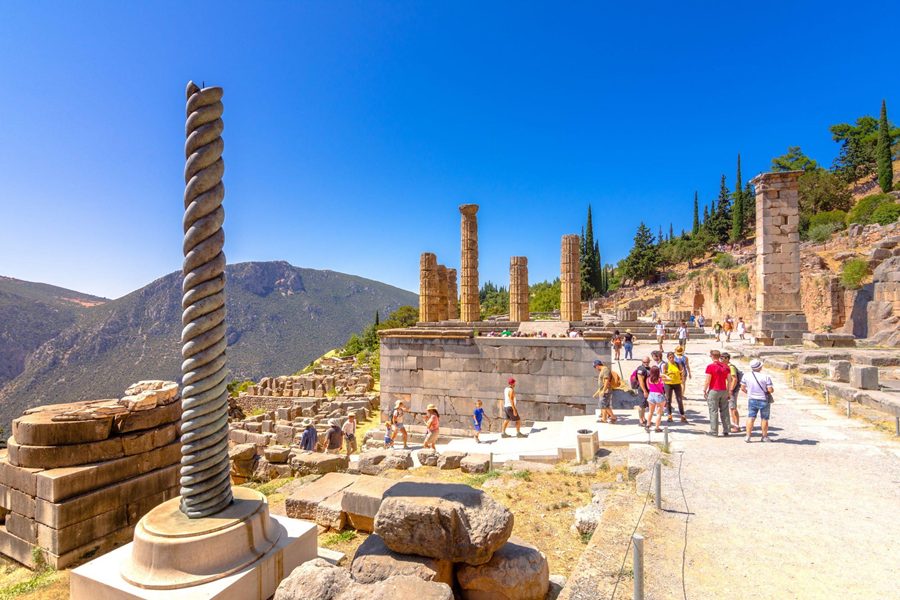
The Persian Wars have a famous physical relic in the Serpent Column, now in Istanbul. Its bronze snakes came from melted-down Persian armour, taken in the plunder of the Persian camp. It honoured the Greeks who fought at Plataea in 479 BC.
Its trail through ancient writing ranks among the longest for any surviving object of Greek and Roman antiquity. Herodotus, Thucydides and Plutarch are among the writers who allude to this Persian Wars monument. In 354 BC the Phocian general Philomelus took the treasures to pay mercenaries. Victors also gave offerings to Zeus at Olympia and Poseidon at the Isthmus.
Constantine the Great moved it to Constantinople in 324, to adorn the central line of the Hippodrome. A later emperor made it a fountain with three mouths. Ahmed Bican, around the fall of the city, called it a charm against snake bites. Mehmed II reportedly shattered the jaw of one head on entering the city.
Other Ottoman writers blame Selim II, Suleiman II or Murad IV, each showing his strength. Petrus Gyllius visited in 1550 and described the column at length, mentioning no damage. Pietro Della Valle, there in 1614, also noted no damage. The speech Against Neaira says the Plataeans sued Sparta over an inscription on this Persian Wars tripod.
- 13th coil: This band carries the Laconic, or Spartan-dialect, inscription reading Those who fought the war.
- Coils 12 to 3: These bands list 31 city states, eight of them not named by Herodotus at Plataea.
- Sabre cuts: These scars on coils 12 and 13 made the old inscriptions hard to read.
The Persian Wars monument also gained a modern copy. In 2015 a bronze cast of the column was set up at the Archaeological Site of Delphi. Apollo took first place among the dedications, despite a suspicion that Delphi favoured the Persians.
How did the Eurymedon extend the Persian Wars into Asia Minor?
The Persian Wars continued in Asia Minor at the Eurymedon, a double battle on water and land. It took place near the river mouth in Pamphylia, in 469 or 466 BC. The Delian League of Athens and its allies faced the empire of Xerxes I.
The Delian League began at a congress on the holy island of Delos. Athens led this new alliance after the Spartans withdrew from the Persian Wars. When Persian forces gathered at Aspendos, near the river mouth, the Athenian general Cimon sailed with 200 triremes. Phaselis first refused him entry, then joined the league through Chian mediation.
League triremes were the sleek deckless type developed by Themistocles, which Cimon adapted for boarding. A standard trireme carried 200 men, including 14 marines. Modern estimates put around 5,000 hoplite marines with the League fleet. Thucydides gives the Persians 200 Phoenician ships, while Plutarch cites 350 from Ephorus and 600 from Phanodemus.
Cimon attacked before 80 Phoenician reinforcements from Cyprus arrived. The Persian line soon broke, and crews grounded their ships and fled to the nearby army. Cimon then landed his marines, whose heavy armour beat the Persian line. This double win in the Persian Wars also brought the Persian camp into Greek hands.
- Plutarch: He compares Cimon to a powerful athlete who won two contests in one day.
- Beached ships: Thucydides reports that 200 Phoenician ships were taken and then destroyed after the fighting.
- Drama judges: Cimon and his fellow generals judged a tragic competition in spring 468 BC.
This Persian Wars victory kept the Persian fleet out of the Aegean until 451 BC. It also held back any attempt to retake the Asiatic Greeks until that year. A stalemate then developed between Persia and the league.
What do travellers ask about the Persian Wars, and what are the answers?
The Persian Wars reach readers only through Greek accounts, because no contemporary records survive in other languages. Aristides the statesman, Herodotus the historian and the siege of Sestos all belong to this record. So does the disputed Peace of Callias.
In the Persian Wars, who was Aristides the Just?
Aristides, an Athenian statesman nicknamed the Just, is remembered for his generalship against Persia. Herodotus ranked him first among Athenians for honour. An illiterate voter once asked him to write Aristides on a voting shard, and he did. In 478 BC, he also set the contributions of members of the new Delian League.
Why do accounts of the Persian Wars rest so heavily on Herodotus?
Herodotus, called the Father of History, was born in Halicarnassus in 484 BC, then under Persian rule. He wrote his Enquiries around 440 to 430 BC to trace the origins of the conflict. Archaeological finds have repeatedly confirmed his version of events. Scholars still treat his troop numbers and dates with scepticism.
What happened at Sestos after the main battles of the Persian Wars?
Shortly after Mycale, the Persians and their allies fell back on Sestos, the strongest town in the region. The Persian governor Artayctes had made no siege plans. When food ran out, the Persians slipped away at night through the least guarded area. The Athenians sailed home carrying the pontoon bridge cables as trophies.
Did a treaty end the Persian Wars, and what was the Peace of Callias?
The Peace of Callias is a disputed treaty, placed around 449 BC, between the Delian League and Persia. Callias, an Athenian politician, is said to have negotiated it. Its terms barred Persian ships from the Aegean and gave self-rule to Ionian states. The historian Theopompus called it a fabrication, and Thucydides never mentions it.