
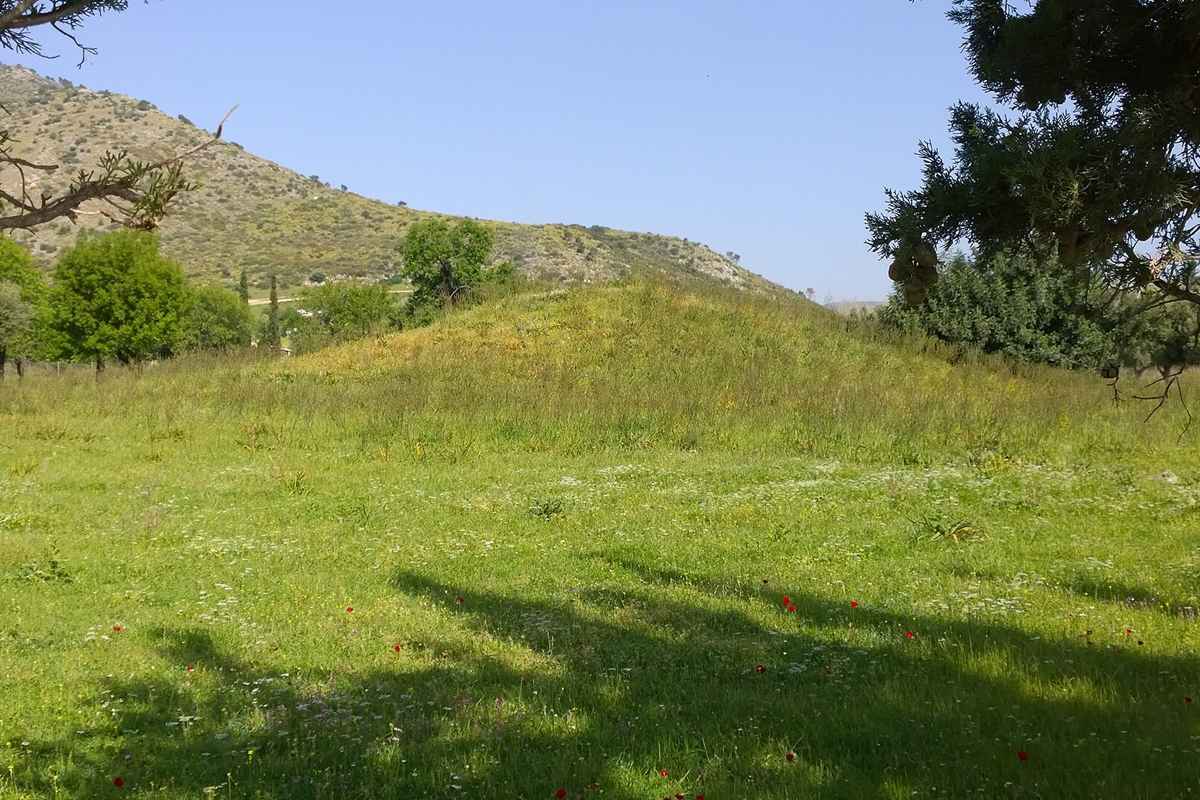
Battle of Marathon trips are outings with a host in Attica, the region ruled by ancient Athens. Athenian citizens and allies from Plataea fought the Persians on its plain. Topics below include the general Miltiades, the Soros burial mound, the runner Pheidippides and the war-ruler Callimachus. Related pages cover the Battle of Thermopylae, Ancient Greek warfare and day trips from Athens. Wider outings appear under Greece tours.
Bookings made through the GetYourGuide widgets on this page earn Classical Greece Tours a commission, at no extra cost to the traveller.
What was the Battle of Marathon?
The Battle of Marathon was fought on a plain in Attica, the region ruled by Athens. Athenian citizens, aided by the city of Plataea, faced Persian troops under Datis and Artaphernes. It marked the first time Greeks had beaten the Persians.
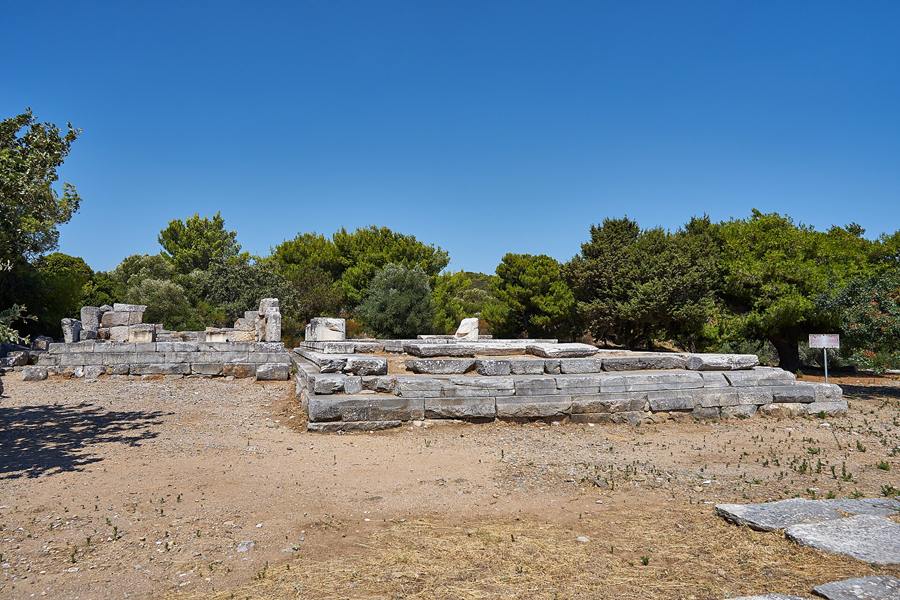
The date of the Battle of Marathon comes from astronomy and the old Greek calendars. August Böckh worked it out in 1855 as September 12, 490 BC. The date depends on when Sparta held its festival. If the Spartan calendar ran a month ahead of Athens, the date moves to August 12.
The Persian campaign answered the Ionian Revolt, when the cities of Ionia tried to overthrow Persian rule. Athens and Eretria each sent a force. A Persian fleet then captured Eretria on the island of Euboea and sailed on to Attica. It landed near Marathon on the advice of Hippias, an exiled Athenian tyrant, meaning a sole ruler.
Athenian troops marched to the plain and blocked its two exits, joined by a small force from Plataea. A message to Sparta asked for support. The Spartans were holding a religious festival, their stated reason for staying away. Marshes and mountains on the chosen ground kept Persian cavalry away from the Persian foot soldiers.
- Persian dead: The historian Herodotus records 6,400 bodies counted on the field, with more lost in swamps.
- Late arrival: Spartan troops covered 220 kilometres and toured the Battle of Marathon field after the fighting.
- Later opinion: John Stuart Mill ranked it above the Battle of Hastings, even as British history.
The Battle of Marathon proved that Greeks were able to win without Sparta. Sparta then held the reputation of the leading Greek military power. Greek esteem for the Athenians rose after the victory. The next two centuries saw Classical Greek civilisation rise.
How did Miltiades shape the Battle of Marathon?
The Battle of Marathon is tied to Miltiades, the Athenian general credited with the winning tactics. He was one of ten elected generals that year. He pressed for an immediate fight, since he saw a siege as ruin for Athens.
Miltiades was born around 550 BC into a prominent Athenian family, the Philaid clan. His father, Cimon Coalemos, won fame in Olympic chariot-racing. Cimon took three chariot victories in a row at the Olympics. Herodotus claims that the sons of Peisistratos, then rulers of Athens, murdered Cimon out of jealousy.
Long before the Battle of Marathon, Miltiades ruled the Thracian Chersonese, known today as the Gallipoli Peninsula. Around 513 BC, King Darius of Persia forced that land to submit and made him a vassal. A vassal is a ruler who answers to a stronger king. He fled to Athens in 493 BC with his family and five ships.
Callimachus, the polemarch or war-ruler, held the deciding vote when the ten generals split five to five. Miltiades persuaded him to back an attack. Fearing Persian cavalry on the flanks, he asked for more hoplites, or armoured foot soldiers, on the wings. At the Battle of Marathon, his men marched to the edge of archer range, then ran.
- The Paros expedition: In 489 BC he led seventy ships against Greek islands deemed friendly to Persia.
- Trial and fine: A death sentence for treason was changed to a fine of fifty talents.
- Final years: He died in prison, and his son Cimon paid the debt.
Aeschines writes that Miltiades wanted his name written in the Stoa Poikile, a hall known for wall paintings. The Athenians refused and painted him in the front rank, urging on his soldiers. That scene of the Battle of Marathon hung among four battle paintings.
Which burial mounds mark the Battle of Marathon?
The Battle of Marathon left two tumuli, which are burial mounds of piled earth, on its plain. One, called the Soros, holds the ashes of 192 Athenians. The other mound holds the buried bodies of fallen soldiers from Plataea.
The Athenian mound dominates the plain of Marathon. Excavators found a large bed of ash and burnt bone inside it. Valerios Stais dug there in 1890 and 1891. The smaller Plataean mound held multiple buried bodies. Professor Marinatos, then the Greek Inspector General of Antiquities, identified that mound.
The mounds of the Battle of Marathon honour Plataea as well as Athens. That small city sent all 1,000 of its hoplites to help the Athenians. The gesture steadied Athenian nerves and won lasting gratitude. Athenian custom also called for a respected man to speak over the war dead.
Both mounds are rounded, with the dead placed in the hole left by digging their soil. The Iliad, the ancient epic poem, describes similar burials for mythical heroes. Polemon of Laodicea, a sophist or teacher of public speech, lived six centuries later. He imagined the fathers of Cynaegirus and Callimachus disputing who spoke over the dead.
- Victory column: Athens raised this third monument on the plain to mark its win over the Persian expedition.
- Simonides: This poet composed the short verse, or epigram, placed on the Athenian tomb.
- Modern setting: A park now surrounds the Athenian mound on the Battle of Marathon plain.
The Athenians at the Battle of Marathon charged from a hillside down to the coastal plain. Their tight, heavily armoured formation broke the Persian flanks, which were unused to such troops. That rout left the Persian centre exposed, and the Persian command fell into disarray.
Who was the runner of the Battle of Marathon?
The Battle of Marathon runner was Pheidippides, or Philippides, an Athenian courier of the fifth century BC. A courier carries messages, and this one carried them on foot. Herodotus, the earliest known writer on him, sends him from Athens to Sparta and back.
Herodotus calls him a hemerodrome, a term translated as day-runner. The Athenian generals sent him to ask Sparta for help against Persia. He covered about 240 kilometres in two days, then ran back. His message warned that Eretria had already been enslaved, leaving Greece weaker. The Spartans waited for the full moon, since their law forbade an earlier march.
The dramatic ending of the Battle of Marathon story comes from Lucian, a later satirist. His runner reaches Athens, announces the victory and falls dead. Plutarch, who lived from 46 to 120 AD, gives the first known written account of that run. He names the herald, an official messenger, as Thersippus or Eukles.
Robert Browning joined both versions in his 1879 poem Pheidippides. In the poem, the runner goes to Sparta and back, fights, then runs from Marathon to Athens. The poem entered late 19th-century popular culture as a historical legend. The run from the Battle of Marathon then inspired the modern 42-kilometre race.
- Spartathlon: This yearly footrace from Athens to Sparta has run across 246 kilometres since 1983.
- 1982 test: John Foden and four other British air force officers tested that distance on an official expedition.
- Finishers: Three runners completed the nearly 250 kilometres, namely Scholtens, Foden and McCarthy.
Writers on the Battle of Marathon also disagree over his name. Pausanias, Plutarch and Lucian report Philippides, while Pheidippides appears in manuscripts of Herodotus. Herodotus never mentions a run from Marathon to Athens. Magill and Moose call the run and his death a romantic invention.
What do travellers ask about the Battle of Marathon, and what are the answers?
The Battle of Marathon took place on a small plain in northeastern Attica. Homer’s Odyssey mentions that place in a way that implies it mattered then. In legend, the Heracleidae, descendants of Heracles, took refuge there when driven from the Peloponnese.
Where did the Athenians camp before the Battle of Marathon?
The Athenians camped on a spur, or side ridge, of Mount Agrieliki beside the plain. Remains of its fortifications survive. A grove of trees or a barrier of stakes protected its flanks. The ancient text can be read either way. Waiting helped the Athenians, because each day brought the Spartan army closer.
Who led the Persian side at the Battle of Marathon?
Datis, a noble of the Median people and an admiral, led the Persian assault force. Artaphernes, a nephew of King Darius, shared the expedition. Accounts of the fate of Datis differ. Ctesias of Cnidus relates that Datis died at Marathon and that Athenians kept his body. Herodotus claims that he survived the fighting.
What part did Callimachus play in the Battle of Marathon?
Callimachus served as polemarch, or war-ruler, and came from Aphidna, a deme or local district of Attica. He commanded the right wing, following Athenian custom. He died chasing Persians to their ships. Fragments of his memorial statue, the Nike of Callimachus, are now in the Acropolis Museum in Athens.
Which well-known Athenians fought in the Battle of Marathon?
The playwright Aeschylus fought there. He counted his part at Marathon as his greatest achievement, above his plays. Themistocles led the Leontis tribe in the centre of the Greek line. Aristides led the Antiochis tribe beside him. After the fighting, Aristides commanded the two centre tribes as they guarded the field.
Featured photo: annysuomo, CC BY 3.0, via Wikimedia Commons.