
Greece weather in December frames trips with a host through the Greek mainland and its islands. The page gives December station figures for Piraeus, Samarina, Dionysos, Astros, Cape Sounion and the Evrotas Valley. It also covers the ski slopes of Vasilitsa, Vigla and Elatochori, the Brumalia and Saint Barbara’s day. Related pages cover the best time to visit Greece, Greece weather in November and Greek traditions. More trips sit among the Greece tours on offer.
Bookings made through the GetYourGuide widgets on this page earn Classical Greece Tours a commission, at no extra cost to the traveller.
What is Greece weather in December like?
Greece weather in December gives Thessaloniki, the country’s second largest city, a daily mean of 8.3 °C. At Piraeus, the national weather service records a December daily mean of 12.6 °C. The Piraeus records cover the years 1981-2010.
The Aristotle University station in Thessaloniki stands 32 m above sea level. Its December average high reaches 11.8 °C, and its average low falls to 4.9 °C. The month brings 48.2 mm of precipitation to the station. Its record December low is −8.2 °C. Its warmest December reading reached 24.4 °C.
The Piraeus figures for Greece weather in December include an average high of 15.4 °C. The station’s December average low sits at 9.7 °C. The average high blends the warmest reading from every day of the month. The station logs 58.84 mm of rain over the whole month.
Downtown Athens has a separate table for Greece weather in December, using averages from 1991 to 2020. The figures come from Cosmos, the scientific magazine of the National Observatory of Athens. Downtown Athens collects 76.3 mm of December rain. Its lowest December reading on record is −4.0 °C.
- Dodecanese: Winter average temperatures in the Dodecanese islands locally climb above 15.0 °C.
- Mountains: Mountain districts see winter averages drop below −3.0 °C.
- Lindos: The Lindos station, 65 m above sea level, gives a December daily mean of 15.8 °C.
For Greece weather in December, downtown Athens shows a daily mean of 11.6 °C. The highest December reading on record there is 22.9 °C. Its December average high is 14.4 °C, with lows averaging 8.7 °C.
How does Samarina shape the colder side of Greece weather in December?
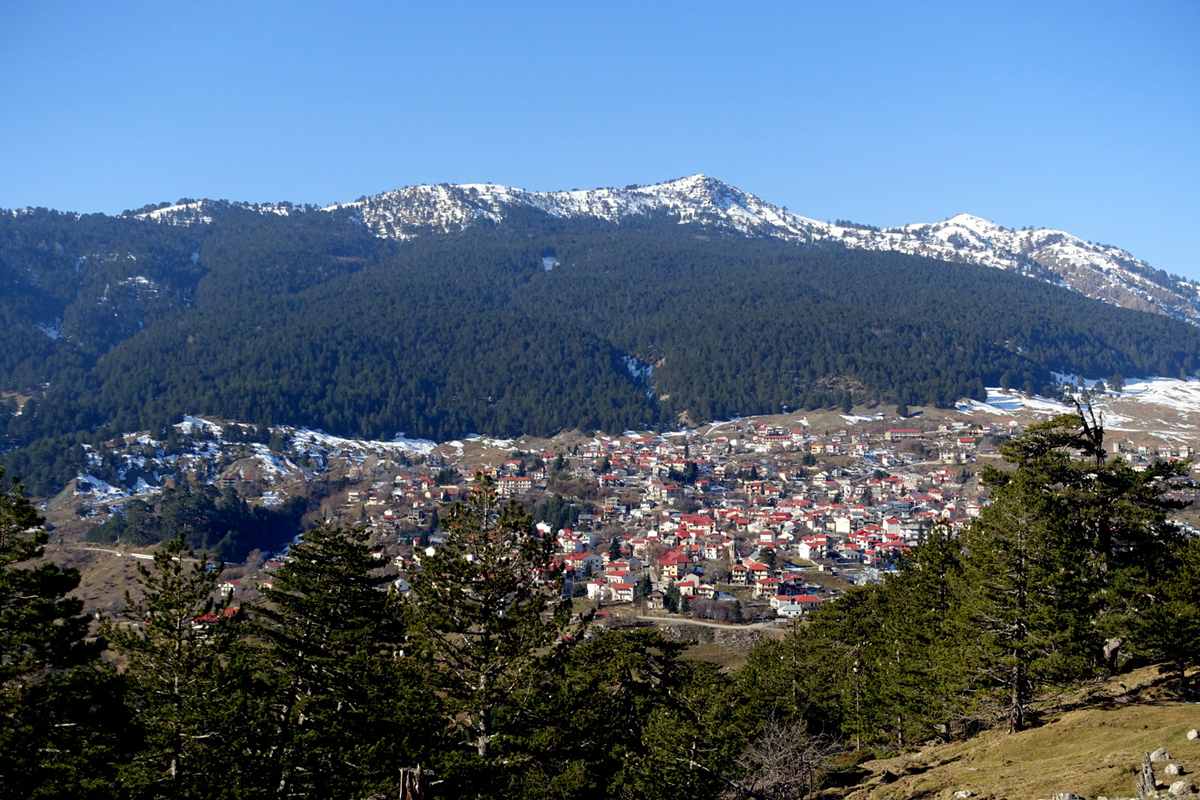
Greece weather in December runs cold in Samarina, which stands at 1420 metres in the Pindus range. Data from the Hellenic National Meteorological Service give the village a December daily mean of 0.24 °C. Its December average low is −3.31 °C.
Samarina sits on an eastern spur, or side ridge, of Mount Smolikas. Smolikas is the highest peak of the Pindus range. The village population is mainly Aromanian, a people also known as Vlachs. In earlier times, its weavers made a woollen fabric called flokati. They sold the cloth at trade fairs across the region.
Winters in Samarina are cold and wet, while summers are warm and drier. Precipitation is the general term for rain, snow and similar moisture reaching the ground. Under the Köppen climate classification, the village belongs to class Dfb. Dfb stands for a warm-summer humid continental climate. Greece weather in December brings the village 365.24 mm of precipitation.
During Greece weather in December, Samarina’s average high reaches just 2.81 °C. It averages the top temperature of each day in the month. The village also logs 78.98 hours of sunshine in December. Sunshine hours count the time when direct sun reaches the recording instrument. Samarina had 253 residents as of 2021.
- Forests: Pine and beech forests around Samarina attract visitors to this high mountain village.
- Area: The Samarina municipal unit covers an area of 97.245 square kilometres.
- Region: Administratively, Samarina belongs to Grevena regional unit, part of Western Macedonia in Greece.
Greece weather in December reaches a village with a long trading past. Samarina flourished in the late 18th century and through the 19th. Its muleteers led long caravans across the Balkans. One old map shows it under the name Santa Marina.
Why is Dionysos a cool corner of Greece weather in December?
Greece weather in December turns wintry in Dionysos, a suburb 18 km northeast of central Athens. The town spreads over the forested Penteliko Mountains, on their north-eastern side. Its weather is markedly cooler than central Athens, with frequent winter snowfall.
The Dionysos climate table draws on HNMS data. HNMS, the Hellenic National Meteorological Service, is the national weather office of Greece. Its figures for Greece weather in December give an average high of 10.86 °C. The daily mean sits at 7.52 °C. The average low drops to 3.76 °C.
Greece weather in December brings Dionysos 91.75 mm of precipitation. The month also brings 100.97 hours of sunshine. Köppen’s system files Dionysos under Csa, the hot-summer Mediterranean kind. In that class, the letter C marks mild winters and the letter s marks dry summers. The final letter a stands for hot summers.
Until 1928, the town carried the name Tzamali. That year it took the name Dionysos. The sanctuary of Dionysus of Icaria, an ancient cult site, was found again by archaeologists in 1888. Seven former municipalities merged in 2011 into today’s municipality. Its seat is the town of Agios Stefanos.
- Location: Dionysos is a northern suburb of greater Athens and a municipality of Attica.
- Neighbours: Its built-up area runs on without a break into Drosia and Rodopoli.
- Area: The municipality covers 69.360 square kilometres, and the Dionysos unit 21.410.
Greece weather in December at Dionysos is measured just 9 km west of Nea Makri. Nea Makri lies on the Aegean Sea coast. Thespis, an actor of the 6th century BC, appears among the notable people of Dionysos. The A1 motorway crosses the western part of the municipality.
What do the Astros records reveal about Greece weather in December?
Greece weather in December brings mild to cool conditions to Astros, in the east-central Peloponnese. The Hellenic National Meteorological Service ran its station there from 1974 to 2010. The station’s December daily mean is 11.8 °C.
For Greece weather in December, the Astros station puts the average high at 15.4 °C. The average low reaches 8.2 °C. Relative humidity in the month averages 74.2 per cent. Relative humidity compares the air’s water vapour with the greatest amount it can hold. In November, the average high stands at 19.0 °C.
In Astros, rain falls mainly in winter, with little in summer. Greece weather in December brings the town 79.9 mm of precipitation. That total arrives on 5.3 precipitation days on average. On a precipitation day, gauges measure at least a set minimum amount of rain or snow.
Astros falls under Csa, the hot-summer Mediterranean type of the Köppen classification. Much of the land around the town is rocky, bushy and unfit for farming. Farms and groves still occupy low-lying ground near the town. In November, the average low is 10.9 °C. The January average high at Astros is 14.0 °C.
- November: The Astros station gives a November daily mean of 14.9 °C.
- January: In January, the daily mean at the Astros station falls to 10.1 °C.
- Port: The harbour of Paralio Astros lies 4 km northeast of the inland town.
Astros, the source of these readings for Greece weather in December, stands just 40 metres above sea level. The town is the seat of North Kynouria municipality. It has an elementary school, a high school and two lyceums, or upper secondary schools.
Where does Cape Sounion fit into Greece weather in December?
Greece weather in December at Cape Sounion brings mild, wet conditions, unlike the hot, dry summer. The December daily mean there is 14.0 °C. That figure comes from the Sounio station in National Observatory of Athens monthly bulletins.
Cape Sounion is a promontory, or headland, marking the far southern point of the Attica peninsula. The cape lies between the villages of Kato Sounio and Legrena. Greece weather in December here sits within a hot semi-arid climate, class BSh in the Köppen system. Semi-arid describes a dry climate that stops short of desert.
For Greece weather in December, the Sounio station records average highs of 16.8 °C. The mean low there settles at 11.3 °C. December rain at the cape totals 110.3 mm. January rain there falls back to 58.3 mm. November rain there comes to 62.8 mm.
The Sounio national park dates from 1974, and its core zone spans 750 hectares. On a low hill about 300 m northeast of Poseidon’s temple stood a temple of Athena Souniados. Builders raised it in 470 BC. Cape Colonna, the cape’s name in 1750, saw the shipwreck of the Scottish poet William Falconer that year.
- November: November at Sounio brings a daily mean of 17.4 °C.
- January: By January, the daily mean at Sounio slips to 11.5 °C.
- January high: The January average high at the cape reaches 14.8 °C.
Greece weather in December at the cape now falls on the site of that lost Athena temple. The temple was pulled down in the 1st century AD. Parts of its columns went to Athens for the South-East temple of the Agora, the old civic square.
What happens along the Evrotas during Greece weather in December?
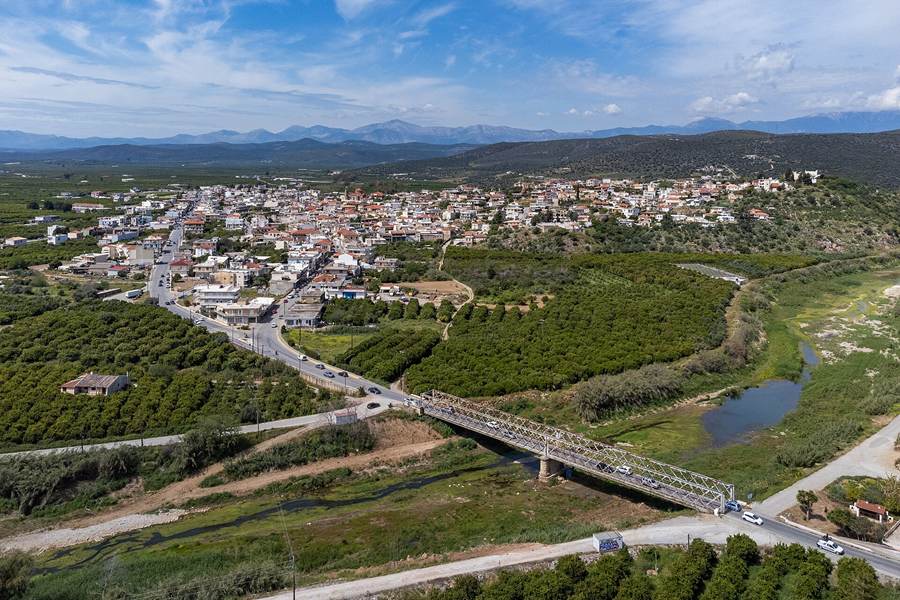
Greece weather in December along the Evrotas comes with a daily mean of 12.1 °C. That reading comes from the Hydro Meteorological station of Evrotas, a National Observatory of Athens site. The station sits 224 m above sea level.
The station’s December average high is 19.1 °C, and its average low is 5.1 °C. The warmest December reading on record there is 27.6 °C. The coldest is −2.6 °C. A record high is the single warmest reading in the station’s history for that month.
The Evrotas Valley has a sunny, warm Mediterranean climate, class Csa. Its interior sits between the Taygetus and Parnon mountains, about 30 km from the shores. For Greece weather in December, rain of 96.3 mm comes from the observatory’s Sparta station. Fans of sediment from Taygetus make the valley lopsided, earning it the name Evrotas Furrow.
During Greece weather in December and the other winter months, floods are a risk on the Evrotas. The river is intermittent, so long sections lose their surface water while groundwater keeps flowing. Its water goes mainly to citrus groves, a crop Laconia is famous for. Near the river mouth, the plain of Elos is especially fertile farmland.
- November: November at the Evrotas station averages a daily mean of 15.9 °C.
- January lows: The average January low at the Evrotas station falls to 2.8 °C.
- Record cold: The coldest January reading on record at the station is −6.5 °C.
In the Evrotas Valley, Greece weather in December follows a wet November. The Sparta station logs 98.9 mm of rain in November. In January, the same station records 101.2 mm. Both months use rain data from the National Observatory of Athens.
Which ski story does Vasilitsa add to Greece weather in December?
Greece weather in December has a winter-sports side at Vasilitsa. This ski resort sits at the heart of the Pindos range. It stands about 42 km from the town of Grevena. The resort runs five lifts and 16 ski trails.
Greece weather in December at Vasilitsa reaches a summit of 2113 m above sea level. The vertical drop measures about 450 m. That term means the height gap between the top and bottom of the slopes. The Alexander the Great lift climbs from 1800 to 2113 m. It serves two hard trails and two intermediate ones.
The quality and amount of snowfall at Vasilitsa allow off-piste routes. Off-piste means skiing away from the marked and groomed trails. Stands of black pine line the trails. Among ski places tied to Greece weather in December, Vasilitsa holds two trails approved by FIS as Olympic. FIS is the top world body that governs skiing and snowboarding.
The first lift, named Elimeia, went up in 1975. The Elimeia lift itself spans 1788 to 2060 m. Major expansions followed in 1993 and again in 2000. The Tymfaia lift runs from 1744 to 2040 m. It serves two hard-intermediate trails and one intermediate trail. Two baby lifts, small lifts for beginners, complete the set.
- Philippos lift: This lift spans 1642 to 1825 m, with two intermediate-easy trails and one very easy trail.
- Midganis lift: Running from 1810 to 2034 m, it serves a single intermediate trail.
- Location: The resort lies about 417 km from Athens, at coordinates 40.033N and 21.083E.
For Greece weather in December, the Grevena station at 510 m averages a 10.6 °C high. The mean daily low there is 2.2 °C. The station logs 87 mm of December precipitation. These figures are averages for 2019 and 2020.
How do Pisoderi and the Vigla slopes tie into Greece weather in December?
Greece weather in December reaches Pisoderi, which lies 17 km west of the town of Florina. Just 5 km away lies the Vigla ski resort. Its centre on Mount Verno runs five lifts and ten trails. The summit stands at 1939 m above sea level.
For Greece weather in December, the Florina station gives an average high of 5.9 °C. Its records cover the years 1961 to 2010. Its December average low is −1.8 °C, below freezing. Snow falls there on 5.9 days in an average December. December precipitation at Florina reaches 85.6 mm.
The Vigla resort has a total vertical drop of about 420 m. An Ottoman record of 1481 first names the village, then called Ipsoder. It had only twelve households at that time. In Ottoman times, the whole village was Aromanian. Aromanians are also known as Vlachs. In 1990s fieldwork, villagers of all ages still used the Aromanian language.
Pisoderi had just 30 inhabitants in 1981. Aromanian served as the main language between people, in public and in private. Certain elderly villagers knew little Greek. Lazaros Tsamis, a merchant and fighter in the Macedonian Struggle, came from the village. He lived from 1878 to 1933. Florina’s coldest December reading on record is −18.6 °C.
- Humidity: Relative humidity at the Florina station averages 81.7 per cent in December.
- Wet days: Greece weather in December at Florina includes 11.8 days with measurable precipitation.
- Daily mean: Florina’s December daily mean stands at 2.0 °C, just above freezing.
Greece weather in December around Pisoderi falls across the Verno range, also called Vitsi. Its highest peak rises to 2,128 m. The forested range stretches about 30 km between the villages of Trivouno and Kleisoura. Trivouno sits at its north-western end.
What does Elatochori bring to Greece weather in December?
Greece weather in December has a ski setting at Elatochori, a mountain village on the Pierian Mountains. Its ski centre spreads between 1,400 and 1,800 metres of altitude, facing south-east on that range. The village lies west of Katerini and south of Veria.
Elatochori is a village and community within the Katerini municipality. A community here is a local unit below the municipality. Before the 2011 local government reform, it belonged to the municipality of Pierioi. The 2021 census counted 447 people living in the village. Its community land spans 38.872 square kilometres in all.
At a base spot called Papá Choráfi stand a dining room and a chalet. Their combined floor area is 450 square metres, with room for over 400 people. The ski centre first ran on a trial basis in 2000. Its official opening followed in 2001. The centre hosts the work of the Ski Sports and Mountaineering Association.
Greece weather in December on the Pierian Mountains, also called Piéria, spans Imathia, Pieria and the Kozani region. Their highest point is Flampouro, at 2,193 m. The range also holds two mountaineering refuges, at 1000 m and 1680 m. Dense forests of beech, oak, chestnut and black and red pines clothe the slopes.
- Flora: Greece weather in December finds a range known for deciduous forests and rare wild flowers.
- Lower slopes: Shrubs and deciduous trees grow at the lowest levels of the range.
- Vegetation: The range carries a lush cover of rich and varied vegetation.
Greece weather in December reaches Vergina too, the site of ancient Aigai, built below these mountains. The plain of Kampania lies north of the Pierian Mountains. The range belongs to Central Macedonia. It lies close to Mount Olympus, the highest peak in Greece.
How does the Brumalia festival connect to Greece weather in December?
Greece weather in December matches the season of the Brumalia. This winter solstice festival belonged to the eastern Roman Empire. Its name comes from bruma, meaning winter solstice or winter cold. In the north, that solstice brings the year’s shortest daylight.
In Rome, a minor holiday called Bruma fell on 24 November. In Constantinople, it grew into large end-of-year festivities. The celebrations included feasting, drinking and merriment by night. Signs seen during the festival served as forecasts for the rest of the winter. Mentions of the Brumalia appear after the 4th century.
Farmers offered pigs to Saturn and Ceres. Vine-growers offered goats in honour of Bacchus, since the goat harms the vine. They filled the skins with air and jumped on them. Civic officials brought firstfruits, the first crops of the season, to the priests of Ceres. These included wine, olive oil, grain and honey.
No record of the Brumalia exists after the Fourth Crusade sacked the capital in 1204. Certain Brumalia practices lived on as November customs and as customs of Greece weather in December. At night, Romans greeted each other with Vives annos, Live for years. The festival was chthonic, meaning tied to the earth and its crops.
- Solstice date: The December solstice falls on or near 21 December, within Greece weather in December.
- Origin claim: John Malalas and John the Lydian claimed that Romulus himself introduced the festival.
- Sources: The Roman Bruma is known only from brief passing remarks, none from before imperial times.
Greece weather in December falls in the same dark stretch that the Brumalia once filled. The festival was kept at least until the 11th century. Christopher of Mytilene left a record of it. It survived the 6th-century emperor Justinian’s official repression of paganism.
Which sweets mark Saint Barbara’s day amid Greece weather in December?
Greece weather in December opens with Saint Barbara’s feast day on 4 December. In Greece, the Artillery Corps of the Greek Army celebrates her day. Artillery camps across the country offer loukoumades, a traditional sweet said to resemble cannonballs.
The Eastern Orthodox title for her, honoured during Greece weather in December, is the Great Martyr Barbara. Tradition makes her an early Christian of Phoenician origin from Heliopolis, today’s Baalbek in Lebanon. Art shows her with miniature chains and a tower. These recall the story of her father keeping her locked in a tower, away from the outside world.
Armourers, artillerymen, military engineers and miners all count her as their patroness. Her legend’s link with lightning ties her to explosives. Mathematicians also claim her as a patron saint. From the 9th century, she was widely venerated, above all in the East. Her relics were brought from Constantinople to a monastery in Kyiv in the 12th century.
The northern Greek city of Drama counts her as its patron saint. On her feast amid Greece weather in December, Drama makes and eats a sweet called varvara. Varvara looks like a runnier version of koliva. Koliva is a dish made from boiled wheat. Levant cooks make a similar wheat dish, burbara, for her day.
- Golden Legend: The Golden Legend dates her martyrdom to 4 December, in the reign of Maximianus.
- Holy Helpers: Barbara counts among the Fourteen Holy Helpers and is a popular saint.
- Cyprus: The Cypriot National Guard also marks her day with artillery celebrations.
Greece weather in December brings a feast whose story has uncertain roots. Legends of her life appear only from the 7th century. Her historicity is considered doubtful, because earlier martyrologies, or lists of martyrs, omit her. Historicity means whether a person really existed.
How cold is Greece weather in December at the Kaimaktsalan Ski Center?
Greece weather in December on Kaimaktsalan stays close to freezing by day. The Kaimaktsalan Ski Center station sits 2090 m above sea level. Its average daily high for the month is just 0.1 °C, a reading barely above zero.
A weather station is a set of instruments that record temperature, rain and wind at one spot. The daily mean blends a whole day and night into one temperature. On the Kaimaktsalan heights, the December daily mean is −2.3 °C. That reading sits below freezing, the point at which fresh water turns to ice.
The record low is the single coldest reading a station has ever logged. For Greece weather in December, the Kaimaktsalan record low stands at −16.9 °C. The record high marks the top reading on file for the same month. On the Kaimaktsalan heights, that December record high is 11.3 °C.
Precipitation covers rain, sleet, hail and snow alike, all measured as water. Greece weather in December brings the Kaimaktsalan station 88.4 mm of it on average. Across the month, 8.6 days each bring at least 1.0 mm. One millimetre equals one litre of water on every square metre of ground.
- Average low: The average December low at the Kaimaktsalan Ski Center station falls to −4.7 °C.
- Ski and springs: The Voras range holds a ski resort and the Loutra Loutrakiou hot springs on its Greek side.
- Neighbour peaks: Starkov grob rises to 1,876 m and Dobro Pole to 1,700 m beside Kaimaktsalan.
Behind these Greece weather in December figures stands the station network of the National Observatory of Athens. An observatory is a centre for scientific measurement. A ski centre is a mountain area with marked runs and lifts built for skiing in winter.
What does Greece weather in December bring to Mount Parnassus and its ski centre?
Greece weather in December on Mount Parnassus is measured at the Vathistalos doline station. That station sits 1780 m above sea level. A doline is a bowl-shaped hollow in limestone ground. Its average December high is 4.8 °C.
For Greece weather in December, the Vathistalos average across day and night sits at −0.4 °C. That daily mean lies just under freezing. A minimum is the lowest reading of a day. At this doline station, the average December minimum drops further, to −5.6 °C. Freezing means cold enough for water to set as solid ice.
Record lows mark the coldest moments in the whole history of a station. Greece weather in December at Vathistalos has a record low of −27.9 °C. No colder December value appears anywhere in the station records. On the Celsius scale, zero marks freezing and one hundred marks boiling water.
On Parnassus, Greece’s biggest ski centre is made up of two ski sections, Kelaria and Fterolakka. A ski section, or ski area, is one zone of marked runs and lifts. A run is a marked slope that skiers follow downhill. In 1981 work on a new ski area at Kelaria was completed.
- Hermes lift: In 1987–1988 the Hermes chair lift, a line of cable-hung seats, began linking both ski areas.
- Height range: The ski centre stretches from a base at 1,600 m up to 2,250 m.
- Runs: Parnassos Ski Centre counts 19 ski runs, together 36 km long.
Greece weather in December also brings Vathistalos an average of 146.6 mm of rainfall in the month. Rainfall counts only the water that comes down as rain. A millimetre of rain is a layer one thousandth of a metre deep.
How wet does Greece weather in December run in Ioannina?
Greece weather in December runs wet in Ioannina. The city station records 171.3 mm of precipitation in an average December. That total counts rain, sleet and snow, each melted and measured as a depth of water in millimetres.
The Ioannina station stands 475 m above sea level. Its December days peak at an average of 10.0 °C. The average December low there is just 1.7 °C. An average high or low is the mean of the day’s warmest or coldest reading over the years.
Greece weather in December brings precipitation to Ioannina on 15.2 days of an average month. A precipitation day is one on which measurable water falls. Relative humidity shows how close the air is to holding all the water vapour it can. At Ioannina it averages 81.5% in December.
Ioannina winters are wet, and they run colder than winters on the coast. That pattern shapes Greece weather in December there, with frequent frosts and snowfall from time to time. Frost is a thin coat of ice crystals that forms on cold ground, roofs and car windows. Snowfall is snow that drops from clouds and settles.
- Daily mean: Day and night together, the Ioannina station averages 5.9 °C across December.
- Sunshine: The Ioannina station logs 75.2 hours of bright sunshine in an average December.
- Coldest on record: The lowest temperature ever measured at Ioannina stands at −13 °C.
Greece weather in December figures for Ioannina come from the Greek National Weather Service. A national weather service is the state body that measures, records and forecasts the weather of a country. The Ioannina series behind these averages covers the years from 1956 to 2010.
Which figures sum up Greece weather in December on Salamis Island?
Greece weather in December on Salamis Island is logged at a station in Salamina. Of all Greek islands in the Saronic Gulf, Salamis is the largest. A gulf is a large sea bay. The average daily high at that station reaches 16.2 °C in December.
Taken over a full day and night, the December mean at the Salamina station is 13.2 °C. A mean daily minimum is the average of the lowest reading taken on each day of the month. For Greece weather in December on the island, that average minimum holds at 10.1 °C.
For Greece weather in December, the warmest reading on file at Salamina is 22.5 °C. That record high is the top temperature ever logged there for the month. Records give the outer limits of what a station has measured. They differ from averages, which describe a normal day in that month.
By the 13th century, and until the 19th, people called the town, the island and its bay Koulouri. The name came from the round shape of the place. Bay is the word for an inlet where the sea curves into the shore. Each century covers one hundred years in all.
- Rainfall: The Salamina station collects 50.9 mm of rain across a normal December.
- Station: The National Observatory of Athens and Harokopio University run the weather station on Salamis.
- Pine forest: A pine forest covers part of southern Salamis, an unusual sight in western Attica.
On Salamis, the lowest December reading ever kept at the Salamina station is 2.7 °C. That figure sits above freezing, when water hardens into ice. Celsius is the scale used for these Greece weather in December readings.
How does Greece weather in December shape the granite island of Mykonos?
Greece weather in December on Mykonos is measured at a station only 10 m above sea level. That station records an average December high of 16.1 °C. That high averages the warmest reading from every single day of December.
For Greece weather in December, the Mykonos daily mean is 14.3 °C. A daily mean blends the warm and cool hours of a day into one figure. At the same station, the December average low holds at 12.5 °C. A low, in weather records, is the coldest point a thermometer reaches during a day.
Greece weather in December on Mykonos has swung between wide extremes. The station’s record high for the month is 24.2 °C. Its record low for December is 2.9 °C. Such records are single readings, the warmest and coldest the Mykonos station has ever logged in that month.
Mykonos is made mostly of granite, and its ground is very rocky. Strong winds have eroded wide areas of that rock. Granite is a hard, speckled stone formed from cooled molten rock deep below the ground. Erosion means land being worn down bit by bit by wind, water or ice.
- Rain: Rain at the Mykonos station totals 55.0 mm across the month of December.
- Winter days: The average daily high on Mykonos across the winter is around 15 °C.
- Water supply: Mykonos has no rivers, but two seasonal streams have been turned into reservoirs, or water stores.
Mykonos winters are mild and wet, with plenty of sunny days even in mid-winter. Greece weather in December on the island belongs to that mild, wet season. Mid-winter is the heart of the cold season, falling around the turn of the calendar year.
Why is Greece weather in December so gentle on Gavdos?
Greece weather in December on Gavdos belongs to extremely mild winters by European standards. A standard here means the usual level found across the rest of the continent. Mild means neither very cold nor very hot for the season.
The Gavdos station stands 25 m above sea level. Greece weather in December there gives an average high of 17.9 °C. Across day and night, the December mean comes to 15.6 °C. Sea level is the mean height of the sea surface, the zero point for heights on land.
Hot winds from the Sahara Desert help keep the Gavdos climate mild. The Sahara is the vast desert of North Africa. A desert is a dry land that gets very little rain and has sparse plants. A climate is the usual pattern of weather in one place over a long span of years.
Because of the subtropical high of the Azores, rain on Gavdos falls mainly in winter. A subtropical high is a large zone of high air pressure that brings dry, settled weather. The Azores are islands in the Atlantic Ocean. In an average December, rainfall at the Gavdos station reaches 86.7 mm.
- Average low: For Greece weather in December, the Gavdos average low sits at 13.2 °C.
- Record low: The coldest December reading in the Gavdos records stands at 6.4 °C.
- Station: The Gavdos figures come from a weather station run by the municipality, the local council.
January is the coldest month on Gavdos, with an average temperature of around 14 °C. Greece weather in December on the island comes just before that low point of the year. An average temperature blends every reading of the month into one single figure.
How much precipitation does Greece weather in December bring to Theodoriana?
Greece weather in December brings Theodoriana a very large amount of precipitation. Its mountain station averages 380.6 mm in the month. Precipitation is any water that drops from clouds, such as rain, hail or snow, measured as depth.
The Theodoriana weather station stands at 962 m, a height also called its altitude. Altitude measures how far a spot rises above the sea. For Greece weather in December, the station gives an average high of 9.0 °C. The mean low there, 1.4 °C, sits a little above freezing.
Theodoriana is a village in the Arta regional unit of Epirus. Regional units are the local government areas that make up each Greek region. Two ranges, the Pindos and the Athamanian mountains, run across the north-eastern part of the area. Each range is a long line of linked peaks and ridges.
Theodorus of Athamania founded the settlement as Theodoria in 250 BC. Settlement is the general word for a place where people live, from a hamlet to a city. The letters BC mean before Christ, counting years back from the start of the Christian era. Hamlet means a tiny village of just a handful of homes.
- Daily mean: Greece weather in December gives the Theodoriana station a daily mean of 5.2 °C.
- River: The Acheloos river flows right past the village of Theodoriana itself.
- Seasonal homes: Part of the population lives in Theodoriana only in summer and leaves for the winter months.
These Greece weather in December readings come from the National Observatory of Athens, which runs the Theodoriana station. The observatory is a national research centre for weather, climate and the sky above Greece. Its network reaches into the mountains of Epirus, Theodoriana included.
What does Greece weather in December record at Mytilene on Lesbos?
Greece weather in December on Lesbos is tracked at a station in Mytilene, on the island. The average high there for December is 13.9 °C. That figure averages the top reading of every December day across decades of records.
Day and night combined, the Mytilene station has a December mean of 11.3 °C. For Greece weather in December, the average low at the same station is 8.7 °C. A mean temperature smooths the warm afternoon and the cold dawn into a single value. It describes a normal day, not an extreme one.
On Lesbos, snow is rare, and so are very low temperatures. Even so, Greece weather in December at Mytilene has a record low of −1.4 °C. That is the coldest December value in the station’s long records. A minus sign in front of a temperature shows a reading below zero on the Celsius scale.
In an average December, 138.7 mm of precipitation reaches the Mytilene rain gauge. A rain gauge is an open container that catches falling water so it can be measured. One millimetre in the gauge equals one litre on each square metre of flat ground. Meteorological means linked to the science of weather.
- Humidity: Relative humidity at the Mytilene station averages 72.0% in December, showing how damp the air is.
- Source: The national weather service, the Hellenic National Meteorological Service, holds Mytilene records from 1955 to 2010.
- Sunshine: Lesbos ranks among the sunniest islands of the Aegean Sea, thanks to exceptional sunshine.
The mean yearly rainfall on Lesbos is 750 mm. Greece weather in December on the island forms one part of that yearly cycle. A yearly mean adds up each year’s rain and divides by the number of years.
Whose feast on 22 December comes amid Greece weather in December?
Greece weather in December coincides with the feast of Saint Anastasia. The Orthodox Church honours her as a Great Martyr. A martyr is a person killed for holding to a faith. Great Martyr is a title of special honour.
Amid Greece weather in December, Eastern Orthodox believers know her as Anastasia the Pharmakolytria. The Greek title means Deliverer from Potions in English. A potion is a drink mixed for healing, for magic or for harm. Her prayers are credited with keeping the faithful safe from poison and other harmful substances.
Greece weather in December also holds the date of her death. Anastasia died as a martyr at Sirmium on 25 December 304 AD. In Roman times, Sirmium stood in the province of Pannonia Secunda, now part of Serbia. AD stands for Anno Domini, Latin for in the year of the Lord.
Relics are what remains of a holy person’s body, kept with care and honoured by believers. In the 5th century, her relics went to Constantinople, where a church already standing was dedicated to her. Later, the relics and her skull moved to her monastery in Chalkidiki, Greece, near Mount Athos. A monastery houses monks or nuns.
- Healer: A dictionary of early Church Greek also renders her title as One who Cures Wounds.
- Second title: Anastasia also carries the epithet Deliverer from Bonds, an epithet being a descriptive title.
- Parents: The Synaxarion, a book of saints’ lives, names a pagan father and a Christian mother.
The Eastern Orthodox calendar sets her feast day on 22 December, well into Greece weather in December. A feast day is the church’s yearly date for remembering one saint. A calendar here means the fixed yearly list of such church dates.
Why is Saint Spyridon linked to rain and to Greece weather in December?
Greece weather in December meets a saint long tied to rain. Saint Spyridon’s prayers, people believed, brought rain to Cyprus in times of drought. For that reason, tradition linked him with the Prophet Elijah. Drought means a long dry spell with too little rain.
Greece weather in December brings his feast in the Eastern churches on 12 December. Those churches also honour him on Cheesefare Saturday, which comes just before Great Lent. Lent, a season of fasting, leads up to Easter. On the older Julian calendar, 12 December lines up with 25 December on the modern Gregorian calendar.
Tradition places the birth of Spyridon in the village of Assia on Cyprus, around 270 AD. As a young man he worked as a shepherd. Shepherds look after flocks of sheep, leading them to pasture and guarding them. Tradition here means beliefs and stories passed on across the generations.
Spyridon later became bishop of Trimythous, an ancient city close to modern Famagusta on Cyprus. Bishops lead and oversee the Christians of a district. An ancient city is one founded in early times, long before the modern age. Greece weather in December now frames the honours paid to this bishop.
- Western date: Western Christianity marks the memory of Spyridon on 14 December instead.
- Council: Spyridon is traditionally listed among bishops at Nicaea’s First Council, held in 325 AD.
- Family: Spyridon married, and the couple had a daughter whom they named Irene.
Spyridon remained bishop of Trimythous up to his death, dated by tradition to around 348 AD. His feast keeps his memory alive each year amid Greece weather in December. A date marked around is an estimate, not an exact historical record.
What do travellers ask about Greece weather in December, and what are the answers?
A Greece weather in December comparison begins with heights. Anafi’s station stands 235 m above sea level, and the Psari Forada station only 45 m. Thrakomakedones lies in the southern foothills of Parnitha. Zakynthos honours its patron saint in the same month.
How mild is Greece weather in December at the Anafi station?
The Anafi station logs a mean December high of 15.6 °C. Its mean December low holds at 12 °C. Precipitation at the station reaches 74.8 mm in December. That total counts every drop of rain and flake of snow. A station of this kind records the weather with fixed instruments.
What does Greece weather in December bring to Psari Forada in Crete?
The seaside village of Psari Forada lies within Crete, in the Heraklion regional unit. December days there average a high of 19.5 °C. The Viannos Municipality station gives the village a hot semi-arid climate with very mild winters. Semi-arid means fairly dry, with more rain than a desert but less than a wet climate.
How does Greece weather in December treat Thrakomakedones below Parnitha?
Hellenic National Meteorological Service data give Thrakomakedones an average December high of 11.08 °C. The same records count 103.54 hours of sunshine in the month. Foothills are the low hills at the base of a mountain. Thrakomakedones lies at the northern edge of the Athens built-up area.
Alongside Greece weather in December, which Zakynthos feast falls on the 17th?
Zakynthos takes Saint Dionysios as its patron saint, honoured on 17 December and again on 24 August. In Athens he was named Archbishop of Aigina, though he humbly protested. He died at his island monastery on 17 December 1622. An archbishop is a bishop of high rank who leads a wider church area.
Featured photo: Kostas Limitsios from Athens, Greece, CC BY 2.0, via Wikimedia Commons.