
3 day Greece itinerary plans fit expert-led tours into a short stay based in Athens. The tours run through the city and out to the Attica coast and nearby islands. Topics include the Altar of the Twelve Gods, Kolonaki and the Acropolis cave sanctuaries. The Library of Pantainos, the Gennadius Library, Philothei of Athens, Sounion, Aegina and Hydra follow. Related pages cover a 5 day Greece itinerary, day trips from Athens and the Greek islands near Athens. Wider choices sit under Greece tours.
Bookings made through the GetYourGuide widgets on this page earn Classical Greece Tours a commission, at no extra cost to the traveller.
What is a 3 day Greece itinerary?
3 day Greece itinerary plans set out three days of travel in Greece, with Athens as the base. The capital stands among the leading European cities for city-break trips. A city break is a short holiday spent inside one city.
For a 3 day Greece itinerary, Athens also acts as a gateway to the islands and the mainland. A gateway is a starting point for wider trips. More than 5 million tourists arrived in the city in 2018. Of that total, 1.4 million came as city-breakers, visitors who stay only a short time.
Within a 3 day Greece itinerary, Athens stands as Europe’s only major city split by a mountain range. Mountain ranges are long lines of joined peaks. Thousands of kilometres of trails cross the city and the land around it. Walkers and cyclists use them to reach wild ground on foot or by bike.
The municipality of Athens holds 144 municipal neighbourhoods. The municipality here means the city area run by one local council. As a rule, a church, monument or square supplies each one with its name. The Athenians themselves split the downtown into neighbourhoods, each with its own history and character.
- Research centre: Athens ranks as a world centre of archaeology, which digs up and studies remains of past peoples.
- Green hills: Lycabettus, Philopappos hill, Pnyx and Ardettos hill carry pines, much like a small forest.
- Urban spread: The Athens urban area stretches over 50 km, between Agios Stefanos to the north and Varkiza.
Athens, the hub of a 3 day Greece itinerary, has gained new bars and cafés in recent years. Street art and graffiti have also spread, adding to the options beside its old sites and museums. Graffiti means words or pictures painted on public walls.
Why does the Altar of the Twelve Gods matter to a 3 day Greece itinerary?
3 day Greece itinerary plans can take in the Altar of the Twelve Gods, an old Athenian sanctuary. It rose at the northwest edge of the Classical Agora. In a Greek city, the agora served as the main square for public life.
For a 3 day Greece itinerary, the altar’s founder was Pisistratus the Younger, archon in 522/1 BC. An archon was one of the chief officials of Athens, chosen for a single year. His grandfather was the tyrant Pisistratus, and he carried the same name. Tyrant then meant a sole ruler who took control without lawful right.
Within a 3 day Greece itinerary, this altar was the zero point for distances to Athens. A milestone of about 400 BC turned up near the gate to the Acropolis. It gave forty-five stades from the harbour to the altar. The stade served the Greeks as a measure of distance.
The altar also gave refuge and was a site of supplication. Supplication is a plea for protection at a holy spot. In 519 BC, the people of Plataea travelled to Athens to seek safety from Thebes. While the Athenians sacrificed to the twelve gods, the Plataeans took seats at the altar.
- Square enclosure: The walled precinct around the altar was roughly square, about 9.5 m on each side.
- Telling base: A marble statue base naming Leagros, son of Glaukon, proved which enclosure this was.
- Under the rails: By 1992, the railway to Piraeus covered nearly nine-tenths of the altar.
Along a 3 day Greece itinerary, the altar’s ancient form ended around 267 AD, when it was dismantled. To dismantle means to take apart piece by piece. A court later backed public transport, and the altar was covered again in August 2011.
How does Kolonaki fit into a 3 day Greece itinerary?
3 day Greece itinerary plans in Athens can add Kolonaki, an upscale neighbourhood in the city centre. Its streets climb up the southern slopes of Mount Lycabettus. Upscale describes a district where wealthier people live, shop and dine out.
The name Kolonaki translates literally as Little Column. It refers to a two metre column that stands in Kolonaki Square. Squares are open paved spaces with buildings on their edges. The column defined the area even before urbanisation reached it. Urbanisation is the spread of streets and houses over open land, as a town grows.
On a 3 day Greece itinerary, Kolonaki holds museums and galleries in its streets. The Benaki Museum fills a preserved neoclassical manor house. Neoclassical buildings copy the columns and calm lines of ancient Greek temples. The National Gallery of Greece stands on Vasileos Konstantinou Avenue. An avenue is a broad city street.
From the 1920s, Bauhaus and Art Deco began to influence almost all Greek architects. Bauhaus, named after a German art school, prized simple and useful forms. Art Deco favoured bold geometric patterns and smooth lines. For a 3 day Greece itinerary, Kolonaki features a great number of buildings in these styles.
- Two districts: For city records, Kolonaki splits into Kolonaki and Kolonaki-Lykavittos, two municipal neighbourhoods.
- Two museums: Across Vasilissis Sofias Avenue lie the War Museum and the Byzantine and Christian Museum.
- Local writer: The playwright Loula Anagnostaki, who lived from 1928 to 2017, ranks among its notable people.
Across a 3 day Greece itinerary, Kolonaki, like Koukaki and Pangrati, offers a cafe and restaurant scene. Koukaki and Pangrati are two other neighbourhoods of central Athens. A cafe serves coffee and light food, while a restaurant serves full sit-down meals.
Which shrines do the Acropolis cave sanctuaries hold for a 3 day Greece itinerary?
3 day Greece itinerary plans around the Acropolis touch on its cave sanctuaries. These are natural fissures in the hill’s rock, used for worship in antiquity. A fissure is a long, narrow split that runs through solid stone.
On a 3 day Greece itinerary, three cave openings mark the northwestern slope of the rock. Ancient Athenians gave them to Pan, Zeus and Apollo. The westernmost hollow, called cave A, held no shrine. Its carved podium served as a viewing spot for the Panathenaic procession, a great parade for Athena. A podium is a raised platform.
Excavations by Kavvadias in 1896–1897 uncovered a cave system nobody had known. The easternmost cave was Pan’s. In a 3 day Greece itinerary, Pan is said to have helped the Greeks win at Marathon. He spread panic among the Persians in 490 BCE. Athens then gave thanks by setting up his worship in the city.
Further along the slope lies a terrace of 30 m by 14 m with an open-air sanctuary. Oscar Broneer excavated it in 1932 and linked it to Aphrodite and Eros. Aphrodite and Eros were the Greek deities of love and desire. Sanctuary here names a sacred spot kept for the worship of gods.
- Zeus cave: Dated to the 5th century, the Middle Cave, or cave C, is credited to Zeus Olympios or Keraunios.
- Later chapel: In the Christian period, cave D2 became a chapel of Saint Athanasius, keeping traces of wall paintings.
- Wedding goddess: Nymphe, an obscure figure among the Greek gods, protected marriage and wedding ceremonies.
Around a 3 day Greece itinerary, the Nymphe sanctuary lies south of the later Herodeion theatre. Worshippers carried water from the Kallirrhoe spring in a loutrophoros, a tall jar. The water served the bath of a bride before her wedding.
What story does the Library of Pantainos give a 3 day Greece itinerary?
3 day Greece itinerary plans in the ancient Agora can add the Library of Pantainos. This Roman-era building stood on the Agora’s southeast edge, south of the Stoa of Attalus. A stoa is a long hall fronted by columns.
On a 3 day Greece itinerary, the builder’s name is Titus Flavius Pantainos, an Athenian philosopher. He built the library between 98 and 102 AD. Philosophers study questions of truth and knowledge through careful reasoning. Its dedication honoured Athena Archegetis, the emperor Trajan and the Athenian people. Archegetis is a title meaning founder or leader.
Philosophy was studied in the library, and the Muses received worship there. Greek myth gave the Muses charge of poetry, song and learning. In 267 AD, the building fell during the Herulian incursion. An incursion is an armed raid into a territory. In the 5th century, the ruin was built into a great peristyle, a court ringed by columns.
For a 3 day Greece itinerary, the floor plan is unlike any other known Roman library. The builders faced uneven ground, and that shaped the odd layout of the rooms. A large open courtyard inside measured 20 × 13.5 m. Small irregular marble tiles set in mortar paved its floor.
- Blue columns: Ionic columns, a slender style, had grooves of blue marble on the north and west fronts.
- Library rules: A white marble plaque found in the Agora carries rules that echo those of modern libraries.
- Dig history: Digging at the building started in 1933, with first results published in 1935.
Inside a 3 day Greece itinerary, no trace survives of the shelf supports meant for the books. The walls were plain rubble stone, without fine masonry. Rubble means rough, unshaped blocks of stone. Masonry is building work in stone or brick.
Where does the Gennadius Library sit within a 3 day Greece itinerary?
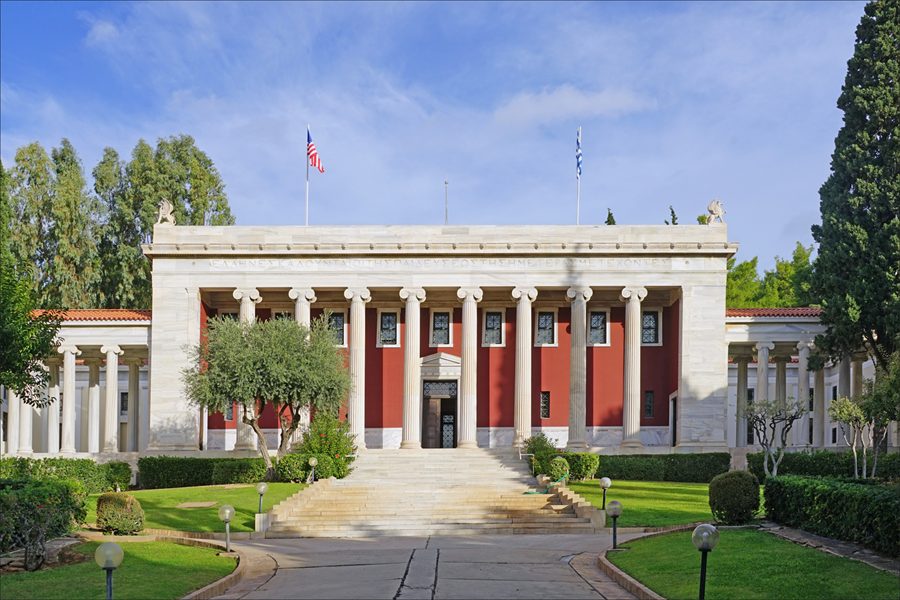
3 day Greece itinerary plans built around Athens can add the Gennadius Library, also called the Gennadeion. Its collection of over 110,000 volumes covers Greek art, history and literature across ancient and modern times. A volume is a single bound book.
Its main founder was Joannes Gennadius, a Greek diplomat and keen book collector. He lived from 1844 to 1932. A diplomat is an official who represents a country abroad. Gennadius first handed a share of his own books to the young National Library of Greece. A national library keeps the books of a whole country.
American scholars then showed interest in founding a dedicated home for the books. A neoclassical building rose to house the 26,000 volumes Gennadius gave. It follows the style of a classical temple set among gardens. Within a 3 day Greece itinerary, the library opened its doors on 23 April 1926.
On a 3 day Greece itinerary, the library’s name honours his father, George Gennadius. George lived from 1786 to 1854. Since 1999 the library has grown and been modernised. That work added an east wing, a new auditorium and air conditioning. An auditorium is a large hall where an audience sits for talks.
- Street address: The library stands on the slopes of Mount Lycabettus, at number 61 Souidias Street.
- Online papers: Part of the original collection, his scrapbooks among them, has been digitised and placed online.
- New wing: New offices and archive storage came with the east wing and auditorium in 2005.
For a 3 day Greece itinerary, the Gennadius Library ranks among the leading libraries in Greece. It belongs to the American School of Classical Studies, a research body based in the Greek capital. The Blegen Library serves as the school’s second library.
What does the Church of the Holy Apostles bring to a 3 day Greece itinerary?
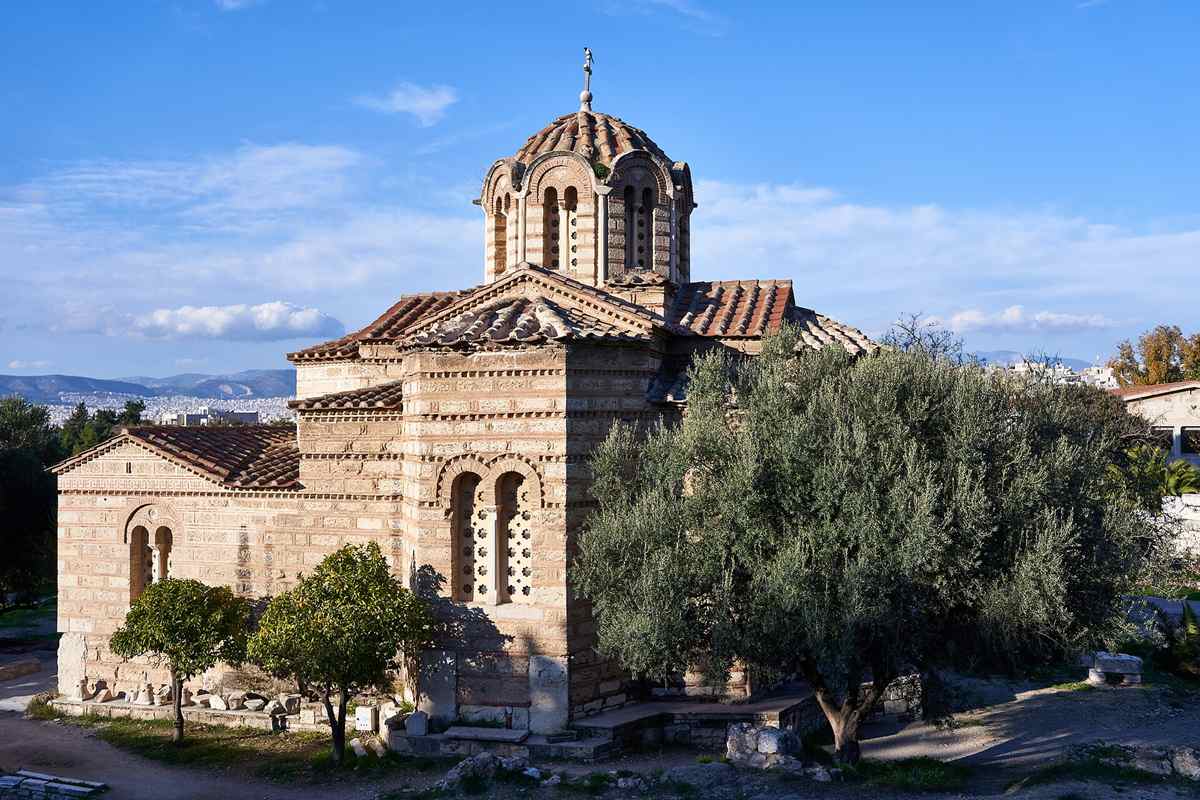
3 day Greece itinerary plans through the Ancient Agora can feature the Church of the Holy Apostles. Its other name is Holy Apostles of Solaki, and it stands beside the Stoa of Attalos. An apostle was an early follower sent to spread the Christian faith.
Inside a 3 day Greece itinerary, its building goes back to around the late 10th century. One account links the name Solakis to a family that paid for a renovation in the Ottoman period. Another ties Solaki to the crowded 19th-century quarter that surrounded the church. The Ottoman period means the centuries of Ottoman Turkish rule.
Apart from the Temple of Hephaestus, it is the only Agora monument intact since its founding. It was also the first major Athenian church of the Middle Byzantine era. The word Byzantine names the eastern half of the Roman world, ruled from Constantinople. The church marks the start of the so-called Athenian type of design.
For a 3 day Greece itinerary, the church rests partly on a 2nd-century nymphaion. A nymphaion was a fountain shrine for the nymphs, minor goddesses of nature. Four columns hold up its dome. Between 1954 and 1957, it was returned to its first form. Repairs reveal four distinct phases of building.
- Cross plan: The original plan formed a cross, with a rounded recess, or apse, on four sides.
- Wall tiles: Tiles on the outer walls carry Kufic-like patterns, after an angular Arabic script called Kufic.
- Old paintings: Wall paintings that survive along the central aisle belong to the 17th century.
During a 3 day Greece itinerary, the church holds paintings brought in from nearby churches. Its altar and floor were first made of marble, a hard, polished stone. An altar in a church is the holy table used for the main service.
How does Philothei of Athens connect with a 3 day Greece itinerary?
3 day Greece itinerary plans through Plaka touch the story of Philothei of Athens, a nun and saint. Her family’s mansion in Plaka is thought to be the oldest house in Athens. A nun is a woman living a religious life in a convent.
Philothei was born Revoula Benizelou in Athens on 21 November 1522. Her family, the Benizelos, was wealthy and well known. Her parents, Angelos Benizelos and Syrigi Palaiologina, both came from old Byzantine families. The couple had been childless until her mother gave birth after fervent prayer. She was married at 14, against her wishes.
Along a 3 day Greece itinerary, her husband’s death in 1539 left her a widow at 17. Around 1551 she took up monastic life and founded a women’s monastery under Saint Andrew’s patronage. Monastic life is a life of prayer within a religious house. The young nuns there gave lessons in handiwork, weaving, cooking and housekeeping.
Within a 3 day Greece itinerary, Philothei is remembered above all for her abundant philanthropy. Philanthropy means generous giving to help others. She founded a second, quieter monastery at Patisia. She built hospices, old people’s homes and schools for the boys and girls of Athens. A hospice is a house caring for the sick or poor.
- City patron: With Hierotheus and Dionysius the Areopagite, she counts as a patron saint, or holy protector, of Athens.
- Feast day: Believers honour her memory on 19 February, which serves as her feast day.
- District name: The Filothei district of Athens takes its name from her.
On a 3 day Greece itinerary, Philothei’s sainthood dates to the years of Ecumenical Patriarch Matthew the Second. She was declared a saint a short time after her death. The ecumenical patriarch is the senior Orthodox bishop, seated in Constantinople.
Why do the Eponymous Heroes stand out on a 3 day Greece itinerary?
3 day Greece itinerary plans in the Agora of Athens can take in the Eponymous Heroes monument. It stood beside the Metroon, the building that once served as the old council house. An eponymous hero is the figure whose name something carries.
The monument served ancient Athenians as an information centre. It worked as a public notice board. Proposed laws, decrees and announcements went up there on wooden tablets. Decrees were formal orders issued by the city’s leaders. In 424 BC, the playwright Aristophanes called it the place where lawsuits are displayed.
On a 3 day Greece itinerary, the remaining base dates from the mid-4th century BC. It runs over 16 m, with room for ten statues and two end tripods. Tripods are stands that rest on three legs. In the late 4th century BC, statues of the Macedonian kings Antigonus I and Demetrius I were added.
About 80 years later, a statue of Ptolemy III joined the group. A sculpture of Attalos I followed at a later stage. Within a 3 day Greece itinerary, a statue of Hadrian went up there in the 2nd century AD. Archaeologists unearthed the monument in 1931, and it ranked among the first major finds of the dig.
- Fence rails: The fence consisted of three wooden rails, slotted into upright posts.
- Rebuilt panels: In 1951, surviving post pieces and capping blocks helped rebuild the fence panels on the west side.
- Uneven plan: The enclosure is 12 cm wider at its north end than at its south end.
Through a 3 day Greece itinerary, the monument long carried the plain label Fenced Peribolos among researchers. A peribolos is a wall or fence that rings an enclosed space. Eugene Vanderpool gave the first detailed case for its identity in a 1949 article.
Why is Cape Sounion worth knowing for a 3 day Greece itinerary?
3 day Greece itinerary research along the Attica coast turns up Cape Sounion. This headland sits 8 kilometres to the south of Lavrio, a coastal town once called Thoricus. A headland is a raised tip of coast that pushes out into open water.
The first mention of Sounion in written literature comes in Homer’s Odyssey. This epic poem follows the hero Odysseus on his voyage home from Troy. In the poem, King Menelaus lands at the cape. There he gives his dead helmsman, the sailor who steered his ship, full funeral honours.
Herodotus, a Greek historian, records a custom at the cape. On a 3 day Greece itinerary, his account dates it to the 6th century BC. Every four years, Athens marked a festival at Sounion. The city’s leaders sailed there in a sacred boat. Sacred means holy, or set apart for the gods and their worship.
On a 3 day Greece itinerary, Sounion counts as a fortress of the Peloponnesian War. Athens and Sparta fought that long war against each other. The cape was fortified in 413 BCE, meaning it gained walls and towers. Those defences protected the cornships, vessels carrying grain to Athens. The prosperity of Sounion passed into a proverb, a well-known saying.
- Travel writing: Lady Mary Wortley Montagu described the cape in a travelogue, or journey account, in 1718.
- Byron’s visits: Lord Byron spent months in Athens in 1810-11 and made two documented visits to Sounion.
- Carved name: No direct evidence proves that Lord Byron himself cut the inscription of his name.
On a 3 day Greece itinerary, the decline of Sounion traces back to Roman times. Even in the days of Cicero, the cape had sunk into decay. That Roman statesman was also a speaker and writer. Decay here means a slow slide into ruin and neglect.
Which coast does the Athens Riviera give a 3 day Greece itinerary?
3 day Greece itinerary planning south of the capital meets the Athens Riviera. This coastal belt covers the southern suburbs of Athens. It runs from Piraeus all the way to Sounio and Lavrio. The word riviera means a shoreline dotted with resort towns.
From the 1920s, the Greek government planned to regenerate the Riviera. To regenerate means to renew and rebuild an area. Political instability, meaning frequent changes of government, kept the plan from moving ahead. On a 3 day Greece itinerary, 1957 marks the start of the development plan for this coast.
For a 3 day Greece itinerary, the Greek National Tourism Organisation sets out the main Riviera areas. This organisation is the state body in charge of tourism. Its list starts with the Bay of Zea, Aenaon Park and Elliniko. It goes on to Glyfada, Voula and Vouliagmeni, then Lagonisi, Varkiza, Anavyssos and Sounio.
Elliniko is a coastal district where the old Athens airport once operated. On a 3 day Greece itinerary, Riviera Tower stands out there as a skyscraper under construction. When complete, it will be the tallest building in Greece, at 200 metres. Work on the Ellinikon Metropolitan Park, a large public green space, began in July 2020.
- Warmth: Mean yearly temperatures on the Riviera reach up to 19.4 °C in places.
- Climate zone: The coast sits in a transition zone between a dry, semi-arid climate and that of downtown Athens.
- Anavyssos: No part of mainland Greece is drier than Anavyssos, which gets around 290 mm of yearly rain.
On a 3 day Greece itinerary, the Faliro Delta belongs to the same coast. It is being redeveloped as Aenaon Park, a major urban waterfront park. A delta is low, flat land where a river splits before it meets the sea.
How does Porto Rafti fit a 3 day Greece itinerary?
3 day Greece itinerary ideas for East Attica turn to Porto Rafti, a seaside resort town. Its official name is Limin Markopoulou. Limin is a formal Greek word for harbour. The full name therefore means the harbour of Markopoulo, a nearby town.
In the middle of the harbour entrance sits a rocky islet. On it stands a colossal statue carved from white marble. Colossal means huge, well beyond the size of a real person. On a 3 day Greece itinerary, the statue explains the modern name. People thought it resembled a tailor at work, and raftis is the Greek word for tailor.
Ancient Prasiae was a deme on this east coast, set between Potamus and Steiria. A deme was a village district of ancient Attica. Prasiae owned an excellent harbour. From there, the Theoria, or sacred procession, used to sail. Theoria means a holy embassy sent to honour the gods at a festival.
Of all the harbours on the east coast of Attica, this one ranks as the best. It is deep and capacious, meaning roomy enough for large fleets. On a 3 day Greece itinerary, the bay also counts as an old centre of trade. The port kept that role until the collapse of the Roman Empire.
- Income: Tourism and winemaking provide the main income of Porto Rafti today.
- Summer peak: Each summer, the population of the town climbs as high as 100,000.
- Statue date: The marble figure on the islet dates from the Roman period of Greek history.
A newer theory gives the name Rafti another root. It links the word with worship of the goddess Rhea across East Attica. Rhea was the mother of Zeus in Greek myth. On a 3 day Greece itinerary, the tailor and Rhea stories both explain the name.
Why do the mines of Laurion matter to a 3 day Greece itinerary?
3 day Greece itinerary plans in southern Attica meet the ancient mines of Laurion, also spelt Lavrion. They lie between Thorikos and Cape Sounion. Thorikos was an ancient town on this coast. A cape is a narrow tongue of coast running into open water.
The mines won fame above all for silver. They also yielded copper and lead. On a 3 day Greece itinerary, the deep past of Laurion shows in tests on Mycenaean objects. Mycenaean refers to the palace-based civilisation of Bronze Age Greece. Isotopic analysis, a chemical fingerprint test, traces their lead to these mines.
Systematic mining at Laurion began under the tyranny of Peisistratos. Systematic means planned and organised. A tyrant, in the Greek sense, was a sole ruler who took power outside the law. After a later slump, the mines came back to life around 370 BCE. Businessmen then rented out shafts that had stood abandoned.
The ore held only 0.1% silver, yet the deposits ranked among the richest in Attica. On a 3 day Greece itinerary, Laurion links straight to the coins of ancient Athens. Tests show that Athens minted its silver coins almost entirely from Laurion metal. To mint means to stamp metal into coins.
- Cisterns: Every ore-washing workshop had a large cistern, a big water tank, beside the washery.
- Round washeries: A small number of round washeries have been found, at the Bertseco and Demoliaki sites.
- Soureza: The Soureza workshops drew their water from streams that flowed only part of the year.
On a 3 day Greece itinerary, the modern chapter of Laurion runs into the late twentieth century. The mines kept producing silver and other metals until 1978. Work stopped once the profitable sulphide deposits ran out. Sulphide ores are minerals that join a metal with sulphur.
Which past links Psyttaleia to a 3 day Greece itinerary?
3 day Greece itinerary notes on the Saronic Gulf include Psyttaleia, an uninhabited island off Piraeus. It sits between the port of Piraeus and Kynosoura, a peninsula of Salamis. A peninsula is almost an island, joined to land on one side. Uninhabited means nobody lives there.
The Persians stationed a garrison there in 480 BC, ahead of the sea battle of Salamis. A garrison means soldiers posted to hold a place. The Greeks won the battle. The Persian fleet then pulled back towards Phaleron, and the island guard was left behind. Phaleron was the old bay of Athens.
Aristides, an Athenian strategos, or general, then landed on Psyttaleia. He put all the Persians there to death. On a 3 day Greece itinerary, the later name of the island comes from its shape. From the Middle Ages it bore the name Lipsokoutali, or half-spoon. Seen from Mount Aigaleo, it looked like one.
In modern history, the island briefly became a naval prison on the French model of the time. Political dissidents were also sent there in exile. Exile means forced removal from home, and dissidents are people who oppose the government. On a 3 day Greece itinerary, Psyttaleia today holds the largest sewage treatment plant in Europe.
- Size: The island of Psyttaleia measures only 0.375 square kilometres in total area.
- Local council: For local administration, Psyttaleia forms part of the Municipality of Piraeus.
- Lighthouse: The north-eastern part holds a lighthouse and a coast guard station for vessel traffic.
On a 3 day Greece itinerary, the island’s present role starts in November 1994. That month, the treatment plant on Psyttaleia began operating. Sewage is the dirty water that drains from homes and factories. Treatment means cleaning that water before it returns to nature.
What lies behind Aegina on a 3 day Greece itinerary?
3 day Greece itinerary choices in the Saronic Gulf bring up Aegina. Today it is famous for the temple of Aphaia. Pistachios and the shrine of St Nektarios, a goal for pilgrims, add to that fame. Pilgrims are believers who journey to a holy spot.
On a 3 day Greece itinerary, Aegina’s buildings blend a Neoclassical style with a strong folk touch. Neoclassical describes design that borrows the columns and calm order of ancient temples. Folk refers to the plain building habits of ordinary local people. Island builders raised them during the 19th century.
When Zeus carried off the maiden Aegina, he brought her to Oenone, an island lying near Attica. Zeus ruled as chief of the Olympian gods of Greece. On Oenone, Aegina gave birth to Aeacus, who later became king of the island. From then on, the island carried her name.
In 1579, Aegina gained new people: Greeks from the mainland, plus a small group of Albanians. Repopulating means bringing residents back to an emptied place. On a 3 day Greece itinerary, those Albanian settlers are linked with the village of Perdika. They made their homes there, in the south-west, and in time blended into the Greek majority.
- Plague of 1688: A plague in Attica that year drove Athenians south, and the bulk settled on Aegina.
- Orphanage: Ioannis Kapodistrias built it in 1828-29 for children left without parents by the War of Independence.
- Local name: Locals call the building The Prison, since it served as a jail from about 1880.
On a 3 day Greece itinerary, the pistachio story of Aegina turns on the year 1950. By then, pistachio cultivation had largely displaced other farming. High profits explained one part of the shift. Phylloxera, a tiny insect pest of vines, was also threatening the island vineyards.
Which seafaring past does Hydra bring to a 3 day Greece itinerary?
3 day Greece itinerary interest in the Saronic Islands extends to Hydra. Its local Arvanite name comes in two forms. The common form is Nidhra, while Nidhriza or Hydriza is rare. Arvanites are a Greek community of Albanian origin with their own language, Arvanitika.
On a 3 day Greece itinerary, two monasteries on Hydra stand out above the main harbour. Profitis Ilias, the Prophet Elijah, was founded in the 19th century. The second is Ayia Efpraxia. Both sit on the same hill overlooking the port. A monastery is a religious house for a community of monks or nuns.
Herodotus, the Greek historian, reports that Hydra belonged to the town of Ermioni around the 6th century BCE. Ermioni later sold Hydra on to Samos. Samos, in turn, ceded it to Troizina. Ceding means giving territory over to another state. Troizina, or Troezen, lay on the nearby coast of the Peloponnese.
Hydra’s first school for mariners opened in 1645. A mariner is a sailor. In the first half of the 18th century, island yards built two kinds of vessel. The sachtouri measured 15 to 20 tons, and the latinadiko measured 40 to 50 tons. On a 3 day Greece itinerary, both names belong to the island’s sailing past.
- Russian flag: After the Treaty of Küçük Kaynarca, Hydriot ships switched to flying the Russian flag.
- Plague of 1792: That year’s plague wiped out a large share of the islanders.
- Far trade: By the late 18th century, Hydriot ships traded as far as France, Spain and the Americas.
On a 3 day Greece itinerary, Hydra also stands apart for the language of its church services. The liturgy there was frequently held in local Arvanitika. Liturgy means the set form of public worship. This was a rare case among Orthodox communities of Albanian origin.
Apart from the battle, what does Marathon town mean for a 3 day Greece itinerary?
3 day Greece itinerary ideas in East Attica lead to Marathon. Today it is a popular resort town on the outskirts of Athens. It is also a centre of agriculture, which means farming. East Attica is a regional unit with its own local authority.
The name Marathon comes from fennel, a herb with a taste like aniseed. In Ancient Greek, the plant was called marathon or marathos. Marathon therefore means a place full of fennel. A herb is a plant grown for flavour, scent or medicine. On a 3 day Greece itinerary, the town’s name recalls a kitchen plant.
In ancient times, Marathon formed part of the Tetrapolis, meaning four towns. Marathon, Probalinthus, Tricorythus and Oenoe made up this group. It ranked among twelve districts of Attica before the age of Theseus. Theseus was a hero king of Athens. Locals also claimed to be the first Greeks to honour Heracles as a god.
In another legend, Theseus conquered a ferocious bull that used to ravage the plain. Ravage means to wreck. On a 3 day Greece itinerary, the Soros rises on the same coastal plain. It is a tumulus, or burial mound, for the 192 Athenians who fell at the Battle of Marathon. A stele, an upright marble slab, now marks it.
- Schinias: The beach of Schinias, south-east of the town, is a popular windsurfing spot.
- Olympic start: Both the 1896 Games and the 2004 Games began their marathon races at Marathon.
- Radio mast: The 250-metre mast at Kato Souli is the tallest structure in Greece.
Marathon stayed an Arvanite village through the 19th century and the early twentieth. On a 3 day Greece itinerary, Arvanite names a people whose forebears spoke a form of Albanian. Their own speech is called Arvanitika. Forebears means ancestors.
What do travellers ask about 3 day Greece itinerary, and what are the answers?
3 day Greece itinerary questions about the coast near Athens begin at Vouliagmeni, a seaside suburb. Just off its shore lies Fleves, a small and rocky islet. Islets are tiny islands. A suburb lies beyond the city centre but still within the urban area.
Before a 3 day Greece itinerary, what is Lake Vouliagmeni?
Lake Vouliagmeni, whose name is Greek for sunken lake, is a small body of brackish water. Brackish means slightly salty. Underground currents feed it through Mount Hymettus. Long ago the lake was a large cave, until an earthquake brought its roof down. Its waters shelter the sole population of a sea anemone, Paranemonia vouliagmeniensis.
On a 3 day Greece itinerary, which small island lies next to Hydra?
Dokos is a small island in the Argo-Saronic Gulf, right beside Hydra. A gulf is a large bay. In ancient times, it went by the name Aperopia. In 1975, Peter Throckmorton found a shipwreck near Dokos. Experts date the wreck to about 2150 BC. Such a wreck is a ship lost and sunk at sea.
For a 3 day Greece itinerary, what is the island of Spetsopoula?
Spetsopoula is an island to the south-east of Spetses, one of the Saronic Islands. In modern Greek, the name translates as small Spetses, after the larger island next door. Its ancient name was Aristera. Pausanias, a Greek traveller and geographer of the Roman era, recorded that old name. A geographer describes places on Earth.
What does a 3 day Greece itinerary note about the port town of Rafina?
The 2021 census recorded 14,620 people living in Rafina. Panagia Pantobasilissa, meaning Panagia the Queen of All, is one of its Greek Orthodox churches. Panagia, or All-Holy, is a name Greeks give the Virgin Mary. Its builders raised it in remembrance of a Byzantine church in Tirilye bearing the same name.
Featured photo: George E. Koronaios, CC BY-SA 4.0, via Wikimedia Commons.