
Birdwatching in Greece unfolds across a country of river deltas, lakes, forests and islands. Small-group trips with a host run in different parts of the country. This page covers Krüper’s nuthatch, Lake Koroneia, the cinereous vulture, the pygmy cormorant and the greater spotted eagle. It also covers the Evros Delta, Cretzschmar’s bunting and four short answers. Related pages cover national parks in Greece, Greece hiking tours and Greece family tours. Wider choices of outings sit on the Greece tours page.
Bookings made through the GetYourGuide widgets on this page earn Classical Greece Tours a commission, at no extra cost to the traveller.
What is birdwatching in Greece like?
Birdwatching in Greece draws on a rich bird fauna, the full set of bird kinds in one land. Varied topography, or land shape, and varied habitats support that richness. The Hellenic Rarities Committee of the Hellenic Ornithological Society counts 462 species for the country.
For certain species, Greece forms the southern edge of their range. For other species, the country forms the northern edge instead. Range here means the full spread of land that a species occupies. Migratory birds, which move between regions with the seasons, also visit the country. They travel between their breeding grounds and their winter quarters.
For birdwatching in Greece, the maquis holds eastern subalpine warblers and Rüppell’s warblers. Maquis is a thick shrubland of low bushes. Wetland birds find support at Ramsar sites, including the Evros Delta, Lake Kerkini and the Nestos Delta. In a delta, a river splits into channels across flat land before reaching the sea.
In the records that shape birdwatching in Greece, four species have not been recorded since 1950. Humans introduced seven others, meaning people brought them from other lands. Reports of 117 rare species must go to the Hellenic Rarities Committee. Only after that review do those reports join the official record of Greek birds.
- Habitats: These wetland sites hold freshwater marshes, lakes, brackish or slightly salty lagoons, saltmarshes and mudflats.
- Ramsar: The Ramsar Convention is a world treaty for protecting wetlands and using them with care.
- Buntings: Cirl, rock and black-headed buntings, a family of seed-eating songbirds, also live in the maquis.
Untagged species on the national list for birdwatching in Greece are regular residents, migrants or seasonal visitors. Each of these has been recorded since 1 January 1950. A resident bird stays in one region through the whole year, without migrating.
Which island links Krüper’s nuthatch to birdwatching in Greece?
Birdwatching in Greece links Krüper’s nuthatch to Lesbos, the Greek island where this bird lives. A nuthatch is a small songbird that lives in woods and forests. Among nuthatches, this species counts as small to medium-sized, measuring 12.5 centimetres in length.
The Austrian ornithologist August von Pelzeln described the species in 1863. An ornithologist is a scientist who studies birds. The name honours the German Theobald Johannes Krüper, who discovered the bird. Its closest relative is the Algerian nuthatch. These two alone carry a black half-crown. The crown is the top of a bird’s head.
Field marks for birdwatching in Greece start at the breast, where Krüper’s nuthatch carries a large rufous crescent. A field mark is a feature that helps name a bird. Rufous means reddish-brown. The face shows a black or grey eyestripe, a dark line through the eye. Above it sits a white supercilium, a pale stripe like an eyebrow.
Krüper’s nuthatch takes seeds from the cones of conifers, the cone-bearing trees such as pines. It wedges each seed into a split in the bark and hammers it open. The bird also keeps food caches, or hidden stores of food. These stores help when damp air closes the pine cones.
- Call: Its contact call sounds like “dvui” and recalls the call of the European greenfinch.
- Nest: It does not shape its nest hole entrance with mud or with resin, a sticky sap.
- Lesbos: For birdwatching in Greece, the Lesbos population is thought stable despite old trees lost to resin tapping.
Away from Lesbos, Krüper’s nuthatch counts as a vagrant in mainland Greece. A vagrant is a bird that strays far outside the range where its kind normally lives. Records from birdwatching in Greece place one at Thessaloniki in October 1955.
What does Lake Koroneia add to birdwatching in Greece?
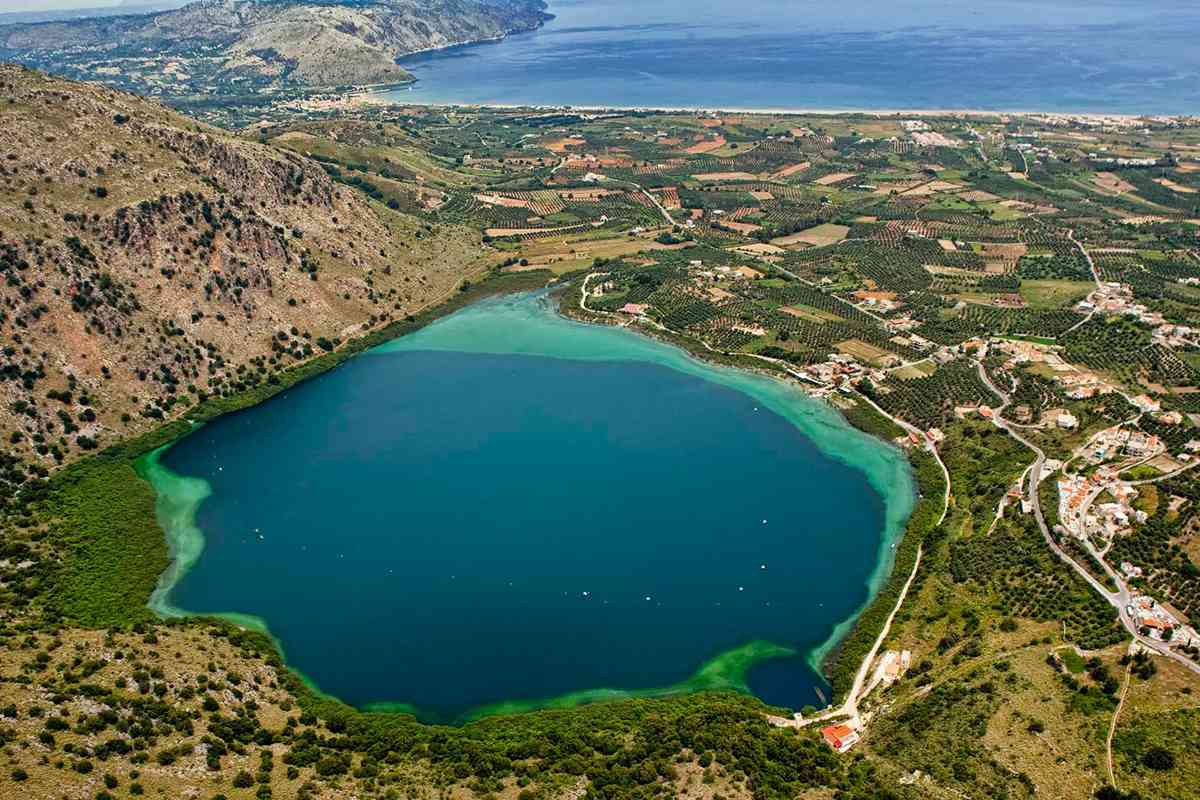
Birdwatching in Greece takes in Lake Koroneia, which sits at the heart of the Thessaloniki regional unit. The lake lies in the Mygdonian basin, a broad, low area of land. Greece divides its regions into regional units, each roughly the size of a county.
For birdwatching in Greece, Lake Koroneia carries a second name, Lake Agios Vasileios. The name comes from the village of Agios Vasileios. Agios Vasileios means Saint Basil in the Greek language. Its area has shrunk over time, and the gap between it and neighbouring Lake Volvi keeps growing.
In the 1950s, Koroneia ranked among the Greek lakes with the biggest fish production. Fish production means the amount of fish that people take from the water. In the 1970s, the lake covered 45 square kilometres and reached a depth of about five metres. Its surface has since fallen to roughly a third of that size.
Water at this site for birdwatching in Greece is now less than 1 metre deep. In the summer of 2009, people were able to cross the lake on foot. Despite its Ramsar listing, pollution and intensive farming harm the lake. Intensive farming means farming that draws very heavily on land and water.
- Court case: The European Commission took Greece before the European Court of Justice over the lake’s protection.
- Low water: In 2019, reports told of falling water levels and dead fish along the shores.
- Response: The Greek government said the ministries in charge were working on urgent measures for the lake.
For birdwatching in Greece, the lake sits roughly 14 kilometres east of the centre of Thessaloniki. The lake is shared between two municipalities, Langadas and Volvi. Each municipality elects a council that manages its own district.
How does the cinereous vulture fit into birdwatching in Greece?
Birdwatching in Greece includes the cinereous vulture, the biggest Old World vulture, at up to 12.5 kilograms. Its range reaches Greece in broken patches, as well as Turkey and the central Middle East. Old World means Europe, Asia and Africa together.
In birdwatching in Greece, the cinereous vulture also goes by black vulture, Eurasian black vulture and monk vulture. The species name monachus means monk. It points to the bald head and the ruff of neck feathers. Together they recall the hood, or cowl, of a monk. The name cinereous comes from Latin cineraceus, meaning ash-coloured.
Adults have a dark blackish-brown body and a pale head. The skin of the head and neck shows a bluish-grey tone. In flight and seen from far away, the birds can look entirely black. This vulture prefers hilly and mountainous country, above all dry, semi-open ground. Semi-open ground mixes open patches with scattered trees or shrubs.
By eating carcasses, the cinereous vulture helps to limit the spread of diseases. A carcass is the body of a dead animal. The species breeds in loose colonies. Its nests rarely share the same tree or rock formation. In a colony, birds of one kind nest close together in one area.
- Breeding: For birdwatching in Greece, very small but rising numbers of the species breed in the country.
- Greek name: Its genus, or group of close species, bears the Greek name Aegypius, meaning vulture.
- Nests: The birds tend to nest near the tree line, beyond which no trees grow.
Birdwatching in Greece features a species listed as Near Threatened. That label means the bird is close to qualifying as a threatened species. At the turn of the 21st century, experts estimated the world population. Their figure was 4,500 to 5,000 individuals.
Which traits set apart the pygmy cormorant in birdwatching in Greece?
Birdwatching in Greece links to the pygmy cormorant, a member of the cormorant family of seabirds. Greece lies in the core of its range, with Albania, Bulgaria, Romania and Turkey. The family holds medium to large coastal seabirds that eat fish, including cormorants and shags.
Its breeding range covers south-eastern Europe and the south-west of Asia. The national list for birdwatching in Greece names it Microcarbo pygmeus. Its full scientific name is Microcarbo pygmaeus. It favours pools thick with water plants, along with lakes and river deltas. By contrast, it keeps away from mountains and from cold, dry areas.
In birdwatching in Greece, the pygmy cormorant stands apart from the great cormorant and the common shag. Its much smaller size, lighter build and long tail mark the difference. It measures 64 to 78 centimetres long. Fish make up the bulk of its diet, and it hunts in groups. Between fishing trips, it perches in trees.
The pygmy cormorant makes its nests of sticks and reeds in thick vegetation, in trees, shrubs and willows. Parents feed their young on small fish and other aquatic animals. Aquatic means living in water. The bird shares the same kind of habitat with egrets, herons and spoonbills. Egrets and spoonbills are long-legged wading birds.
- Company: These birds live alone or in groups and have adapted to human presence.
- Threats: Drained wetlands, water pollution, disturbance, poaching and drowning in fishing nets all harm the species.
- Treaty: An international agreement on African-Eurasian migratory waterbirds covers the pygmy cormorant.
For birdwatching in Greece, the pygmy cormorant is part of a wider world population. Estimates put that total at 85,000 to 180,000 individuals. Between 74 and 94 per cent of all these birds live in Europe.
What story does the greater spotted eagle bring to birdwatching in Greece?
Birdwatching in Greece covers the greater spotted eagle, a big, migratory bird of prey from the Accipitridae family. Greece is among the nations that give this eagle legal protection. A bird of prey is a meat-eating bird that hunts with sharp claws.
In birdwatching in Greece, the species sits in the subfamily Aquilinae, the booted eagles, whose legs carry feathers. It once belonged to the genus Aquila but now falls in the separate genus Clanga. One proposed root for Clanga is the Greek word klangos. Aristotle used that word for a kind of eagle.
One study at the Amvrakikos Wetlands of Greece identified 95 prey items. Almost all of them were water birds. The species favours wetter habitats than the majority of other booted eagles. These include riverbanks, bogs, lakes and ponds surrounded by woodland. It breeds mainly on floodplains, the flat land beside rivers that floods at high water.
The eagle readily scavenges carrion, the flesh of dead animals. It also takes small mammals, frogs and smaller birds. The lesser spotted eagle is its nearest living relative. The two species breed together and produce hybrid young. A hybrid is the young of parents from two different species. This mixing harms numbers of the rarer greater spotted eagle.
- Status: For birdwatching in Greece, the IUCN, a world nature conservation body, rates the species vulnerable.
- Threats: Habitat loss, collisions with objects and mixing with lesser spotted eagles all threaten its numbers.
- Name: Another view traces Clanga to the Ancient Greek klange, meaning a scream.
For birdwatching in Greece, the national bird list describes Accipitridae as a family of birds of prey. That family holds eagles, hawks, harriers, kites and the Old World vultures. Its members share keen eyesight, strong legs and powerful talons.
Why does the Evros Delta matter for birdwatching in Greece?
Birdwatching in Greece counts the Evros Delta among the key habitats of Europe. The delta covers an area of 200,000 acres. Records for the delta list 320 bird species. Habitat means the kind of place where a living thing is found in nature.
The river that forms the delta is the Maritsa. Greek speakers call it the Evros, and Turkish speakers call it the Meriç. Downstream, the river divides Greece on the west bank from Turkey on the east bank. For birdwatching in Greece, the city of Alexandroupolis lies about 14.5 kilometres west of the delta.
The Ramsar Convention includes the delta among its protected areas. Part of the delta holds the status of a Special Protection Area. Such an area is set aside to protect wild birds. It is also a proposed Site of Community Interest within Natura 2000. Natura 2000 is a chain of European Union sites that protect wild species and habitats.
Besides birds for birdwatching in Greece, the delta holds more than 300 plant species. Its fauna counts 40 species of mammals and 28 species of reptiles. Here, fauna refers to every kind of animal living there. The waters hold 46 species of fish. A reptile is a cold-blooded animal with scales, such as a snake or tortoise.
- Floods: For about four months each year, the low lands around the lower river lie under water.
- Drainage: Of the whole catchment, or land draining to the river, 6.3 per cent lies in Greece.
- River use: The river carries no shipping and serves hydroelectric power and the irrigation of farmland.
For birdwatching in Greece, the Evros Delta lies at the mouth of the main river of historical Thrace. Thrace is a historical region in the south-east of Europe. At a river mouth, the river flows out into the sea.
How does Cretzschmar’s bunting belong to birdwatching in Greece?
Birdwatching in Greece knows Cretzschmar’s bunting as a breeding bird of Greece, Turkey, Cyprus and the Levant. Levant is an old name for the countries on the far eastern Mediterranean shore. The species is a passerine, or perching bird, in the bunting family Emberizidae.
The English name honours Philipp Jakob Cretzschmar, a German physician and scientist. A physician is a medical doctor. He founded the Senckenberg Natural History Museum. The genus name Emberiza comes from Embritz, an Old German word for a bunting. The species name caesia comes from the Latin caesius, which means bluish-grey.
For identification in birdwatching in Greece, Cretzschmar’s bunting is smaller than the ortolan, a close relative. In breeding dress, the male shows a grey head and orange moustaches. Moustaches here mean coloured stripes that run down from the bill. Its underparts are rusty orange, and its stout bill is pink.
The species breeds on sunny, open hillsides that carry bushes. Its range is mainly coastal or insular, meaning on islands. A clutch of four to six eggs goes into a nest on the ground. Clutch means all the eggs that one nest holds at a time. It feeds almost entirely on the ground, on small grass seeds and ants.
- Greek list: The national list for birdwatching in Greece records the bird as Emberiza caesia.
- Females: Females and young birds show a warm brown rump, or lower back, and a white eye-ring.
- Family: Buntings form a large family of passerines that eat seeds and have bills of a distinct shape.
For birdwatching in Greece, Cretzschmar’s bunting holds Least Concern status, thanks to its wide range and large numbers. Europe holds an estimated 230,000 to 451,000 mature birds. That share makes up 85 per cent of the global range. Least Concern is the lowest risk level.
What do travellers ask about birdwatching in Greece, and what are the answers?
Birdwatching in Greece rests on a national list that uses tags. The tag Ex marks a species extinct in Greece, though still alive elsewhere. The black francolin carries Ex together with B. B marks a species with no Greek record since 1 January 1950.
In birdwatching in Greece, what ties the bearded vulture to ancient Greek life?
Ancient Greeks asked ornithomancers, people who read signs in birds, about political decisions. Bearded vultures were among a small group of birds whose signs counted. Its genus name, Gypaetus, comes from Ancient Greek for eagle or vulture. It gains its orange or rust colour by dust-bathing or rubbing on mud rich in iron.
For birdwatching in Greece, what is known about Dalmatian pelican nests and food?
Artificial nesting platforms have been installed in Greece, Turkey, Bulgaria and Romania. They help breeding where natural nest sites are gone or degraded. In Greece, boating for fun, above all tourist powerboats, is tied to disrupted feeding. At Lake Mikri Prespa, food fed to chicks held 384 grams of fish on average.
On birdwatching in Greece, what is the observation post at Dadia?
At the Dadia national park, an observation post built in 1998 overlooks a feeding site for raptors. Raptors are birds of prey. The park drew about 10,000 visitors in 1995 and more than 50,000 by 2003. The area also belongs to Natura 2000 and counts as an Important Bird Area.
Before birdwatching in Greece, how does the national list describe bee-eaters, rollers and kingfishers?
On the national list, bee-eaters are colourful birds with long, downturned bills and pointed wings. From afar, those features make them look like swallows. Rollers match crows in size and build, yet their closer kin are kingfishers and bee-eaters. Kingfishers are mid-sized birds with big heads, long sharp bills, short legs and stubby tails.