
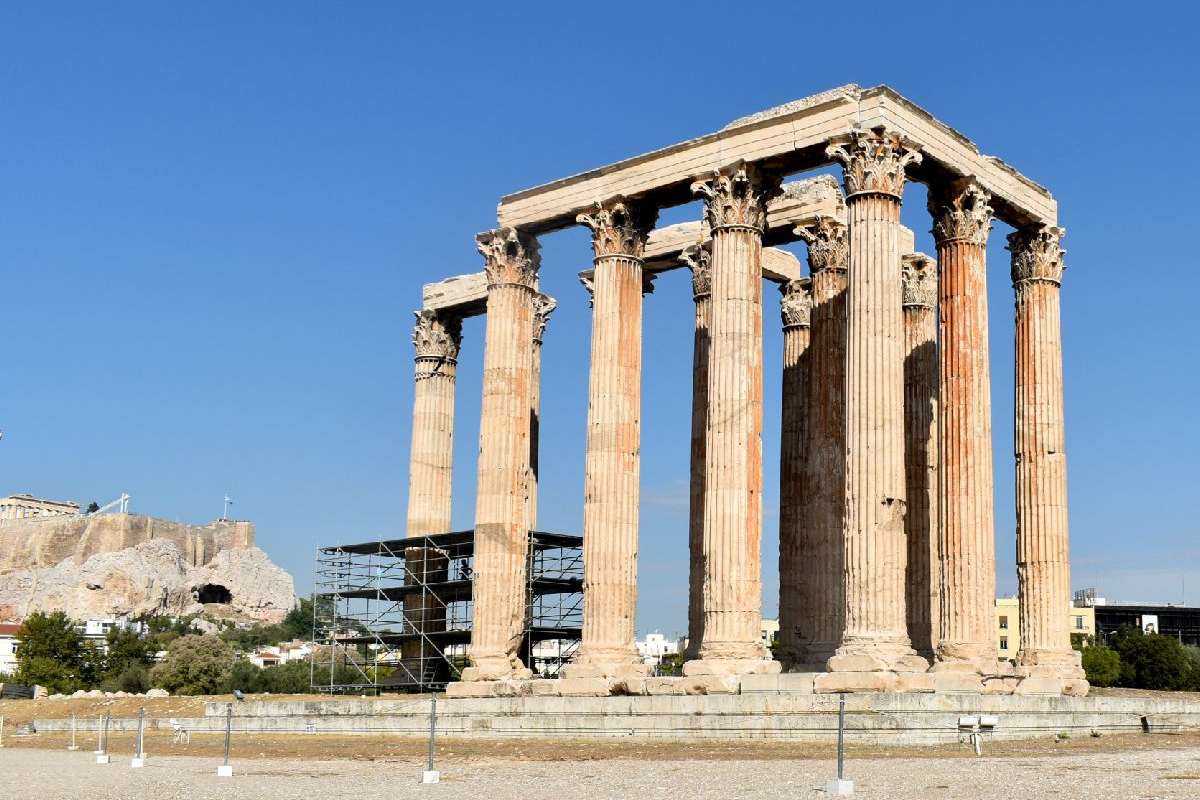
Greek mythology tours are trips across Greece shaped by the ancient myths of gods, heroes and monsters. Their cast runs from the twelve Olympians to Zeus, Hera, Poseidon, Athena, Apollo, Artemis, Demeter and Dionysus. Heroes, monsters and famous myths share the stage with them. Related stories of the gods also run through Delphi tours, Olympia tours and an Epidaurus tour. Wider choices across the whole country sit under Greece tours.
Bookings made through the GetYourGuide widgets on this page earn Classical Greece Tours a commission, at no extra cost to the traveller.
What are Greek mythology tours?
Greek mythology tours are trips through Greece shaped by the ancient stories of gods and heroes. The twelve Olympians were the major gods of the Greek pantheon. A pantheon is the whole family of gods that one ancient people worshipped.
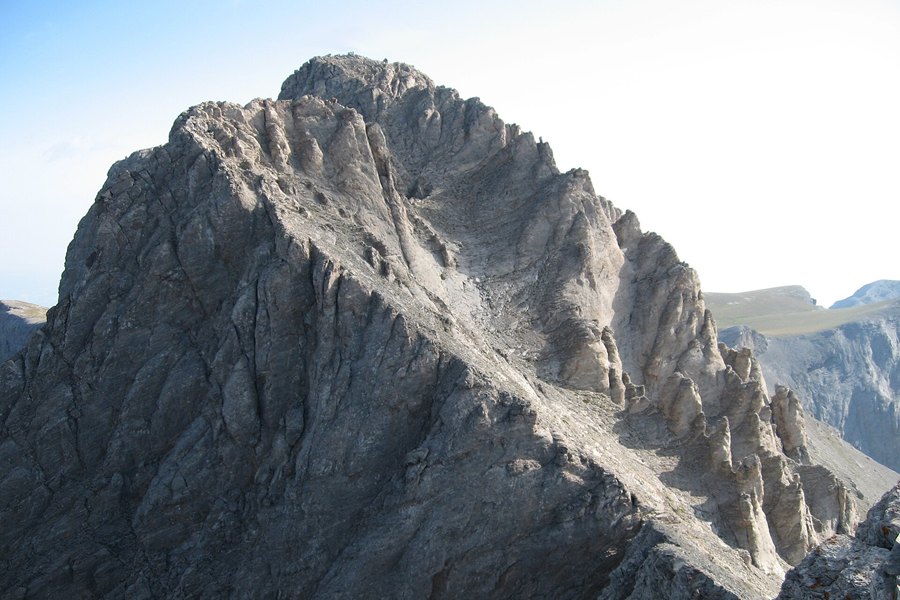
Tradition placed the home of these gods on Mount Olympus, which gave them the name Olympians. They won their power in a war among the gods that lasted ten years. Zeus led his brothers and sisters to victory in that war. The losers were the Titans, an older family of gods who had ruled before them.
Hades was a brother of Zeus, but he lived in the underworld, far from Olympus. So he was not normally counted as an Olympian. Gods below the earth, like Hades and Persephone, took offerings in a pit, not at an altar. For Greek mythology tours, an altar is a raised block where gifts to a god were placed.
Twelve-god worship first shows up late in the sixth century BC. Around 522 BC, an altar of the twelve gods was set up in the agora of Athens. In Greek mythology tours, an agora means the open market and meeting square of a Greek city. Distances from Athens were measured from that altar.
- Twelve months: Plato linked the twelve gods with the twelve months of the year.
- Heracles: The ancient writer Diodorus Siculus records a claim that Heracles turned down a seat among the twelve.
- Canonical list: No single canonical, or officially fixed, list of the twelve Olympian gods exists.
Olympus also housed other residents besides the twelve. Hesiod wrote that four children of Styx, Zelus, Nike, Kratos and Bia, always dwelt with Zeus. Their names mean Envy, Victory, Strength and Force. Within Greek mythology tours, Hesiod is an early Greek poet.
How does Zeus, king of the gods, shape Greek mythology tours?
Greek mythology tours place Zeus at the top of the family of gods. Myth made him the supreme god of the Greek pantheon. He was a sky and thunder god, ruling as king of the gods from Mount Olympus. Supreme means highest in rank.
Zeus was the child of Cronus and Rhea. Cronus swallowed each of his children at birth. A prophecy warned him that one child was destined to overthrow him. Tradition made Hera his wife, the mother of his children Ares, Eileithyia, Hebe and Hephaestus. For Greek mythology tours, a prophecy is a message about the future.
In Greek mythology tours, the thunderbolt and the eagle stand among the symbols of Zeus. Classical Greeks called him the cloud-gatherer, Nephelegereta in their language. Certain features of his image came from the ancient Near East, such as the sceptre. A sceptre is a staff held by a ruler as a sign of power.
The name Zeus goes back to Dyeus, an ancient Indo-European god of the daytime sky. Indo-European names an old family of related languages. In ancient Rome, Zeus was identified with the Roman god Jupiter. Even gods who were not his own children called him Father. All the gods rose to their feet in his presence.
- Epithets: Certain epithets, or extra names, of Zeus survive from local gods merged into his myth.
- Clear roots: His is the only Olympian name with such a clear Indo-European origin.
- Plato’s pun: Plato linked the name Zeus to Greek words for life through a pun on its titles.
Zeus was equated with foreign weather gods as well. The ancient writer Pausanias noted that all peoples shared the saying that Zeus is king in heaven. Within Greek mythology tours, a weather god is one who rules rain, wind and storms.
Which stories of Hera belong on Greek mythology tours?
Greek mythology tours meet Hera as the ancient goddess of marriage, women and family. She was also the protector of women during childbirth. In myth she reigned as queen among the twelve Olympians on Mount Olympus. Her Roman counterpart was Juno.
Art presents Hera as a dignified, matronly figure, standing upright or seated on a throne. Matronly means like a mature, respected married woman. She wears a polos or a diadem on her head. For Greek mythology tours, a polos is a tall, round crown, and a diadem is a jewelled band.
Among the animals sacred to Hera were the cow, the cuckoo and the peacock. Art sometimes shows her holding a pomegranate, a red fruit packed with seeds. That fruit served as an emblem of immortality, which means endless life. Myth also gave her a jealous and vengeful nature toward anyone who offended her.
The name Hera already appears in Linear B, an early script used for Mycenaean Greek. It was found on tablets from Pylos and Thebes. One scholar proposes that the name meant young cow. That idea fits her common epithet boopis, meaning cow-eyed. In Greek mythology tours, an epithet is a fixed descriptive title for a person or god.
- Names from Hera: Personal names such as Heracles, Heraclitus and Herodotus are built on the name of Hera.
- Roofed temple: Hera is possibly the first deity to receive an enclosed, roofed temple, at Samos about 800 BCE.
- Island worship: She was worshipped on the islands of Crete, Rhodes, Kos, Thera, Amorgos, Delos, Paros and Samos.
Hera began as a goddess of fertility in her Toneia festival at Samos. At Samos her image was hidden among willows, and worshippers tried to find it. Within Greek mythology tours, fertility means the power to produce new life and growth.
What does Poseidon, lord of the sea, add to Greek mythology tours?
Greek mythology tours find their sea god in Poseidon. He presided over the sea, storms, earthquakes and horses. He also protected seafarers and guarded Hellenic cities and colonies. Hellenic simply means Greek. A colony was a settlement founded overseas.
In Homer’s Iliad, Poseidon takes the side of the Greeks against the Trojans in the Trojan War. The Iliad is the ancient epic poem about that war. Art showed him on horseback, or in a chariot pulled by two or four horses. Sailors prayed to him for a safe voyage.
In the Odyssey, the hero Odysseus blinded the Cyclops Polyphemus, a son of Poseidon. For Greek mythology tours, the Odyssey is the ancient poem of his voyage home from Troy to Ithaca. The angry god struck back with storms. Odysseus lost his ship and a large part of his crew. His return was delayed by ten years.
Myths tell of contests between Poseidon and other gods over which one protected a city. In one such myth, Helios and Poseidon clashed, as each wanted the city for himself. In Plato’s dialogues Timaeus and Critias, the legendary island of Atlantis was his domain. In Greek mythology tours, a domain is the realm a god rules.
- Trident springs: With one strike of his trident, a three-pronged spear, Poseidon created springs of water.
- Horses and springs: In the Greek language, the words for horses and for springs are related.
- Lost partner: A feminine form of his name, po-se-de-ia, points to a lost goddess partner.
Bronze Age Greeks honoured Poseidon as a chief god at Pylos and Thebes. In that early age he was linked with animals, the bull above all. Within Greek mythology tours, the Bronze Age names the early era when bronze was the chief metal.
Where does Athena fit into Greek mythology tours?
Greek mythology tours link Athena with wisdom, warfare and handicraft. Handicraft is skilled work made by hand. She was the patron of cities across Greece, above all Athens. Her name is thought to come from that city. A patron is a protecting god.
Athena began as an Aegean palace goddess and grew closely tied to Athens. Aegean names the sea east of the Greek mainland. In Homer’s poems, her commonest epithet is Glaukopis, meaning bright-eyed or with gleaming eyes. The poet Pindar tells how she invented the aulos, a kind of flute. She gave it to humans as a gift.
Owls, olive trees, snakes and the gorgoneion rank among her major symbols. A gorgoneion is the face of a Gorgon, a monster. With Aphrodite and Hera, she was one of three goddesses whose feud led to the Trojan War. For Greek mythology tours, a feud is a long and bitter quarrel.
As patron of craft and weaving, Athena carried the title Ergane. Myth credited her with inventing the plough and the chariot. In Greek mythology tours, a plough is a farm tool that turns the soil. A chariot is a two-wheeled cart pulled by horses. She was called Polias and Poliouchos, titles drawn from polis, meaning city-state.
- Roman and Etruscan: Athena was later blended with Roman Minerva and Menrva of the Etruscans, an early Italian people.
- Hilltop temples: Her temples tended to stand on the fortified acropolis, the high citadel at the centre of a city.
- Odysseus: In the Odyssey, Athena acts as the protecting goddess of the hero Odysseus.
Since the Renaissance, Athena has served worldwide as a sign of wisdom, art and classical study. Within Greek mythology tours, the Renaissance means the European revival of ancient art and ideas. Western artists have also made her stand for freedom and democracy.
Which gifts of Apollo enrich Greek mythology tours?
Greek mythology tours recall Apollo as the ideal kouros, a beardless and athletic young man. Kouros is the Greek word for such a youth. His parents were Zeus and Leto. Artemis, goddess of the hunt, was his twin sister. An ideal is a model to aim at.
Apollo was credited with inventing string music. The lyre, a small harp, is his common attribute. In Greek mythology tours, an attribute means an object that identifies a god. Artists gave him long, uncut hair as a sign of eternal youth. Boys also kept long hair until they came of age. It was then cut and dedicated to Apollo.
Apollo was seen as a god who brings help and keeps evil away. He bore the title Alexicacus, the one who turns away evil. He freed people from epidemics, meaning fast-spreading diseases. Yet his arrows were also believed to bring ill health and deadly plague. For Greek mythology tours, plague means a killing disease.
Apollo watched over the young and cared for the health and schooling of children. He also oversaw their passage into adulthood. He was the patron of herdsmen and shepherds. He shielded their herds, flocks and crops from disease, pests and predators. Predators are animals that hunt and eat other animals.
- Bow: Writers give him a bow of silver or gold, with arrows held in a quiver, or arrow case.
- City laws: Greek cities consulted his oracles, or sacred places of prophecy, before setting down laws.
- Sun god: From the 5th century BC, Apollo was linked with Helios, the Sun in person.
Medicine and healing were linked with Apollo himself. Later writers made the word Paean into a title for him as a healing god. Within Greek mythology tours, Paean means physician or healer. His worship reached Rome in the 5th century BC.
In what ways does Artemis connect with Greek mythology tours?
Greek mythology tours know Artemis as the goddess of hunting, wild animals and wilderness. She also ruled nature, plants, childbirth and the care of children. Myth pictured her roaming forests and mountains with a band of nymphs. Nymphs were minor female spirits of nature.
Epithets tied Artemis closely to animals. Agrotera meant huntress, and Elaphebolos meant deer shooter. In Athens she was worshipped as a torchbearer under the titles Kalliste and Ariste. Those titles mean the fairest and the best. For Greek mythology tours, a torchbearer is one who carries a burning torch in worship.
Artemis was a kourotrophic goddess, a Greek term for child-nurturing. She protected children, girls above all, and the cubs of wild animals. Together with Eileithyia and Hera, she was a chief goddess of childbirth and midwifery. In Greek mythology tours, midwifery means helping women give birth. She was believed both to grant health and to send illness.
The hunter Actaeon came upon Artemis while she bathed. She turned him into a deer, and his hounds killed him. Callisto was driven from her company after breaking a vow of chastity. Callisto became a bear and then the star pattern Ursa Major. Ursa Major, or the Great Bear, is a northern group of stars.
- Virgin goddesses: Artemis was one of three major virgin goddesses, with Athena and Hestia.
- Symbols: The bow, arrow and quiver served as her symbols, and she held the deer sacred.
- Moon goddess: Later Greeks identified her with Selene, the Moon pictured as a goddess.
Artemis also guarded the passage out of boyhood and maidenhood, along with other rites of passage. Within Greek mythology tours, a rite of passage is a ceremony that marks a new stage of life. The Romans matched her with their goddess Diana.
What does the harvest goddess Demeter bring to Greek mythology tours?
Greek mythology tours name Demeter as the Olympian goddess of the harvest and agriculture. Agriculture means farming the land. She watched over crops, grain, food and the fertility of the earth. She was also known by the shorter name Deo.
Demeter was the second child of Rhea and Cronus. Like all her siblings except Zeus, she was swallowed by her father as a baby. Zeus later rescued her. Through Zeus she became the mother of Persephone, a goddess of fertility and rebirth. For Greek mythology tours, rebirth means a return to life after death.
When Hades took Persephone to the underworld, Demeter neglected her work as goddess of farming. The earth fell into a deadly famine, and nothing grew. Because Persephone had eaten underworld food, she had to divide her year between Demeter and Hades. The myth explains the seasons, since Demeter lets no plants grow while her daughter is away.
Her cult titles included Sito, meaning she of the Grain. Another title, Thesmophoros, meant giver of customs. That title was tied to the Thesmophoria, a secret festival for women only. In Greek mythology tours, mysteries are secret rites open only to initiated members. The Eleusinian Mysteries promised a happy afterlife to those initiated.
- Poppy: Her emblem was the poppy, a red flower found growing in barley fields.
- Cybele and Ceres: Demeter was linked with Cybele of Anatolia, now Turkey, and identified with the Roman Ceres.
- Wider roles: Beyond grain, she also acted as a goddess of health, birth and marriage.
The Mysteries grew from old farming cults and came before the Olympian family of gods. Their roots are thought to reach back to the Mycenaean period, around 1400 to 1200 BC. Within Greek mythology tours, Mycenaean refers to the late Bronze Age culture of mainland Greece.
Why is Dionysus, god of wine and theatre, part of Greek mythology tours?
Greek mythology tours connect wine and drama with Dionysus. He was the god of wine-making, orchards, fruit, festivity and theatre. He also ruled ritual madness and religious ecstasy. Ecstasy here means a joyful state of being carried out of oneself.
The Greeks called him Bacchus, after a frenzy called baccheia that he was said to cause. His thyrsus was a sceptre made from a fennel stem. Ivy was at times twined around it, and honey dripped from it. For Greek mythology tours, the thyrsus was both a kindly wand and a weapon against foes.
The origins of Dionysus are uncertain. Tradition traced his cult to Asia Minor, the land of modern Turkey, by way of Thrace. Yet his name also appears on Linear B tablets from Pylos. That points to a possible Mycenaean origin. He was even called the god who comes, an arriving outsider.
Wine was a religious focus of his cult and his earthly incarnation. In Greek mythology tours, an incarnation is a god taking bodily form. Wine was believed to ease pain, bring joy and stir divine madness. His festivals staged sacred dramas that acted out his myths. Those dramas gave the first push to theatre in Western culture.
- Festivals: Four festivals, the Dionysia, Lenaia, Haloa and Ascolia, were held in his honour.
- Rural Dionysia: One of the oldest festivals of Dionysus, it began in Attica, the land around Athens.
- City Dionysia: Its procession carried a wooden statue of the god, with sacrificial bulls and richly dressed choruses.
In Rome, Bacchus was identified with the Roman god Liber Pater, whose name means the free Father. Liber was the Roman patron of viniculture, wine and male fertility. Within Greek mythology tours, viniculture means the growing of grapes for making wine.
What does Heracles bring to Greek mythology tours?
Greek mythology tours cross the land of Heracles, whose Ancient Greek name means glory or fame of Hera. He was born with the name Alcaeus or Alcides. Unlike other Greek heroes, he had no tomb that anyone ever identified as his.
The poet Pindar called him heros theos, which means hero-god. At one festival, Heracles first received a libation as a hero. Libation means pouring a drink to honour a divine figure. Then he received a sacrifice upon an altar as a god. Certain city-states, called poleis, kept two sanctuaries for him, one for each role.
Greek mythology tours take place in a country where the ancient Greeks once held the Heracleia. This festival marked the death of Heracles. It fell on the second day of Metageitnion, a month in late July or early August. Near the town of Bura in Achaea, a statue of Heracles stood on the River Buraicus.
An oracle of Heracles sat in a cave near that statue. On Greek mythology tours, the word oracle names a shrine where a god answered questions. Visitors first prayed before the statue. Then they threw four dice from a mound onto a table. Marks on the dice were explained by an artwork in the cave.
- Locusts: The Oitaeans called Heracles Cornopion because he freed them from locusts, which they named cornopes.
- Voyages: Outside his set tasks, Heracles sailed with the Argonauts and sacked Troy a generation before the Trojan War.
- Looks: The philosopher Dicaearchus described Heracles as square-built and muscular, with brownish-amber eyes and long hair.
Greek mythology tours look back to a time when ancient cities took the name Heraclea in his honour. A small island near Lemnos was called Neai, from a Greek verb meaning to dive or swim. The name recalls the story that Heracles swam there.
Which roadside battles does Theseus add to Greek mythology tours?
Greek mythology tours explore the tale of Theseus, an Athenian hero. His Ancient Greek name means the placer, the instituter or one who establishes order. He united Attica, the region around Athens, under Athenian rule, called synoikismos, or dwelling together.
Theseus chose a dangerous path to Athens around the Saronic Gulf. Along that road lay six entrances to the Underworld, where Greek myth housed the dead. A fierce foe guarded each entrance. These trials are better known as the Six Labours. For Greek mythology tours, a labour here means a hard trial faced by a hero.
Greek mythology tours move through the land where a robber named Sinis held the Isthmus entrance. The word isthmus names a narrow neck of ground that links two larger lands. Sinis had the nickname Pityokamptes, meaning he who bends pine trees. He tied travellers between two bent pines, then released the trees. Theseus killed Sinis by his own method.
Further north, at Crommyon, he slew an enormous pig called the Crommyonian Sow. Near Megara, the robber Sciron forced travellers on a narrow cliff path to wash his feet. Theseus pushed Sciron off that cliff in turn. Procrustes the Stretcher kept two beds of different lengths, so no traveller ever fitted.
- Plutarch: Plutarch built his Life of Theseus to mirror the Life of Romulus, Rome’s founding story.
- Hecale: Theseus gave the name of Hecale, an old woman who sheltered him, to a district of Attica.
- Skyros: On Skyros, a man named Lycomedes threw Theseus from a cliff after the hero lost favour in Athens.
Greek mythology tours deal with a figure whose life as a real person has never been proven. Scholars suggest he lived in the Late Bronze Age, or ruled in the 8th or 9th century BC. His myths have supplied storytellers through the ages.
How does the Trojan Horse fit into Greek mythology tours?
Greek mythology tours touch on the Trojan Horse, known in Greek as doureios hippos, or wooden horse. In the Aeneid by Virgil, the Greeks built it after a failed ten-year siege of Troy. Odysseus asked for it and hid inside it himself.
Thirty top Greek warriors hid in the horse’s belly, with two spies in its mouth. Other writers gave other totals. Later tradition fixed the number at 40. The rest of the Greeks pretended to sail away. The Trojans then pulled the horse into their city as a trophy of victory.
For Greek mythology tours, the main surviving ancient source on the horse is the Aeneid of Virgil. There, a Greek named Sinon was the only volunteer to stay behind. The Trojan priest Laocoon guessed the trick. Virgil gave him the famous Latin line Timeo Danaos et dona ferentes, a warning against Greeks bearing gifts.
Within Greek mythology tours, Cassandra is the soothsayer, or teller of the future, who warned of Troy’s downfall. Nobody listened to her either. That night the hidden Greek force crept out and opened the gates. The rest of the army had sailed back under cover of darkness. The Greeks then destroyed the city and ended the war.
- Brooch: The earliest known picture of the horse sits on a Boeotian brooch, or fibula, from about 700 BC.
- Jars: Relief pithoi, or large storage jars, from the islands of Mykonos and Tinos also show the horse.
- Earthquake: Fritz Schachermeyr proposed that the horse stood for an earthquake that damaged the walls of Troy.
Beyond Greek mythology tours, a Trojan horse now means any trick that lets a foe inside. A harmful computer program that fools users into running it shares the name. The poet Quintus Smyrnaeus says the Greeks built the horse in three days under Epeius.
Which Gorgon tale does Medusa add to Greek mythology tours?
Greek mythology tours bring up Medusa, whose Ancient Greek name means guardian or protectress. She was one of three Gorgon sisters and had living snakes in place of hair. Her sisters were Stheno and Euryale. Of the three, only Medusa was mortal.
A single look at Medusa turned a person to stone. Hesiod and Apollodorus named the sea god Phorcys and his sister Ceto as the parents of the Gorgons. Hesiod and Aeschylus placed her home on Sarpedon, somewhere near Cisthene. Herodotus instead linked the Gorgons with Libya, in north Africa.
In the lore of Greek mythology tours, Perseus faced her with gifts from the gods. Athena gave him a mirrored shield, and Hermes gave sandals with gold wings. Hephaestus added a sword, and Hades lent his helm, or helmet, of invisibility. Perseus killed Medusa while looking at her reflection in the shield.
Two beings sprang from her body when she died. Pegasus was a winged horse, and Chrysaor was a giant who held a golden sword. Perseus later gave the head to Athena, who set it on her shield, the Aegis. In the vocabulary of Greek mythology tours, the Gorgoneion is her head shown as a charm against evil.
- Art: Sculptors and vase-painters of the fifth century BC began to show her as fair and terrifying.
- Poetry: In an ode from 490 BC, the poet Pindar already called her fair-cheeked Medusa.
- Coral: One tale says the corals of the Red Sea formed from her blood spilled onto seaweed.
In the classical Greek art behind Greek mythology tours, Medusa shifted from hideous beast to attractive young woman. The painter Polygnotus drew her as a comely, or good-looking, woman asleep as Perseus beheads her. No recorded tale has Medusa turning a woman to stone.
What kind of hero does Odysseus give Greek mythology tours?
Greek mythology tours recall Odysseus, a king of Ithaca in legend and the hero of Homer’s Odyssey. In Latin, his name takes the form Ulysses. His nostos, or homecoming, lasted ten eventful years, following a Trojan War that ran a decade.
Homer opens the Odyssey with the Greek word polytropos for him. Translators render it as a man of twists and turns. Greek mythology tours also know him as Odysseus the Cunning. The Greek word behind it, metis, means cunning intelligence. Homer linked his name to odussomai, a verb meaning to be angry against or to hate.
In Book 19 of the Odyssey, Euryclea asks his grandfather Autolycus to name the baby. Autolycus says he has been angered with men and women alike. He therefore names the child Odysseus. Dares the Phrygian, an ancient source for Greek mythology tours, called Odysseus tough, crafty, cheerful, eloquent and wise.
On the voyage home, the Cyclops Polyphemus captured Odysseus and his men. A Cyclops is a one-eyed giant. Odysseus told the giant that his name was Outis, which means Nobody. He made Polyphemus drunk, and the Greeks blinded him with a fiery stake. Polyphemus then cried out to the other Cyclopes that Nobody had blinded him.
- Madness: To avoid the war, he feigned madness by yoking a donkey and an ox to his plough.
- Exposed: Palamedes placed baby Telemachus before the plough, and Odysseus swerved, which exposed the trick.
- Bow: Back home, he alone strung his rigid bow and won the contest of twelve axe shafts.
Ancient Greek vases spell his name Oliseus, Olyseus or Olysseus, among other forms. Greek mythology tours follow a hero whose stories were also adopted in Etruria, in Italy. There his name appears as utuse and similar forms beside images on mirrors and urns.
What links the heel of Achilles to Greek mythology tours?
Greek mythology tours turn to Achilles, a Trojan War hero known as the greatest Greek warrior. He is the central character of Homer’s Iliad. His mother was Thetis, a Nereid or sea nymph, and his father was Peleus, king of Phthia.
His name joins two Greek words. Achos means distress, pain or grief, and laos means people or soldiers. Together they give he who has the people distressed. Linear B tablets, which carry an ancient script for Greek, already record the name as a-ki-re-u. His first name was Pyrisous, meaning saved from the fire.
On Greek mythology tours, his other titles point to real Greek places. Phthius comes from Phthia, his birthplace. Larissaeus comes from Larissa, a town of Achaia Phthiotis in Thessaly. Aemonius comes from Aemonia, a country later called Thessaly. At Epirus he was known as Aspetos, meaning inimitable or vast. Podarkes means swift-footed.
Later legends say Achilles was safe from harm in all his body except one heel. For Greek mythology tours, this idea starts with the Achilleid, an unfinished epic, or long poem, by Statius. When he was a baby, Thetis dipped him in the river Styx. She held him by one heel, which the water never touched.
- Hector: His best-known feat in the war was killing the Trojan prince Hector outside the gates of Troy.
- Death: Paris killed him with an arrow near the end of the Trojan War, though the Iliad omits it.
- Shield: Hephaestus made new armour for him, including the Shield of Achilles, described in detail in the Iliad.
In everyday English, far from Greek mythology tours, Achilles’ heel means a weak point that can bring downfall. The Achilles tendon takes its name from the same legend. In Attica, the female form Achilleia was in use as a name in the fourth century BC.
Why is Prometheus, the fire thief, part of Greek mythology tours?
Greek mythology tours look to Prometheus, a Titan, or member of an elder race of gods. He shaped and helped humanity in its earliest days. He defied the Olympian gods by stealing fire and giving it to people. His name is thought to mean forethought.
Greek mythology tours recall a trick played at Mecone, during a sacrificial meal of mortals and gods. Prometheus laid two offerings before Zeus. One was beef tucked inside an ox’s stomach. The other was bones wrapped in glistening fat. Zeus chose the bones, setting the pattern for later sacrifices. People then kept the meat for themselves.
Zeus grew angry and hid fire from humans. Prometheus stole it back inside a fennel stalk, the hollow stem of a plant. Zeus then bound him with chains. An eagle ate his immortal liver every day, and it grew back every night. Within Greek mythology tours, the eagle stands as a symbol of Zeus.
Worship of Prometheus was rare, but Athens honoured him beside Athena and Hephaestus. His altar stood in the grove of the Academy, beyond the city’s sacred boundary. A torch race for the Panathenaic festival began there. Pausanias says this relay, called the lampadedromia, was first held at Athens to honour Prometheus.
- Caucasus: One tradition places his suffering at Mount Elbrus or Mount Kazbek, in the Caucasus Mountains.
- Rescue: With the permission of Zeus, the hero Heracles killed the eagle and freed Prometheus.
- Novel: In 1818, Mary Shelley gave her novel Frankenstein the second title The Modern Prometheus.
At Athens, his festival was the Prometheia. Wreaths worn at it stood for the chains of Prometheus. Greek mythology tours also meet his brother Epimetheus, whose name means afterthought. The two names rest on pro-, meaning before, and epi-, meaning after.
Who was Oedipus, the riddle solver of Greek mythology tours?
Greek mythology tours tell of Oedipus, a mythical king of Thebes whose Greek name means swollen foot. As a tragic hero, he fulfilled a prophecy without knowing it. He killed his father and married his mother, which brought disaster to his city and family.
On Greek mythology tours, a prophecy is a prediction spoken through a god. Before his birth, an oracle warned King Laius that a son of his was fated to kill him. When Queen Jocasta bore a son, Laius had the baby’s ankles pierced and tied together. Polybus and Merope, the king and queen of Corinth, adopted him.
Near Thebes, a monster called the Sphinx stopped travellers with a riddle. Those who failed to answer were killed and eaten. The riddle asked which creature goes on four feet at dawn, two by afternoon and three at night. Oedipus answered man, who crawls as a baby, walks on two legs, then leans on a stick.
In Greek mythology tours lore, Oedipus was the first to solve the riddle correctly. Creon, brother of Jocasta, had promised the throne to anyone who freed Thebes from the Sphinx. Years later, a plague of infertility struck the city. The blind prophet Tiresias then exposed Oedipus as the killer of Laius.
- Themes: Oedipus stands for the flawed nature of humanity and the role of a person in destiny.
- Sons: His sons Eteocles and Polynices agreed to rule in turn, then killed each other in battle.
- Freud: Sigmund Freud used the legend to name the Oedipus complex, a term in psychology.
Greek mythology tours draw on Sophocles, whose three Theban plays are Oedipus Rex, Oedipus at Colonus and Antigone. After Oedipus blinded himself, his daughter Antigone led him through the country. He died at Colonus, welcomed by King Theseus of Athens.
What do travellers ask about Greek mythology tours, and what are the answers?
Greek mythology tours deal with heroes, and hero cults were a defining feature of ancient Greek religion. In the Greek of Homer, a hero meant the mortal child of a human and a god. A hero cult means worship of such a figure after death.
Before Greek mythology tours, who was the poet Homer?
Homer was an ancient Greek poet, traditionally credited with the Iliad and the Odyssey. Scholars place the poems near the end of the eighth century BC or early in the seventh. The question of who he was, called the Homeric Question, remains under debate. To Plato, Homer was the poet who had educated Greece.
For Greek mythology tours, when did hero cults begin?
The hero cult arose in the Greek Dark Ages, from about 1180 to 800 BC, say scholars. Worship centred on a heroon, or shrine, at the hero’s burial site. Hero shrines were rare and unevenly spread across Greece. The earliest written reference comes from Dracon, an Athenian lawgiver of the late seventh century BC.
During Greek mythology tours, what is a nymph?
A nymph is a lesser goddess of nature in ancient Greek folk belief. A nymph is bound to a particular place, landform or tree. Dryads are oak tree nymphs, Naiads are spring nymphs and Oreads are mountain nymphs. In Modern Greek, the word nymphe is still the everyday term for bride.
Within Greek mythology tours, what is a satyr?
A satyr is a male nature spirit with a horse’s ears and tail. Satyrs were companions of the god Dionysus. They loved wine, music and dancing, and lived in woodlands, mountains and pastures. The satyr Silenus was tutor to the young Dionysus. The Romans identified satyrs with fauns, their own nature spirits.