
Greek mythological creatures give trips through Greece a cast of monsters tied to real places. Those places run from Crete and the Argolid to Corinth, Arcadia, Boeotia and the Mani. Topics include Echidna and Typhon, the Minotaur of Knossos, Cerberus at Tainaron and the Lernaean Hydra. Pegasus, the Stymphalian birds, the Calydonian boar and the Sphinx follow, then centaurs, sirens, harpies and nymphs. Related pages cover the Greek gods, Greek mythology tours and Greek mythology places. Other trips sit under Greece tours.
Bookings made through the GetYourGuide widgets on this page earn Classical Greece Tours a commission, at no extra cost to the traveller.
What are Greek mythological creatures?
Greek mythological creatures are the monsters and part-animal beings of ancient Greek stories. The centaurs and similar beings count as archaic survivals. The term means remnants of mythologies older than the classical tales. Echidna, mate of Typhon, mothered the best-known monsters of Greek myth.
Among Greek mythological creatures, Typhon carried one hundred snake heads on his shoulders in the account of Hesiod. He fought Zeus for rule of the cosmos, and Zeus won with his thunderbolts. Apollodorus says Argus Panoptes killed Echidna in her sleep. This giant had a hundred eyes and served the goddess Hera.
Pausanias identified Echidna and Typhon on the throne of Apollo at Amyclae, a sixth-century BC temple complex. Among Greek mythological creatures, Echidna left no certain ancient picture. A mountain near Thebes bears the name Typhaonium in the Hesiodic Shield of Heracles. Hesiodic means linked with the poet Hesiod. One tradition buried Typhon beneath a Boeotian mountain that breathed fire.
Greeks credited the cycle of twelve labours to Peisander, a poet of the seventh or sixth century BC. The cycle is known as the Dodekathlos. Six labours were set in the Peloponnese, ending at Olympia. Ruck and Staples call the other six places entrances to the Netherworld, the land of the dead.
- Master: Heracles served Eurystheus, king of Mycenae, who set him each of the labours.
- Pattern: Each labour sent Heracles to kill, subdue or fetch back an animal or plant with special powers.
- Sculpture: Carved panels called metopes, from the 460s BC, show the labours at the Olympia temple of Zeus.
Greek mythological creatures appear throughout the order of labours that Apollodorus gives. Heracles had to capture the Ceryneian Hind, the Erymanthian Boar and the Cretan Bull. A hind is a female deer. The last labour was capturing Cerberus and bringing him back.
How does the Minotaur of Knossos fit among Greek mythological creatures?
Greek mythological creatures include the Minotaur, whose name joins Minos with tauros, the Greek word for bull. The name therefore translates as the Bull of Minos. His Labyrinth stood near the royal palace of Minos at Knossos, on Crete.
In the lore of Greek mythological creatures, Minos prayed to Poseidon for a snow-white bull. Because of its beauty, Minos kept the bull instead of sacrificing it. Daedalus, a master craftsman, made a hollow wooden cow for Pasiphae, wife of Minos. On advice from the oracle at Delphi, Minos then had Daedalus build a gigantic Labyrinth.
Theseus, a prince of Athens, offered to kill the Minotaur as the third sacrifice drew near. In tales of Greek mythological creatures, Ariadne, the daughter of Minos, handed him a ball of thread. The thread let him retrace his path through the Labyrinth. It was an elaborate maze-like building designed by Daedalus.
The ruins of the palace at Knossos have been found, but the Labyrinth never was. Archaeologists once linked the myth to the palace, with its more than 1300 maze-like rooms. That idea is now discredited. Fifth-century coins struck at Knossos ringed a star or a bull’s head with labyrinth patterns.
- Art: Later versions reversed the Classical form, setting a human head and upper body on a bull.
- Ovid: Ovid’s Latin account left unclear which part of the Minotaur was bull and which was man.
- Fleet: Pausanias says Minos led a fleet against Athens and harassed it until it sent children.
Like other Greek mythological creatures, the Minotaur comes with rival versions of his tale. Theseus killed him with a sword, a club or his bare hands, depending on the source. Homer tells of a dancing ground Daedalus built for Ariadne, without calling it a labyrinth.
Which gates did Cerberus guard among Greek mythological creatures?
Greek mythological creatures include Cerberus, the hound of Hades, who guarded the gates of the underworld. His task was to stop the dead from leaving. Hesiod’s Theogony, the earliest description, gives Cerberus fifty heads. The poet Pindar later gave him one hundred heads.
The first three-headed Cerberus appears on a cup from Laconia, made in the mid-sixth century BC. In tales of Greek mythological creatures, Euphorion gave the hound eyes that flashed fire. Ovid says Heracles dragged him up with chains of adamant. Adamant was a legendary metal thought to be unbreakable.
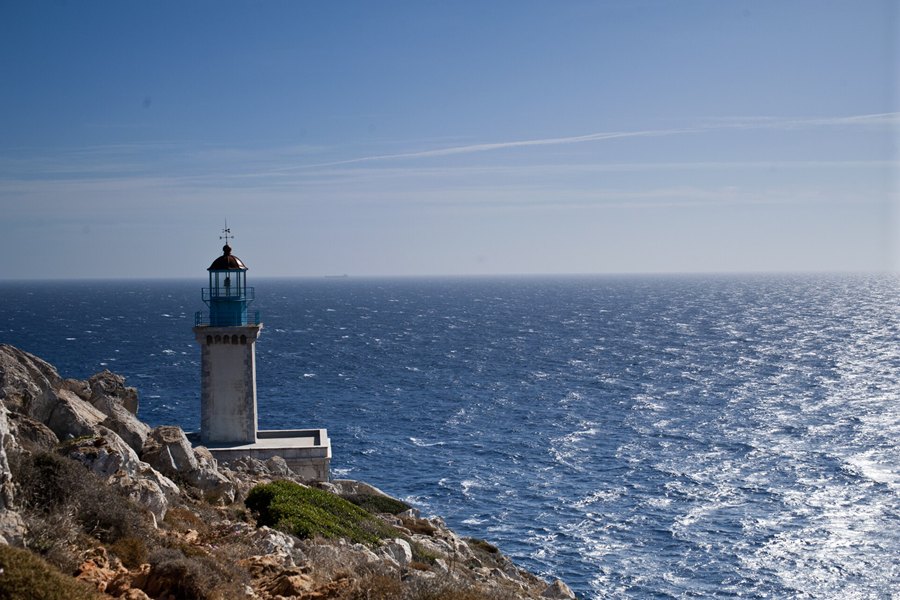
Before his descent, Heracles was initiated into the Mysteries, the secret rites of Eleusis. Apollodorus says Heracles went to Eumolpus at Eleusis for it. The majority of accounts send Heracles down to the underworld at Tainaron. In stories of Greek mythological creatures, Tainaron was the best-known Greek entrance to the underworld.
Apollodorus has Heracles come back up at Troezen instead. A temple at Troezen held altars for gods believed to rule beneath the earth. A legend of Hermione says Cerberus rose through a chasm beside the sanctuary of Chthonia. The Boeotians named Mount Laphystion as the place where Heracles brought him up.
- Name: Servius derived the name from the Greek creoboros, meaning flesh-devouring.
- Prisoners: In the underworld, Heracles found Theseus and Pirithous held prisoner by Hades.
- Relief: A shield-band relief from Olympia, about 560 BC, first shows the pair in this story.
In accounts of Greek mythological creatures, Hecataeus of Miletus first tied Tainaron to the Cerberus story. His account was rationalised, meaning it explained the old myth in everyday terms. Thesprotia and Emeia, near Mycenae, were possibly also linked with the hound’s return.
Why is Lerna the home of the Hydra among Greek mythological creatures?
Greek mythological creatures include the Lernaean Hydra, a serpent-like lake monster. The monster lived in the lake of Lerna, in the Argolid. Lerna was said to be an entrance to the Underworld. Archaeology dates its sacred site to before Mycenaean Argos.
Among Greek mythological creatures, the oldest Hydra images are on bronze fibulae of about 700 BC. Fibulae are ancient brooches used to pin clothes. Those pins show a six-headed Hydra. Alcaeus, writing about 600 BC, first fixed its heads at nine. Simonides, a century later, raised the number to fifty.
Heracles held a cloth over his nose and mouth against the poisonous fumes. He shot flaming arrows into the lair, the spring of Amymone. The spring was a deep cave, and the Hydra left it to terrorise nearby villages. In tales of Greek mythological creatures, Hera set a giant crab on him as a distraction.
Heracles set the still-living head beneath a huge rock on the holy road from Lerna to Elaius. Ancient Greeks used the saying cutting off a hydra for hopeless, endless tasks. Strabo and Pausanias blamed the stench of the river Anigrus in Elis on the Hydra’s poison. The smell made the river’s fish inedible, meaning unfit to eat.
- Parents: Hesiod named Typhon and Echidna as the parents of the Hydra.
- Helper: Heracles needed his nephew Iolaus to help him cut off the heads and burn the necks.
- Sky: Hera placed the Hydra and the crab in the night sky as constellations.
In later stories of Greek mythological creatures, the Hydra regrew lost heads. Euripides first mentions this power, with a pair of heads growing back for each one cut. Heracles also soaked his arrow tips in the venomous blood of the Hydra.
Which springs tie Pegasus to Greek mythological creatures?
Greek mythological creatures include Pegasus, the winged horse of myth, whose common image is a white stallion. The Hippocrene, whose name means horse spring, lies on Mount Helicon, the mountain of the Muses. Another spring linked with Pegasus was at Troezen.
In tales of Greek mythological creatures, Antoninus Liberalis says Poseidon had the Hippocrene opened. The god wanted to stop Helicon from swelling with joy at the singing of the Muses. Because of this link with springs, the Muses were also called the Pegasides. The name Pegasides comes from Pegasus.
Polyeidos told the hero Bellerophon to spend the night in Athena’s temple. In the night the goddess came to him with a golden bridle. A bridle is the set of straps used to steer a horse by the head. Next morning Bellerophon came upon Pegasus drinking at the Pierian spring and tamed him.
Hubbard links the golden bridle to a Corinthian cult of Athena. A cult here means a local form of worship. Among Greek mythological creatures, Pegasus appeared on early Corinthian coins as a civic symbol. A civic symbol is an emblem that stands for a whole city. Pegasus also carried Bellerophon into battle against the Chimera.
- Fall: Bellerophon fell from the back of Pegasus while trying to reach Mount Olympus.
- Thunder: On Olympus, Pegasus had the job of bearing the thunderbolts of Zeus.
- Stars: For his faithful service, Zeus later turned Pegasus into a constellation.
Among Greek mythological creatures, Pegasus has a disputed name. One proposal traces it to pihassas, a word for lightning in the ancient Luwian language. The idea was first suggested in 1952. Robin Lane Fox criticised it in 2009 as implausible, meaning hard to believe.
What made the Stymphalian birds feared among Greek mythological creatures?
Greek mythological creatures include the Stymphalian birds, a group of voracious birds from Greek myth. Voracious means hungry for huge amounts of food. They ate people, had beaks of bronze and left poisonous dung. They also launched sharp metallic feathers at their victims.
Their beaks pierced all bronze or iron armour that men wore. A garment of thick cork caught the beaks fast. Small birds stick to bird-lime in the same way. Bird-lime is a sticky paste spread on branches to trap birds. In tales of Greek mythological creatures, they were pets of Artemis or raised by Ares.
In Arcadia these Greek mythological creatures bred quickly. They destroyed crops, fruit trees and townspeople. Heracles was unable to enter the marsh, since the ground was unable to bear his weight. Athena gave him a rattle called a crotalum, made by Hephaestus for the occasion. A crotalum works like castanets, a pair of clappers shaken by hand.
Heracles shook the rattle on a mountain above the lake. The noise scared the birds up into the air. He shot them with arrows dipped in the venom-filled blood of the Hydra he had slain. Heracles carried a number of the dead birds to Eurystheus as proof of success.
- Discount: Other versions of the labours discounted this task, because Athena helped with bronze rattles.
- Survivors: The birds that lived flew far away and never troubled Arcadia again.
- Poem: Apollonius Rhodius gave the birds an epithet, or descriptive name, in his Argonautica.
Sophocles mentions these Greek mythological creatures in Philoctetes, a tragedy of the fifth century BC. A tragedy is a grave drama that ends in sorrow. Pausanias also covers the birds in his Description of Greece. That work is a travel account from the second century AD.
Who hunted the Calydonian boar, one of the Greek mythological creatures of Aetolia?
Greek mythological creatures include the Calydonian boar, also called the Aetolian boar. It is one of a group of monsters in Greek myth named for a specific place. Artemis sent it to lay waste to the lands of Calydon in Aetolia.
Calydon was a city of west-central Greece, lying north of the Gulf of Patras. Its king, Oeneus, had a name meaning wine man. One year he forgot to include Artemis in his harvest offerings. Ovid says the boar then destroyed vineyards and crops. People took refuge inside their city walls.
Oeneus promised the boar’s hide and tusks as the prize for the best hunters. In the lore of Greek mythological creatures, the hunt came in the generation before the Trojan War. Men led by Kepheus and Ankaios first refused to hunt beside a woman. That woman was the huntress Atalanta, who first wounded the boar with an arrow.
Among Greek mythological creatures, Strabo makes the boar the offspring of the Crommyonian Sow. Theseus overcame that sow, a monstrous female pig. Heracles did not join the Calydonian hunt. He beat his own Erymanthian boar on a separate occasion. When Pausanias saw the hide at Tegea, age had rotted it and its bristles were gone.
- Argonauts: The voyage of the Argonauts came before the Calydonian hunt, in the same generation.
- Sources: Only scraps of papyrus from Oxyrhynchus remain of the version told by Stesichorus.
- Praise: Bacchylides has Meleager call the hunters the best of the Hellenes, or Greeks.
In this tale of Greek mythological creatures, the hunters turned on one another over the spoils. Peleus killed his host Eurytion by accident during the chase. Spoils are prizes won in a victory. Meleager killed the sons of Thestius when they took the skin from Atalanta.
Why does the Sphinx of Thebes stand apart among Greek mythological creatures?
Greek mythological creatures include the Sphinx, who had a woman’s head, a lion’s haunches and a bird’s wings. Greek mythology knew a single sphinx, a demon of destruction and bad luck. Haunches are the hips and upper legs of an animal.
Hesiod made the Sphinx a daughter of Orthrus. Apollodorus and Lasus instead called her a daughter of Echidna and Typhon. In late lore of Greek mythological creatures, Hera or Ares sent her from her Aethiopian homeland to Thebes. The Greeks always remembered that the Sphinx came from a foreign land.
In accounts of Greek mythological creatures, early tellers did not give the exact riddle the Sphinx asked. She strangled and devoured anyone who failed to answer. Lesser accounts add a second riddle about two sisters, each giving birth to the other. Its answer is day and night. Both words are feminine in Ancient Greek.
Once beaten, the Sphinx leapt to her death from her high rock. In other versions, Oedipus killed her. The ancient city-state of Chios took the sphinx as its emblem. Such a city-state governed itself and the land around it. Its image marked Chian seals and coins between the 6th century BC and the 3rd century AD.
- Egypt: Egyptian sphinxes had no wings, unlike the Greek and Near Eastern ones.
- Guardians: Greek and Egyptian sphinxes were seen as guardians, and their statues flank temple entrances.
- Word: In English, the plural of the word sphinx is either sphinxes or sphinges.
The best-known riddle among Greek mythological creatures came from the Sphinx at Thebes. She asked which creature has one voice but walks on four feet, then two, then three. Oedipus gave the answer: man, who crawls, then walks, then leans on a stick.
How do the Centaurs of Mount Pelion rank among Greek mythological creatures?
Greek mythological creatures include the centaurs, each one a human from the waist up and a horse below. The Greek word centaur names this kind of mixed human and horse body. A creature built from parts of different animals is called a hybrid.
Myth placed the centaur homeland in Magnesia and on Mount Pelion, in Thessaly. These Greek mythological creatures also had other homes in the myths. One was the Foloi oak forest in Elis. The other was the Malean peninsula in southern Laconia. The word peninsula comes from Latin for almost an island.
Greek writers named Ixion and Nephele as the parents of the centaurs. Their mother Nephele was a cloud given the look of Hera, a goddess of Greek myth. The cloud formed part of a plot against Ixion. It was meant to expose his lust for Hera before Zeus. Lust is a strong and improper desire for someone.
Another version of the story gives these Greek mythological creatures a different father, called Centaurus. Centaurus was a deformed man. A deformed body is one with a twisted or badly formed shape. In this version, he mated with the Magnesian mares. A mare is a female horse. Magnesian means belonging to Magnesia.
- Horse breeds: The tribes of Thessaly said their own breeds of horse came down from the centaurs.
- Mosaic: A Macedonian mosaic of the 4th century BC is among the earliest images of a female centaur.
- Family name: The centaurs as a group bore the name Ixionidae, which means the sons of Ixion.
The Lapiths were a tribe of Thessaly, counted in myth as kinsmen of the centaurs. A kinsman is a relative by blood. Greek writers named the Lapiths, kin to these Greek mythological creatures, as the inventors of horse-riding. Horse-riding means sitting on a horse and steering it.
What song do the Sirens add to Greek mythological creatures?
Greek mythological creatures include the sirens, female beings with a human look and voices that drew listeners close. They appear in a scene of the Odyssey, the epic poem of Homer. An epic tells the deeds of heroes in long verse.
By the 7th century BC, Greek art regularly showed sirens as birds with human heads. Artists also showed these Greek mythological creatures making music. Their instruments were chiefly the lyre, the kithara and the aulos. A kithara is a large lyre, and an aulos is a reed pipe. A lyre is a small harp.
An earthenware bowl found in Athens shows sirens in the form of mermaids. The bowl belongs to the 3rd century BC. A mermaid is a woman with the tail of a fish. Earthenware is low-fired clay pottery. Funerary statues of these Greek mythological creatures are known in mainland Greece since the classical era. Funerary means linked to burial.
A sanctuary of Hera stood at Coroneia, and it held a statue of the goddess holding the sirens. The sanctuary was holy ground where Hera received worship. Pythodorus of Thebes made the statue. In one myth, Hera urged the sirens to face the Muses in a singing contest. The Muses were goddesses of song and poetry.
- Calydon: One named mother of the sirens is Sterope, a daughter of King Porthaon of Calydon.
- Number: In the Odyssey, Homer says nothing of their names and counts only two sirens.
- Underworld: The sirens were called the Muses of the lower world, the land of the dead.
In one tale, the goddess Demeter gave the sirens their wings. With them these Greek mythological creatures were to search for Persephone, abducted by Hades. To abduct a person is to carry them off by force. Hades was the god of the underworld.
Which islands and caves house the Harpies among Greek mythological creatures?
Greek mythological creatures include the harpies, and ancient writers gave them more than one home. They named the Strofades islands, the entrance of Orcus, or a cave in Crete. In Roman myth, Orcus is the dark world below, home of the dead.
Hesiod, an early Greek poet, called these Greek mythological creatures daughters of Thaumas and the Oceanid Electra. An Oceanid is a sea nymph, a child of the Titan Oceanus. The same poet made them sisters of Iris, the rainbow goddess. Later, the Roman poet Virgil added a third harpy, Celaeno. Her name means the dark.
These Greek mythological creatures carried evildoers to the Erinyes, above all people who had killed their own families. The Erinyes were goddesses of vengeance, which means punishment paid back for a wrong. The harpies also carried off the daughters of King Pandareus. They gave the girls to the Erinyes as servants. A servant works for a master.
Zeus blinded King Phineus and left him on an island with a feast. A feast is a large meal of fine food. The harpies always came and stole the food out of his hands. After a chase, one harpy reached the Echinades and never came back. Those islands were then called the Strophades.
- Podarge: Homer knew a harpy called Podarge, who was mother to both horses of Achilles.
- Athens: Nonnus made Aello the mother of Xanthus and Podarkes, horses of King Erechtheus of Athens.
- Eumenides: In a play by Aeschylus, the priestess of Apollo compares the Erinyes with painted harpies.
In the end, the harpies flew back to their cave in Minoan Crete. Minoan is the modern label for Bronze Age Crete. Bronze, the metal of its blades, lends the era its name. That cave gives Crete a home for these Greek mythological creatures.
What did the Cyclopes forge and build among Greek mythological creatures?
Greek mythological creatures include the Cyclopes, giants who each had a single eye. Ancient writers spoke of three different kinds of Cyclopes. Each kind had its own story, from forging weapons to building walls. The name Cyclops means round-eye in ancient Greek.
In the Theogony of Hesiod, these Greek mythological creatures are three brothers. The Theogony is a poem tracing the birth of the gods. The brothers made the thunderbolt of Zeus, the trident of Poseidon and the helmet of Hades. A trident is a three-pronged spear. Arges, Brontes and Steropes mean Bright, Thunder and Lightning.
In the late 7th century BC, Tyrtaeus wrote poems in Sparta. He used the Cyclopes as a byword for great strength. The geographer Pausanias wrote of an altar of the Cyclopes on the Isthmus of Corinth. It lay at a spot sacred to Poseidon, where people offered sacrifices to these Greek mythological creatures. A geographer studies lands and places.
Pindar has Heracles drive the cattle of Geryon through the Cyclopean portal of Eurystheus, king of Tiryns. Pindar was a Greek poet. A portal is a grand gateway. Cyclopean means made by the Cyclopes. Pherecydes said Perseus led the Cyclopes from Seriphos to Argos. Pherecydes was a writer of myths.
- Argos: Pausanias records a stone head of Medusa at Argos, said to be another Cyclopes work.
- Mycenae: Euripides called Mycenae a hearth, or home, built by the Cyclopes.
- Worship: No evidence survives of any other cult, or worship, of the Cyclopes.
The geographer Strabo said these Greek mythological creatures, as wall-builders, bore the name Bellyhands. The name came from the way they fed themselves. They earned their food with the work of their hands. The belly is the stomach, and the name joins it to the hands.
Where do nymphs, naiads and Nereids dwell among Greek mythological creatures?
Greek mythological creatures include the nymphs, lesser female powers of the wild world. Their tie to springs led people to see them as healers. A spring is water welling up from under the ground. A healer is someone who cures illness.
Other powers of these Greek mythological creatures included divination and shapeshifting. Divination is the search for hidden knowledge through signs. Shapeshifting means a change of bodily form at will. Each nymph group took its name from its home. The Meliae were nymphs of ash trees, and the Alseids were nymphs of groves.
Naiads are the nymphs of fresh water. At coming-of-age rites, boys and girls gave their childish locks to the naiad of the local spring. A lock is a curl of hair. A coming-of-age rite marks the move from child to adult. At Lerna, ritual washing in naiad waters was thought to hold a magic power to heal.
Naiads also seized Hylas, a crew member of the Argo, charmed by his beauty. The Argo was a ship in Greek myth. In another tale, the bees of Aristaeus died in Thessaly. He went to consult these Greek mythological creatures of the water. To consult is to ask someone for advice. Advice is an opinion on what to do.
- Aegean: The Nereids, nymphs of the sea, dwelt with Nereus in a golden palace in the Aegean.
- Cardamyle: Seaport towns such as Cardamyle worshipped the Nereids, as did the Isthmus of Corinth.
- Aegina: The Nereid Psamathe bore Phocus, a son of King Aeacus of Aegina.
Despite a divine nature, the nymphs of Greek myth were not immortal. Divine means godlike, or of the gods. An immortal being lives for ever and never dies. These Greek mythological creatures therefore lived lives that came to an end in time.
Why did Athens put Satyrs, of all Greek mythological creatures, on the stage?
Greek mythological creatures include the satyrs, male spirits of the wild who share features with the horse. Early art gave them horse-like legs at times. By the sixth century BC, human legs had become the more common choice.
Art gave these Greek mythological creatures mane-like hair, beastly faces and snub noses. A mane is the long neck hair of a horse. A snub nose is short and turned up. The Catalogue of Women ranks among the earliest written sources on satyrs. It is credited to Hesiod, a poet from Boeotia.
In classical Athens, satyrs formed the chorus of the satyr play. The chorus was a band of performers who sang and danced as one. The satyr play was a rude parody of tragedy. A parody mocks a serious work by copying its style. The Cyclops by Euripides is the only satyr play that survives whole.
In this play, the Cyclops Polyphemus holds a band of satyrs as his slaves. Silenus leads the band, and the play calls him their father. From the Ichneutae of Sophocles, a play on these Greek mythological creatures, about 450 lines survive. The title means Tracking Satyrs. Tracking is following the trail of an animal or person.
- Marsyas: The satyr Marsyas challenged the god Apollo to a contest of music.
- Family: A fragment linked to Hesiod makes satyrs sons of the five granddaughters of Phoroneus.
- Lifespan: The classical Greeks were not sure if satyrs died like humans or lived for ever.
The Athenian sculptor Praxiteles made a statue known as the Pouring Satyr. A sculptor shapes figures in stone or bronze. His work showed one of these Greek mythological creatures with a very human look. Athenian means from Athens, the city of the sculptor.
What do travellers ask about Greek mythological creatures, and what are the answers?
Greek mythological creatures include the Telchines, said to be the first people of Rhodes. They were known in Crete and Cyprus as well. The oldest sure images of the Giants are on votive plaques from Corinth and Eleusis. Votive means offered to a god.
Where did the Arcadians place the war of the Giants among Greek mythological creatures?
Pausanias wrote that Arcadians put the war of the Giants in the plain of Megalopolis. He noted huge bones around the city, which Greeks took for giants’ bones. These are now known as fossils of Pleistocene beasts like straight-tusked elephants. The Pleistocene was the era of the ice ages.
What did the Telchines of Rhodes look like among Greek mythological creatures?
The Telchines had flippers in place of hands and the heads of dogs. Their chief seat was Rhodes and its three towns, Cameirus, Ialysos and Lindos. As skilled metal workers, they forged the trident of Poseidon and the sickle of Cronus. A sickle is a curved blade for cutting crops.
Which king of Phthia gave the Myrmidons a place among Greek mythological creatures?
The Myrmidons took their name from Myrmidon, a king of Phthia. His parents were Zeus and Eurymedousa, a princess of Phthiotis. In one account, Zeus won her while in the shape of an ant. Another tradition makes Myrmidon a Thessalian nobleman instead. He married Peisidice, a daughter of Aeolus, king of Thessaly.
How did the Spartoi of Cadmus join Greek mythological creatures?
Out of fear, Cadmus threw a stone among the armed men. Each man thought another had thrown it, and they fought until five remained. Their names were Echion, Udaeus, Chthonius, Hyperenor and Pelorus. Every later descendant of the Spartoi bore a mark like a dragon. Descendants are the later members of a family line.
Featured photo: George E. Koronaios, CC BY-SA 4.0, via Wikimedia Commons.