
Greek War of Independence sites lie across the Peloponnese and western Greece. Expert-led trips through the country take place in both regions. This page looks at the revolt of 1821 to 1829 and Theodoros Kolokotronis. It then covers the Battle of Dervenakia, Laskarina Bouboulina and the third siege of Missolonghi. Georgios Karaiskakis and four short answers close it. Related outings appear under Peloponnese road trip, Mani peninsula tour and Epidaurus tour. Trips in other regions appear under Greece tours.
Bookings made through the GetYourGuide widgets on this page earn Classical Greece Tours a commission, at no extra cost to the traveller.
What was the Greek War of Independence?
The Greek War of Independence was a revolt against the Ottoman Empire, fought from 1821 to 1829. Greek revolutionaries waged it, and the war ended in success for their side. Revolutionaries take up arms to bring down the power that rules them.
Apart from the Ionian Islands, every Greek land had passed under Ottoman rule during the 15th century. Rule here means control by a government. In 1814, three men set up a secret organisation called the Filiki Eteria. The Greek name means Society of Friends. Its founders were Nikolaos Skoufas, Emmanuil Xanthos and Athanasios Tsakalov.
Leaders first planned the rising for 25 March 1821, the Orthodox holy day of the Annunciation. From 1826, Britain, France and Russia gave help to the Greek side in the Greek War of Independence. Ottoman forces drew help from vassal lands, above all Egypt. A vassal serves a stronger ruler.
Tensions grew between Greek factions as the Greek War of Independence went on. A faction is a group inside a wider movement that follows its own leaders. These quarrels led to two consecutive civil wars. Consecutive means coming one straight after the other. In a civil war, groups of the same people fight one another.
- Sea power: Greek fleets in the Aegean Sea blocked Ottoman reinforcements that tried to come by sea.
- Treaty: In the Treaty of Adrianople, the Ottomans had to accept self-rule for Greece.
- Motto: The revolution’s slogan, Freedom or death, became the national motto of Greece.
The Greek War of Independence led to the formation of modern Greece. Formation means the act of bringing something new into being. In later years, the new state grew until it reached its present size. A state is a land with its own government and borders.
How did Theodoros Kolokotronis shape the Greek War of Independence in the Morea?
The Greek War of Independence drew Theodoros Kolokotronis back to the Greek mainland in March 1821. There he formed a league of irregular klepht bands from the Morea. A klepht was a warrior-bandit, and Morea was the old name of the Peloponnese.
His father, Konstantinos Kolokotronis, was killed in 1780 in a clash with Ottoman troops. Two of the father’s brothers, George and Apostolis, fell in the same fight. A clash is a short, sharp fight between armed groups. The boy Theodoros had received his first name in honour of Fyodor Orlov.
Before the Greek War of Independence, Kolokotronis served as a kapos for the Deligiannis family. A kapos was an armed guard hired by Greek notables of the Peloponnese. A notable is a leading figure in a local area. In 1806, Ottoman attacks on the klephts drove him across the sea to the island of Zakynthos.
From 1823 to 1825, Kolokotronis took part in the civil wars of the Greek War of Independence. A civil war is fighting between groups of one people. A faction is a group with its own aims inside a larger side. His faction lost, and he spent a short time in prison on Hydra.
- Service abroad: On Zakynthos he served under Richard Church, a philhellene, or foreign supporter of the Greek cause.
- Family loss: His eldest son, Panos Kolokotronis, lost his life in the second civil war.
- Reburial: In 1930 prime minister Eleftherios Venizelos had his bones moved to Tripoli.
Today his bones rest beneath his statue in Areos Square, in Tripoli. A statue is a figure of a person made in stone or metal. The statue in that square honours Kolokotronis, a general of the Greek War of Independence.
In the Greek War of Independence, why does the Battle of Dervenakia matter?
The Greek War of Independence counts the Battle of Dervenakia as an important event. Greek forces won it against Ottoman troops from 6 to 8 August 1822. The victory crushed a major expedition led by Mahmud Dramali Pasha. Pasha was a title for high Ottoman officers.
The Ottoman side gathered about 20,000 men and 8,000 cavalry at Larissa for the campaign. Cavalry means soldiers who ride into battle on horses. Greece had not seen so large an army since the last Ottoman-Venetian war. Those earlier wars pitted Ottoman forces against the state of Venice.
At Argos, the Greek side held the citadel against Dramali for twelve days. A citadel is a stronghold that stands above a town to protect it. Demetrios Ypsilantis led the defenders in this stand of the Greek War of Independence. In the end, lack of water forced them out by night.
In the Greek War of Independence, Kolokotronis now held the rank of archistratigos. The Greek word archistratigos means commander-in-chief, the top officer of an army. On the hills from Lerna to the Dervenaki, he massed at least 8,000 men. To mass troops is to gather them in one place for battle.
- Captured animals: The Greeks seized 1,300 mules, 400 horses and 700 camels from the Ottoman army.
- Lerna: Five thousand Greek troops gathered at the fortified Mills of Lerna.
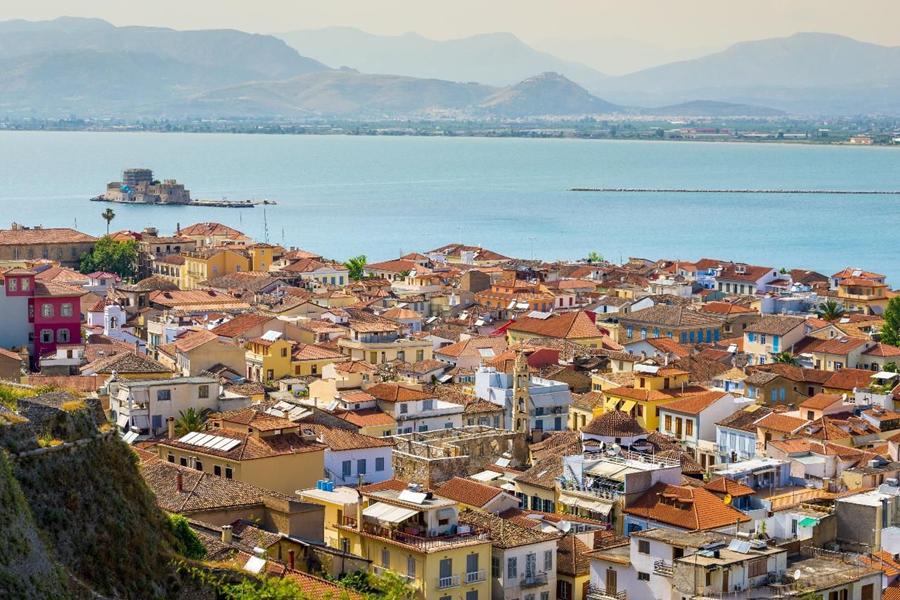
- New capital: In December 1822, Nafplion surrendered, and the Greeks made it their provisional capital.
The destruction of Dramali’s army saved the Morea, heartland of the Greek War of Independence. A heartland is the central and vital area of a movement. The Greeks then held the region of the Morea until Ibrahim Pasha arrived in 1825.
Which part did Laskarina Bouboulina play in the Greek War of Independence at sea?
The Greek War of Independence of 1821 had a naval commander in Laskarina Bouboulina. She is counted among the first women to hold the rank of admiral. An admiral is a high-ranking officer who commands a fleet of warships.
Before the Greek War of Independence, Bouboulina first married captain Dimitrios Yiannouzas, and the couple had three children. A captain here means the master of a ship. In 1816 she went back to Constantinople to argue her case over her property. She asked the Russian ambassador in the city for help with her case.
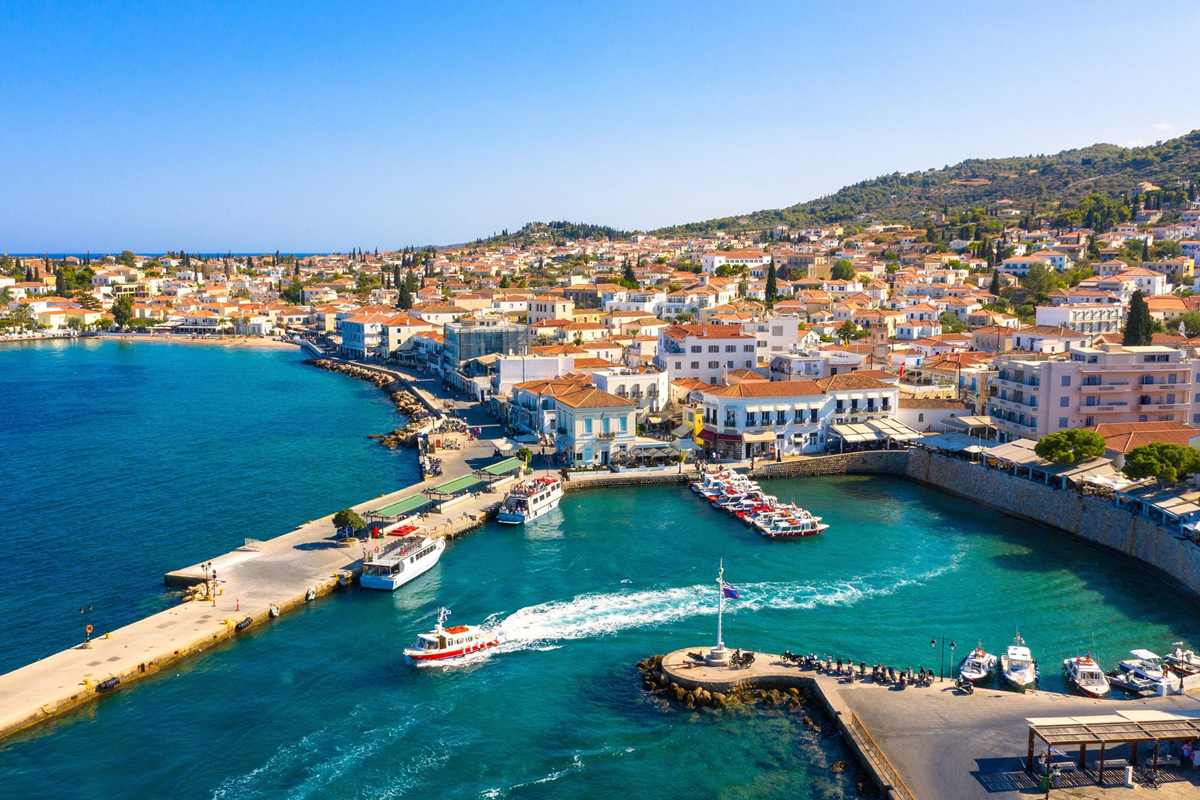
Back on the island of Spetses, she had a ship built that broke the Ottoman limit on size. Armed with 18 cannons, it became modern Greece’s first warship. A warship is a ship built and armed for battle at sea. A cannon is a large, heavy gun that fires iron balls.
When the Greek War of Independence began, Bouboulina sailed to Nafplion with two ships. Her son, Yiannis Yiannouzas, commanded the ship she sailed on. On 4 April 1821, she placed a naval blockade on the town. A blockade cuts a place off from supplies by sea or land. Naval means linked to warships.
- Visitor: The priest Papaflessas, a supporter of the Greek national cause, visited her in 1818.
- Supplies: She rode to Argos on horseback and gave local rebels money and ammunition.
- Portrait: A romantic print of her, bought in Paris, made Bouboulina burst out laughing.
For the Greek War of Independence, the islanders of Spetses sent seven more ships to the siege. During a siege, attackers ring a town and block every supply route into it. Bouboulina and Staikos Staikopoulos had asked them for this help.
During the Greek War of Independence, what happened at the third siege of Missolonghi?
The Greek War of Independence brought the third siege of Missolonghi. It lasted from 15 April 1825 to 10 April 1826. Ottoman forces faced the Greek rebels holding the town. Rebels are people who rise up against a ruling power.
Accounts frequently name it the second siege, which is an error. In the Greek War of Independence, Missolonghi stood on a promontory that juts into a lagoon. A promontory is a point of high land reaching out into water. A lagoon is shallow sea water cut off by sandbanks or islands.
Michael Kokkinis, a military engineer from Chios, strengthened the town walls with 17 bastions. A bastion is a strong point that sticks out from a wall. Together the bastions held 48 guns and 4 mortars. A mortar is a short gun that fires shells high into the air. An engineer plans and builds works such as forts.
About 3,000 men defended the town during this siege of the Greek War of Independence. Besides Greeks, their ranks held Italian, Swiss and German philhellenes. A philhellene is a foreigner who supports the Greek cause. During truces, men of the two sides met and talked like old friends. A truce halts the fighting for a time.
- Bastion names: Kokkinis named the bastions after heroes of liberty, among them Benjamin Franklin and Markos Botsaris.
- Painting: The painter Delacroix made Greece on the Ruins of Missolonghi in 1827.
- Opera: The siege inspired Le siège de Corinthe, an opera by Gioacchino Rossini.
About 500 metres of the old fortifications of Missolonghi remain to this day. Fortifications are walls, ditches and similar defences around a place. They form a surviving part of the town’s defences from the Greek War of Independence.
What made Georgios Karaiskakis a Greek War of Independence leader?
The Greek War of Independence ranks Georgios Karaiskakis among its military commanders and leaders. He lived from 1782 to 1827 and fought on the Greek side. A commander is an officer placed in charge of soldiers in a war or battle.
Historians disagree on where this leader of the Greek War of Independence was born. One view puts his birth in a monastery at Skoulikaria, in Epirus. Another points to a cave close to Mavrommati, a village in Thessaly. In 1927, a committee of the Ministry of the Interior chose Mavrommati as his birthplace.
Very early in life he joined the band of Katsantonis, a famous klepht captain. He rose to protopalikaro, the Greek title for a lieutenant. A lieutenant is an officer who acts for a captain. Long before the Greek War of Independence, Ali Pasha’s troops caught him at fifteen. He was jailed at Ioannina, where he learned to speak Albanian.
In early 1823, Karaiskakis struck an Ottoman army in retreat from Missolonghi. That army had failed to capture the town during its first siege in the Greek War of Independence. He defeated a detachment of 3,000 men at the pass of Agios Vlasios. A detachment is a group of troops sent away from the main army.
- Komboti: He fought on the rebel side at the Battle of Komboti in July 1821.
- Rumeli command: In 1826 he was made commander-in-chief of the revolutionary forces in Rumeli, central mainland Greece.
- Municipality: In 1997 a new municipality that includes Skoulikaria took the name Georgios Karaiskakis.
After his death, King Otto of Greece awarded him the Grand Cross of the Order of the Redeemer. An order is a group of honours that a state gives for service. The Grand Cross is a high class within that order.
What do travellers ask about Greek War of Independence, and what are the answers?
Greek War of Independence questions commonly centre on four people. They are Ioannis Kapodistrias, Lord Byron, Manto Mavrogenous and Markos Botsaris. They were a statesman, a poet, a heroine and a chieftain from Souli. A chieftain is the head of a clan.
Which legacy did Ioannis Kapodistrias leave after the Greek War of Independence?
As governor, Kapodistrias set up hospitals, schools, orphanages and the first Hellenic Military Academy. In Switzerland, the cantons of Geneva and Vaud made him an honorary citizen. A canton is one of the member states of Switzerland. In 2009, the city of Lausanne unveiled a bronze statue of him in Ouchy.
How is Lord Byron remembered in the Greek War of Independence?
On his way to Greece, Byron left Genoa on 16 July and reached Kefalonia on 4 August. Kefalonia is one of the Ionian Islands. A suburb of Athens took the name Vyronas in his honour. In 2008, the Hellenic Parliament named 19 April, the date of his death, a day of philhellenism.
What did Manto Mavrogenous do for the Greek War of Independence?
Manto Mavrogenous spoke French, Italian and Turkish fluently. She paid to equip 150 men for a campaign in the Peloponnese. To equip means to supply with arms and gear. A campaign is a set of planned military moves. She also sent a group of fifty men to aid Nikitaras at the Battle of Dervenakia.
What rank did Markos Botsaris hold in the Greek War of Independence?
Markos Botsaris was born in 1790 in Souli. He served in the Albanian Regiment of the French army until 1813, rising to officer. A regiment is a large unit of an army. The revolutionary Greek government later named him General of Western Greece. A general is an officer of the highest rank in an army.