
Public holidays in Greece come to twelve national days a year. They draw on state history and church feasts. This post starts with the national list and Easter Monday. It then turns to 25 March, when the War of Independence is honoured. A section on the Monday of the Holy Spirit comes next. Short answers explain the Annunciation, Great and Holy Friday, 26 December and Labour Day. Related reading sits under Greek festivals and Greek Easter traditions. For trips with a tour leader around the country, the main page is Greece tours.
Bookings made through the GetYourGuide widgets on this page earn Classical Greece Tours a commission, at no extra cost to the traveller.
What are the public holidays in Greece?
The public holidays in Greece add up to twelve national holidays each year. The list opens with New Year’s Day on 1 January and Theophany on 6 January. It closes with the Nativity, then the Synaxis of the Theotokos on the following day.
The Ministry of Labour announces the mandatory holidays each year. More days are kept as public holidays in Greece than that official list shows. The list of moveable national holidays rarely changes, and it has stayed the same for decades. A moveable holiday changes its date each year. Mandatory means required by law.
Among the public holidays in Greece, a number belong only to one profession or one local community. Easter Monday, by contrast, is an official non-working day for the whole country. The law makes it mandatory. Schools, government offices and banks close for it. A non-working day is a day off from paid work.
In the Orthodox Church, Easter Monday goes by the names Bright Monday and Renewal Monday. Its services resemble those of Easter Sunday, with an outdoor procession after the Divine Liturgy. The Divine Liturgy is the main Orthodox church service. Greeks see the day as a time for family and for the return from holiday travel.
- Procession: The procession is set for each day of Bright Week, yet churches tend to hold it on Monday.
- Parades: Military parades became a fixed part of Greek national celebrations in 1930.
- Ohi Day: The word ochi, Greek for no, entered the press in the opening days of the Greco-Italian War.
When Ohi Day became a national holiday, the government called it comparable to the 25th of March. For Dimitris Zazas of the parliament library, the decree approved a custom begun by ordinary people. The public holidays in Greece include both national days.
Which revolution do the public holidays in Greece honour on 25 March?
The public holidays in Greece set aside 25 March for the War of Independence. After nine years of fighting, from 1821 to 1829, Greece won recognition as independent. It ended four centuries of Ottoman rule over Greece. Ottoman names the Turkish-ruled empire of those centuries.
Alexander Ypsilantis led the Filiki Eteria, a secret society that organised the revolution. He chose 25 March, the feast of the Annunciation, as its starting day. Before it joined the public holidays in Greece, the date was already a reference point for the revolt. It was even used to begin a new calendar.
Before 25 March was fixed, the main national celebration fell on 25 January. That date recalled the day King Otto landed at Nafplio. In 1834 Panagiotis Soutsos first proposed a celebration of the revolution on 25 March. The minister Ioannis Kolettis then suggested festivals with panhellenic games, like those of ancient Greece. Panhellenic means shared by all Greeks.
The games were to rotate each year between Tripoli, Athens, Hydra and Mesologgi. Athens held the first celebration, with King Otto and Queen Amalia present. Athens’ Metropolitan Church was dedicated to the Annunciation in honour of 25 March. Of the public holidays in Greece, 25 March closes schools there and in Cyprus. Businesses shut in large numbers too.
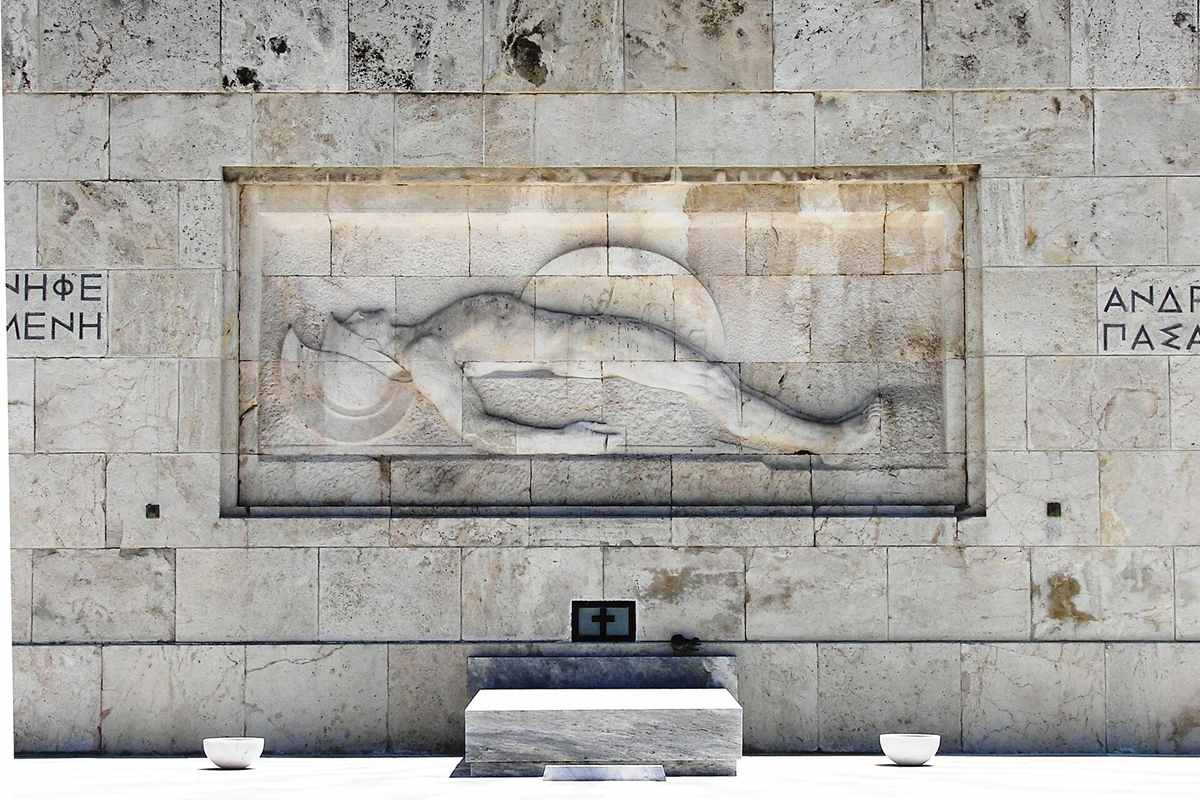
- Wreath: Before the parade, the president goes to a wreath ceremony at Athens’ Tomb of the Unknown Soldier.
- Route: The Athens parade route runs by the Hellenic Parliament and along Panepistimiou Street, past the Academy of Athens.
- Schools: School events before the day include dancing, songs and poetry recitals.
In 1836 a bronze medal, minted for King Otto’s marriage to Amalia of Oldenburg, honoured 25 March. One side shows Germanos raising a flag and a cross. The public holidays in Greece keep 25 March as a fixed date.
How does the Monday of the Holy Spirit fit among the public holidays in Greece?
Public holidays in Greece include Whit Monday, the day after Pentecost. Orthodox churches call it the Monday of the Holy Spirit. It is a moveable feast, because its date depends on Easter. Pentecost is always on a Sunday.
Behind one of the public holidays in Greece stands Pentecost, from the Koine Greek pentekoste. That word means fiftieth. Koine was the shared Greek of antiquity. In the Orthodox Church, Pentecost ranks as the highest Great Feast of the Lord, second only to Easter. The feast lasts three days, ending on Tuesday, the Third Day of the Trinity.
Among the public holidays in Greece, the Monday of the Holy Spirit opens the afterfeast of Pentecost. An afterfeast is a run of days that extends a great feast. The day honours the Holy Spirit and recalls the Spirit’s descent upon the apostles. A share of the Pentecost hymns are sung again in its services.
The afterfeast lasts one week, with no fasting allowed, even on Wednesday and Friday. Fasting means going without set foods as a religious duty. Orthodox churches tend to be decorated with greenery and flowers for the feast. Its church colour is green, and clergy and faithful carry flowers and green branches.
- Roses: Decorating churches with roses at Pentecost gave the feast the Greek name rousalia.
- Kneeling Prayer: At the Kneeling Prayer on Pentecost night, worshippers touch the floor with their foreheads.
- Basil: Its three sets of long poetic prayers are the work of Basil the Great.
The Monday after Pentecost is among the public holidays in Greece, Cyprus, France and Germany. The Orthodox icon of the feast shows the Twelve Apostles sitting in a half circle. Above them, the Holy Spirit descends as tongues of fire.
What do travellers ask about public holidays in Greece, and what are the answers?
Public holidays in Greece include the Annunciation on 25 March. In the Gospel of Luke, the archangel Gabriel tells Mary that she is to bear a son, Jesus. An archangel is a chief angel. A gospel is an account of the life of Jesus.
Among the public holidays in Greece, what rank does the Annunciation hold?
In the Orthodox Church, the Annunciation ranks among the twelve Great Feasts of the church year. It is also one of eight feasts of the Lord. Orthodox tradition places the event at the town well of Nazareth, known as Mary’s Well. The festal Divine Liturgy is held on this feast even on Great Friday.
What happens on Great and Holy Friday, one of the public holidays in Greece?
Orthodox Christians call Good Friday Great and Holy Friday. On Friday night comes the Lamentation at the Tomb, also known as Jerusalem Matins. Matins is a church service of prayer. Much of the service unfolds around the tomb of Christ in the middle of the nave. A nave is the central space where worshippers stand.
Why do the public holidays in Greece include 26 December?
In the Orthodox calendar, 26 December is the second day of the Feast of the Nativity. Nativity is the church name for the birth of Jesus. The day also holds the Synaxis of the Theotokos. A synaxis is an assembly, and Theotokos is a Greek title of Mary. The flight into Egypt is also recalled.
What place does Labour Day hold among the public holidays in Greece?
Labour Day, on the fifth month’s first day, is an optional public holiday in Greece. Workers treat it as a strike. The Ministry of Labour keeps the right to class it as official each year. By custom, it does so. Its Greek name, Ergatiki Protomagia, means the workers’ first of that month.
Featured photo: Evadb, Public domain, via Wikimedia Commons.