
Greece in summer spans June, July and August. In those months, small-group trips cross the islands, the mainland and Crete. This page reads the climate tables for Neos Marmaras, Argos, Lentas and Metsovo. It then turns to the Hyacinthia of Sparta, the Adonia, the Buphonia and the Olympus Festival. Related reads are Greece weather in July, Greece weather in August and best beaches in Greece. More trips appear under Greece tours.
Bookings made through the GetYourGuide widgets on this page earn Classical Greece Tours a commission, at no extra cost to the traveller.
What is Greece in summer like?
Greece in summer covers June, July and August under the meteorological convention. That convention is the season rule of weather science. It counts these three months as summer in the northern hemisphere. A hemisphere is one half of the globe, split here at the equator.
Daylight lasts longest around the summer solstice. A solstice is a yearly turning point, when the noon sun stands at its highest or lowest. After the summer solstice, each day grows a little shorter as the season moves on. The earliest sunrises and the latest sunsets of the year also arrive close to that date.
Greece in summer covers a country near the top of Europe’s list of mountainous lands. The Greek mainland is extremely mountainous. On the highest ground, the climate turns alpine, meaning typical of high peaks. This alpine Mediterranean type carries the code Csc. In it, summers stay cool, and thunderstorms break out now and then.
Across Greece in summer, heights above 1,000 metres keep a warm-summer climate, as on Mount Parnitha. That mountain stands in Attica, the region that holds Athens. Its climate code, Csb, comes from the Köppen scheme, which sorts world climates by heat and rainfall. The letter b in that code marks a warm rather than hot summer.
- Alpine zones: Cool alpine summers belong to the high Pindus, the Rhodope range and the upper slopes of Crete.
- Dry season: In Mediterranean climates, summer goes hand in hand with dry weather rather than rain.
- Sunshine records: Greece measures sunshine only with Campbell-Stokes recorders, which miss about 200 hours a year.
Greece in summer falls in the brightest and hottest of the four seasons of temperate lands. Those lands lie between the cold polar zones and the hot tropical belt. In them, summer arrives after spring and comes before autumn each year.
What does the Neos Marmaras station record for Greece in summer?
Greece in summer, as logged at Neos Marmaras, shows a July mean daily maximum of 32.3 °C. That figure is the average daily peak. The town, whose name means New Marmara, lies on the Sithonia peninsula of Chalkidiki, in Macedonia.
The climate here is hot semi-arid, coded BSh, with strong Mediterranean influences. Semi-arid means dry for much of the year, though less dry than a desert. The letters BSh come from the Köppen scheme of climate types. In that code, B marks a dry climate and h marks a hot one.
August edges a little higher at the same station, with a mean daily maximum of 32.5 °C. For Greece in summer at Neos Marmaras, the August mean daily minimum then reaches 23.7 °C. That minimum is the average of the lowest reading recorded on each day of the month.
In 2021, the town counted 3,038 permanent residents, meaning people who live there all year. For Greece in summer, estimates put the town’s population at 20,000, more than six times that count. An estimate is a careful judgement of a number that nobody has counted one by one.
- July rainfall: The Neos Marmaras station averages 27.7 millimetres of rain across July.
- August rainfall: August rain at the station falls to an average of 11 millimetres.
- Origins: A large share of the town’s residents trace their roots to Marmara Island.
Greece in summer at Neos Marmaras opens with a June mean daily maximum of 29.4 °C. June is the first of the three summer months in the calendar of weather science. A climate table lists average readings like these for each month of the year.
How does the Argos climate table read for Greece in summer?
Greece in summer at Argos brings a July mean daily maximum of 34.0 °C. That figure is the average of the top reading on each July day. The Argos weather station table that supplies it spans the years from 1980 to 2010.
Argos falls in the Csa class, the Mediterranean type with hot summers. For Greece in summer, the city counts as one of the country’s hottest spots. In the Csa code, C marks a mild winter and s marks a dry summer. The final letter a marks a hot summer, which matches the name of the type.
Nights on the Argos table for Greece in summer drop much lower than the days. The July mean daily minimum, the average of each night’s lowest point, stands at 16.7 °C. June rain averages just 8.9 millimetres. A millimetre of rain is the depth that water reaches on flat, level ground.
Argos sits on a plain that covers about 250 square kilometres. Mountains rise close by to the west, and rivers run down from them onto the plain. A plain means broad, level country with no hills. Square kilometres measure area, so the figure gives the size of that flat ground.
- August high: In August, the Argos mean daily maximum eases slightly to 33.7 °C.
- Humidity: July humidity at Argos averages 52.5%, set against the full moisture load air can hold.
- Sunny days: Argos weather brings plenty of sunny days throughout the year, winter included.
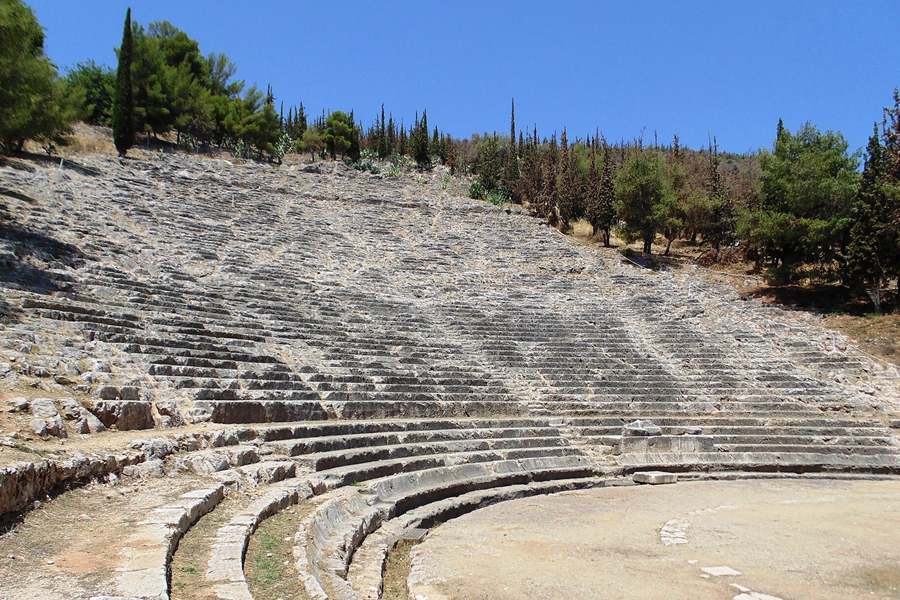
Greece in summer at Argos has a cultural side as well. Today, cultural events take place at the ancient theatre of the city during the summer months. An ancient Greek theatre is an open-air venue with rows of stone seats set into a slope.
How did the Hyacinthia at Amyclae fit into Greece in summer?
Greece in summer, in ancient Sparta, held the Hyacinthia at Amyclae. This festival marked the death of the hero Hyacinthus. It fell in the Spartan month Hyacinthius, early in the summer. The celebrations ran for three days in all.
The first day was a day of mourning for the dead hero. Sacrifices went to the dead, and the banquets stayed bare, without show or decoration. The sacrificial breads, too, were kept very simple. Mourning means showing sorrow after a death. A sacrifice was a gift offered to a god or to the dead.
The second day celebrated the hero’s rebirth. Young people played the cithara, a kind of lyre, and the aulos, a double pipe. They sang in praise of Apollo, the god of music. In ancient Greece in summer, choirs competed in the town, dancing and singing country songs. A choir is a group of singers who perform together.
For Greece in summer in ancient Laconia, Amyclae was also the setting for parades of carts. The girls and women of Sparta decorated those carts themselves. A parade is a public procession that moves along a route for people to watch. A cart is a light, open vehicle with wheels.
- Horse races: On the second day, other people took part in horse races.
- Woven tunic: Spartan women wove a chiton, or tunic, which was then offered to the god.
- Army pause: Xenophon reports that Spartans broke off campaigns to return home for the festival.
Greece in summer at Amyclae held kopis feasts under special tents called skenai. Kopis was the name for these banquets, and skenai means tents. A banquet is a large formal meal. Such tents were a typical feature of ancient country festivals.
Where does the Adonia, a women’s festival, fit into ancient Greece in summer?
Greece in summer, by one ancient account, held the Adonia, a yearly festival of women. In it, women mourned the death of Adonis, the consort or partner of the goddess Aphrodite. Modern scholars who follow Plutarch place the festival around midsummer.
Plutarch’s dating ties the Adonia to Greece in summer: he places the festival of 415 BCE in midsummer. He sets it on the eve of the day a fleet sailed for Sicily. Plutarch was a Greek writer of lives and essays. BCE stands for Before Common Era, the span also written BC.
During the festival, Athenian women climbed onto the rooftops of their own houses. Up there, they danced and sang. They also mourned the death of Adonis through set rituals. A ritual is a fixed series of acts carried out for a religious purpose. Greece in summer, on the Plutarch dating, saw these rooftop rites in Athens.
For the Adonia of ancient Greece in summer, the women of Athens planted Gardens of Adonis. These were lettuce and fennel seeds sown in potsherds, which are broken pieces of pottery. The seeds sprouted, then withered and died within a short time. Fennel is a garden herb with feathery leaves and a taste like aniseed.
- Best record: The Adonia is best recorded in classical Athens, though other Greek cities knew it.
- Unofficial rite: The Adonia was not state-organised and had no place in the official state calendar.
- Proverb: Greeks used the phrase Gardens of Adonis for anything trivial and wasteful.
Greece in summer, on that dating, ended the Adonia in the streets. The women carried the gardens and small images of Adonis from the roofs. They held a mock funeral, a pretend burial rite. They buried the images and garden remains at sea or in springs.
What happened at the Buphonia, the ox rite of Greece in summer?
Greece in summer, in ancient Athens, brought the Buphonia, a sacrificial ceremony held as part of the Dipolieia. The name Buphonia means ox-slayings. That festival fell on the 14th of Skirophorion, a midsummer month in June or July. It took place on the Acropolis.
In this rite of Greece in summer, a working ox was offered to Zeus Polieus. That title means Zeus, protector of the city. A working ox is a farm animal trained to pull a plough or a cart. Sacrifice here means the killing of an animal as an offering.
A herd of oxen was led up to the altar on the very top of the Acropolis. When one ox began to eat there, it singled itself out for the sacrifice. An altar is a stone base on which worshippers laid their offerings. The Acropolis is a high rock above central Athens.
Next, a man of the Thaulonidae family stepped up with an axe. He killed the ox, threw the axe aside at once and fled. His act was treated as a crime heavy with guilt. Thaulonidae is the Greek name of that family line. An axe is a tool with a heavy blade on a long handle.
- Straw ox: In the account by Porphyry, the hide was filled with straw and then yoked to a plough.
- Long life: The Dipolieia, a rite of Greece in summer, lasted at least until the Roman Empire.
- Old even then: Athenians in the age of Aristophanes already saw the sombre rite as archaic, meaning very old.
Greece in summer at the Dipolieia ended with a trial. The axe was then taken before the court of the Prytaneum and tried for murder. The Prytaneum was the town hall of an ancient Greek city. A trial is a hearing that decides guilt.
What do the Lentas readings on Crete say about Greece in summer?
Greece in summer at Lentas reaches a July mean daily maximum of 33.0 °C. This value averages each July day’s top reading. Lentas is a coastal village on Crete’s south coast. It lies 75 kilometres south of Heraklion.
The climate of Lentas is hot semi-arid, with mild winters and hot summers. The readings come from a station that the National Observatory of Athens operates. Its Köppen code is BSh, where B stands for dry and h for hot. Semi-arid describes land with little rain, short of a true desert.
For Greece in summer at Lentas, the August mean daily minimum stands at 26.1 °C. That number averages the coolest reading taken on each August day. Even the record low for August at the station is 22.3 °C. A record low marks the coldest point measured in any August there.
The name Lentas is linked to the lion-shaped cape that forms the small, sheltered bay of the village. The word cape names a narrow tongue of land ending in the sea. Its bay is a curved inlet that the cape helps to shelter. Lion-shaped means that the outline of the headland recalls a lion.
- Daily mean: The July daily mean at Lentas, averaged over day and night, reaches 29.4 °C.
- Rain: For Greece in summer, July rainfall at the Lentas station averages just 0.1 millimetres.
- Driest corner: Lentas and Psari Forada are the driest and warmest parts of Crete.
Greece in summer at Lentas has an ancient past. The village was once Lebene, one of the two harbours of Gortyn. Gortyn became the leading city of Crete after the fall of Knossos. A harbour gives ships calm, sheltered water for mooring.
Which mountain readings does Metsovo add to Greece in summer?
Greece in summer at Metsovo gives a July mean daily maximum of just 25 °C. The town station that records it stands 1,240 metres above sea level. Height above sea level measures how high a place rises over the surface of the sea.
For Greece in summer in the mountains, night readings at Metsovo sit far below the day readings. The July mean daily minimum is 15 °C, which averages the low point of each July day. June runs lower still, with a mean daily minimum of just 12.3 °C.
For Greece in summer at Metsovo, June brings an average of 69.3 millimetres of precipitation. By August, the figure falls to 34.8 millimetres. Precipitation covers every kind of water that falls from the sky, such as rain, hail or snow. Each millimetre stands for a thin layer of water one millimetre deep.
For the small villages and hamlets of the Pindus region, Metsovo acts as a large regional hub. A hub is a central place that the surrounding communities rely on. The town has shops, schools, offices, museums and galleries. The Pindus is the long mountain range that runs down the spine of mainland Greece.
- August high: August at the Metsovo station has a mean daily maximum of 25.4 °C.
- Winter fame: Metsovo is a popular winter holiday destination and a ski resort town.
- Winemaking: Metsovo has a name for winemaking, the craft of turning grape juice into wine.
Greece in summer at Metsovo opens in June with a mean daily maximum of 21.6 °C. That average of daily peaks is the lowest of the three summer months at the town station. A weather station holds instruments for reading heat, rain and wind.
When does the Olympus Festival fill Greece in summer with music and theatre?
Greece in summer brings the Olympus Festival, a yearly festival of theatre and music. It runs each year in July and August. It ranks as the largest event of its type in northern Greece. It is also a major cultural event for the whole country.
Greece in summer has had the festival since its first season in 1972. Since 2010, the festival has worked with a chosen guest country of honour. A guest country of honour is a nation invited to share its culture at the event. Honour here means special respect shown in public.
For Greece in summer, the programme mixes ballet, classical concerts, theatre and choirs. It also stages ancient comedies and tragedies of the Hellenistic age. Traditional Greek music and modern music complete the mix. Hellenistic times ran from the death of Alexander the Great to the rise of Rome. Tragedy is drama that ends in grief.
Leivithra, an archaeological park, ranks among the venues of the festival. Legend says that Orpheus, the singer and poet, once lived at this spot. An archaeological park is an open-air site where ancient ruins are kept and shown. Legend, in this sense, means an old story told down the generations, not a proven record.
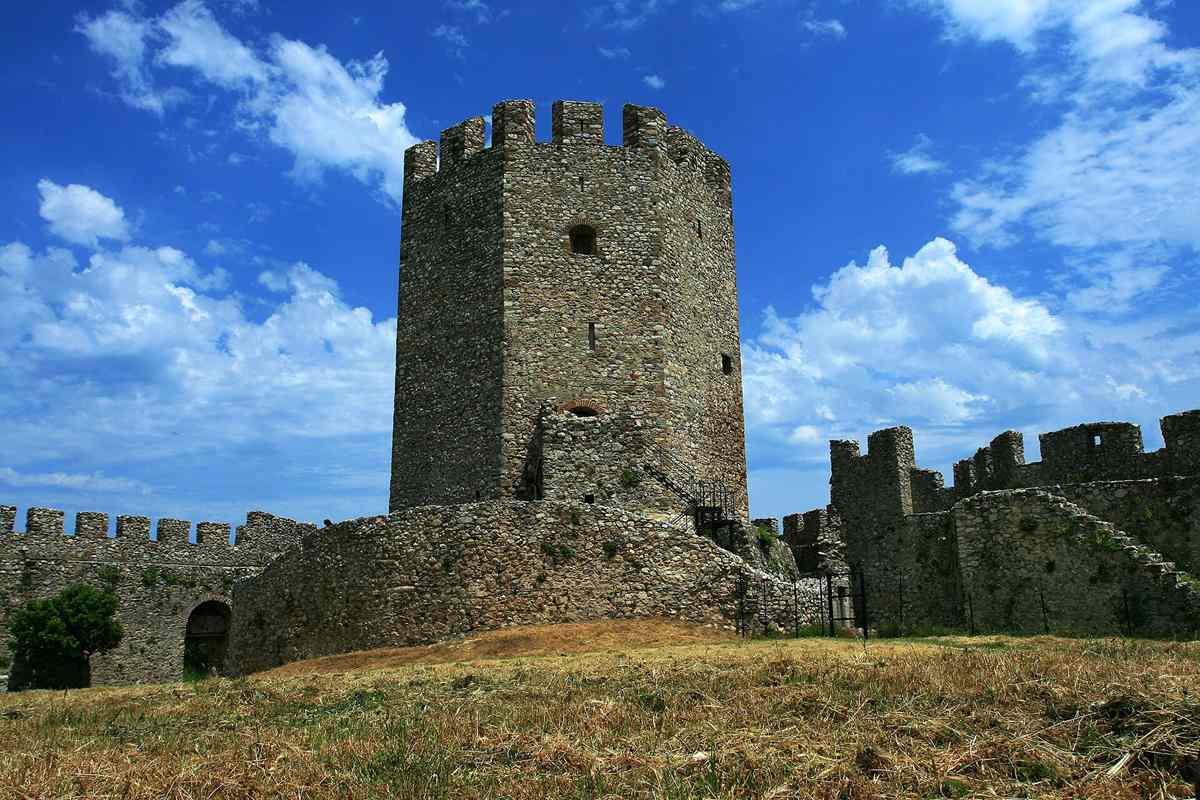
- Castle stage: The Castle of Platamonas, a building from Byzantine times, serves as a festival venue.
- Litochoro sites: The Olympus National Park Information Center and the Litochoro Park amphitheatre also host events.
- Backing: The Greek Ministry of Culture and local authorities in Pieria support the festival.
For Greece in summer, the festival aims to offer cultural entertainment to local people and tourists alike. It also seeks to build contact between different cultures and to promote tourism in the region. Cultural entertainment means shows and events tied to the arts.
What do travellers ask about Greece in summer, and what are the answers?
Greece in summer draws questions about two more weather stations, Lavrio and Kamariotissa on Samothrace. Others concern the outdoor cinemas of Athens, whose story dates back to 1900. The last one concerns the feast of Saint Paraskevi on 26 July.
How do the Lavrio readings describe Greece in summer?
At the Lavrio station, the July mean daily maximum reaches 31.3 °C. The July mean daily minimum stays high, at 25 °C. August rainfall there averages only 0.3 millimetres. Such a minimum averages the coolest point of every day in the month. Rainfall counts only the water that falls as rain.
What does the Kamariotissa station on Samothrace show for Greece in summer?
The Kamariotissa village station on Samothrace stands 90 metres above sea level. Its July mean daily maximum is 31.9 °C. In August, the mean daily minimum comes to 23.9 °C. June precipitation there averages 15.9 millimetres. Precipitation means rain together with snow and hail, measured as water.
How old is the outdoor cinema habit of Greece in summer?
In the summer of 1900, films were shown outdoors in the cafés of Syntagma Square in Athens. Such cinemas are still a well-loved part of Greek summers. At their peak in the 1960s, Athens had more than 600 outdoor cinemas. An outdoor cinema shows films under the open sky.
Which saint is honoured on 26 July in Greece in summer?
The Church commemorates Saint Paraskevi on 26 July. Her name means Friday in Greek, since she was born on a Friday. A tradition of the people of Epirus places her martyrdom in Thesprotia. Today the Pounta monastery of Saint Paraskevi stands on that ground. A martyr is a person killed for their faith.
Featured photo: Nikos Laskaridis, CC BY-SA 4.0, via Wikimedia Commons.