
Greek cheese is a fitting subject for food and wine trips through Greece. These run as small-group outings, each with a host, on Crete, Naxos and the mainland. Topics run from feta, graviera and kefalograviera to batzos, manouri and anthotyros. Notes on milk, regions and protected names go with each. Dishes, pies and sweets made with cheese follow, such as spanakopita and dakos. Related pages cover Greek food, Greece food tours and Greek desserts. Trips of every kind appear under Greece tours.
Bookings made through the GetYourGuide widgets on this page earn Classical Greece Tours a commission, at no extra cost to the traveller.
What is Greek cheese?
Greek cheese covers a great variety of cheese types used in Greek cuisine. Feta, kasseri, kefalotyri and graviera all belong to this wide group of cheeses in Greece. Anthotyros, manouri, metsovone and mizithra join them, along with ladotyri, a cheese made with olive oil.
The story of Greek cheese reaches back to myth, where Aristaeus won the credit for discovering cheese. Homer’s Odyssey dates from the late 8th century BC. In that poem, the Cyclops makes and stores cheese and milk from his sheep and goats. The Cyclops of the poem is a giant with a single eye.
The letters PDO are short for protected designation of origin. This legal label ties a food’s name to its home area and its method. In Greece, cow’s milk goes mainly to drinking or to the making of processed cheese. Among Greek cheeses with PDO status, three Graviera cheeses, San Michali and Metsovone contain cow’s milk.
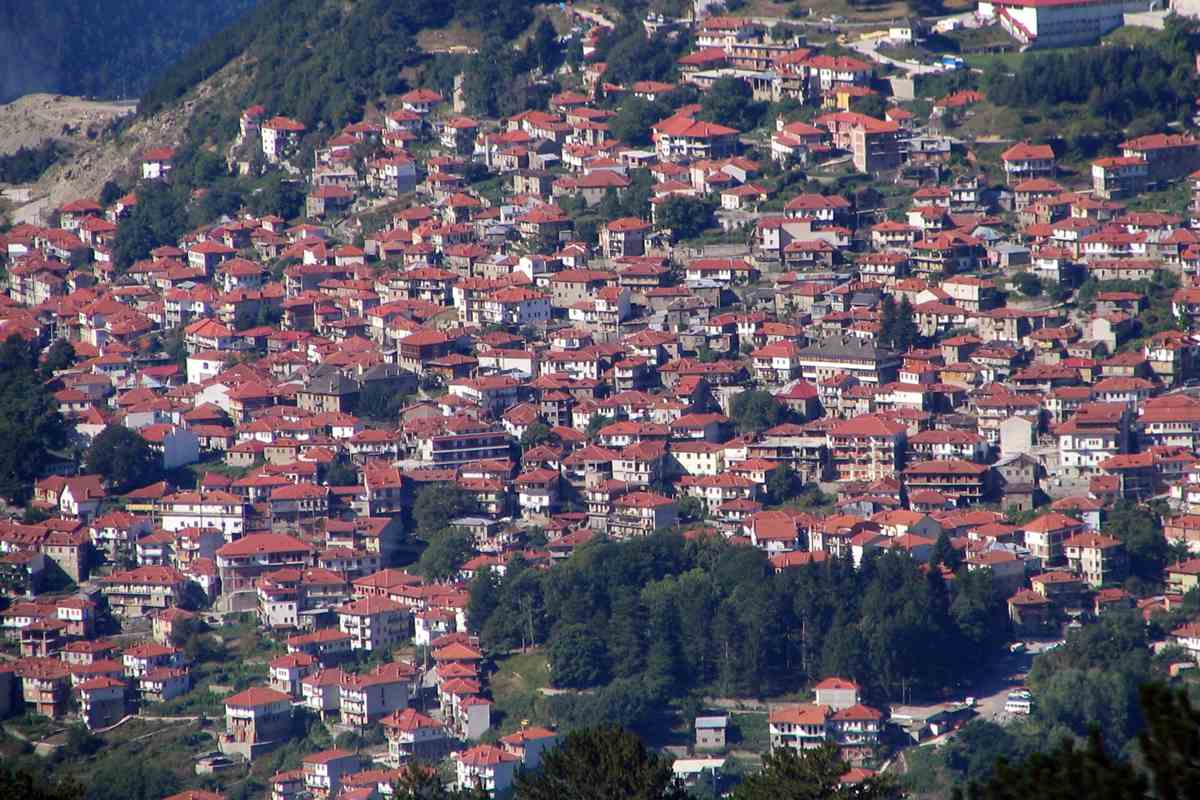
Metsovo, in Epirus, makes metsovone, a smoked cheese that is semi-hard. Semi-hard means firm yet easy to slice. Smoked means the cheese has been held in smoke to flavour it. Sfela carries the nickname Fire Feta. It is a soft white Greek cheese from Messenia in the Peloponnese, with a mildly spicy taste.
- Katiki Domokou: This moist white cheese from Domokos in Thessaly is slightly spicy and easy to spread.
- Epicurus: The thinker Epicurus asked his patron by letter for a wheel of hard cheese for a feast.
- Legal reach: Greek cheeses with PDO registration are protected in the EU and in the UK.
Greece also has cheeses made solely from goat’s milk, with no blend of any other milk. Not one application for PDO status has gone in for any of these goat cheeses so far. So no goat-only cheese appears on the protected list.
Which traits make feta the favourite Greek cheese?
Greek cheese has one clear favourite, and the list of protected Greek cheeses names that favourite as feta. Feta is white and brined, made with pure sheep’s milk or with a mix that adds goat milk. Brined means kept in salty water.
European Union law protects the name of this Greek cheese. Similar laws in 25 other countries do the same. EU rules also set a floor for the fat in feta. The cheese must hold at least 43% fat in its dry matter. Dry matter is everything left in a cheese once the water is taken out.
High-quality feta carries the aroma of butter, yoghurt and ewe’s milk. Ewe is the English word for a female sheep. On the tongue, feta closes on a spicy note that brings pepper and ginger to mind. A light hint of sweetness comes with it. The finish of a cheese is the taste that stays in the mouth after swallowing.
The first clear written record of cheese kept in brine comes from Cato the Elder. His farming book, De Agri Cultura, dates from the 2nd century BC. Its Latin title means On Agriculture. In the late 15th century, the Italian visitor Pietro Casola came to Candia. He described feta on sale there and its storage in brine.
- Flavour: This Greek cheese is tangy and salty, with a taste that runs from mild to sharp.
- Land and herds: The land’s biodiversity and its special sheep and goat breeds give feta its aroma and flavour.
- Biodiversity: This word means the full range of plant and animal life in one place.
In 2005, the Court of Justice of the European Union gave its ruling. It upheld the regulation that made this Greek cheese a PDO. Under a PDO, only food made in a defined area and way can carry the name.
How do Crete, Naxos and Agrafa shape graviera as a Greek cheese?
Greek cheese makers produce graviera, a hard cheese, in different parts of Greece. On Crete, the cheese is made from sheep’s milk. It then ripens for at least five months. To ripen means to rest and age while the flavour develops.
Graviera Kritis is the protected name for the Cretan kind. Kritis means of Crete in Greek. It belongs to the group of sheep’s milk cheeses on the list of protected Greek cheese names. Even so, it can include a little goat’s milk. Cretan cuisine is the traditional cooking of Crete. It lists graviera cheese among its foods.
Graviera Agrafon appears among the sheep’s milk cheeses on the protected list. It can also contain a little goat’s milk. Agrafa is a mountainous region of mainland Greece. Its land lies in two regional units, Evrytania and Karditsa. The Pindus range, a long line of mountains, ends in the south with Agrafa.
Graviera Naxou is the cow’s milk Greek cheese from the island of Naxos, in the South Aegean. Up to 20% of its milk can come from sheep or goats instead. Naxos has crops and cattle breeding, which make it more self-sufficient than any other Cycladic island. Self-sufficient means able to supply its own needs.
- Fried: Cooks fry graviera as saganaki, and people eat it as a snack.
- Grated: Graviera can also be grated and served on top of pasta dishes.
- Saganaki: Saganaki is the Greek name for a dish cooked in a small frying pan.
The name Agrafa means unwritten in Greek. It points to how remote the region is and how difficult its terrain is. Terrain means the ground itself, with its slopes, ridges and hollows. For this Greek cheese, the word Agrafon simply means of Agrafa.
What sets kefalograviera apart from other hard Greek cheese?
Greek cheese of the hard table kind includes kefalograviera. Makers traditionally use sheep’s milk, or blend it with goat’s milk. A table cheese is one eaten as it is, in slices or pieces. Its flavour is salty, and its aroma is rich.
One cookbook writes about kefalograviera with high praise. At its best, the book says, this Greek cheese equals Romano or aged Asiago, or beats them. Romano and Asiago are both well-known cheeses from Italy. An aged cheese has been kept to mature, so its flavour becomes deeper and stronger.
For saganaki, cooks cut kefalograviera into triangular pieces. Triangular means shaped with three sides and three corners. Each piece is rolled in seasoned flour and then fried lightly. Seasoned flour is plain flour mixed with salt, pepper or herbs. This hard Greek cheese also grates well. Cooks use it widely as a grated topping for pasta dishes.
Kefalograviera is very close to kefalotyri, another hard Greek cheese. Shops sometimes sell it under the kefalotyri name instead. The first part of kefalotyri comes from the Greek word for head. One explanation links the name to the head-like shape of the cheese wheel. Cooks add kefalotyri to meat dishes and to cooked vegetables.
- Regions: Western Macedonia and Epirus are two of the regions that produce kefalograviera.
- Regional units: The regional units of Aetolia-Acarnania and Evrytania also make this cheese.
- Grouping: The protected list places kefalograviera among the cheeses of mixed sheep and goat milk.
Kefalograviera holds PDO status across the EU and the UK. With that status, the name belongs only to cheese from the set areas, made in the set way. Greek cheese from outside those areas cannot carry the name in either market.
Which rules protect batzos as a brined Greek cheese?
Greek cheese rules protect batzos, a traditional brined cheese. It is made from sheep’s milk, goat’s milk or a mix of the two. Its protected area covers Western Macedonia, Central Macedonia and Thessaly. Both the making and the maturing must happen inside that area.
The name of this Greek cheese gained recognition in Greece in 1994. In 1996, the European Union registered it as a PDO. The rules cap the moisture of the cheese at 45 percent by weight. They also demand at least 25 percent fat in the dry matter. Moisture is the share of water held in a cheese.
Only local breeds suited to the area, raised there, can supply the milk. Their feed comes mainly from the area’s own plants. Old-style makers of this Greek cheese beat the thickening milk again and again. This moves a large share of its fat into the whey. Whey is the liquid left when milk turns into curd.
Batzos has no rind. A rind is the firm outer layer that forms on the outside of a cheese. Inside, this Greek cheese is white to pale yellow, with a large number of irregular holes. The cheese matures in brine that holds 10 to 12 percent salt. Brine is water with salt dissolved in it.
- Banned additives: The rules ban colourants, preservatives and antibiotics, both in the cheese and in its brine.
- Salting: On the day after draining, makers slice the curd and dry-salt it with coarse salt.
- Preservative: A preservative is a substance added to food to stop it from spoiling.
A scholarly review describes the taste of batzos as sourish and lightly piquant. Sourish means a little sour, and piquant means pleasantly sharp. At the table, this Greek cheese is eaten plain or fried. It is also served with eggs.
How does whey turn into manouri, a creamy Greek cheese?
Greek cheese makers turn whey into manouri, chiefly in Thessaly and Macedonia, in central and northern Greece. Whey is the liquid by-product that remains after cheesemaking is done. Cream is added to that whey, which makes manouri creamier than feta.
One source of that whey is the making of batzos, a brined cheese. When batzos uses goat’s milk or mixed milk, its fat-rich whey can become manouri. Fat-rich means holding a large share of fat. Mizithra, another Greek sheep’s milk cheese, has a similar flavour. Manouri is the less dry of the two.
Manouri contains about 36-38% fat, yet only 0.8% salt. That leaves manouri far less salty than feta, its fellow Greek cheese. In the EU system of protected names, whey cheeses sit outside the cheese class. They belong to class 1.4, for other products of animal origin. Class 1.3 is the one set aside for cheeses.
The aroma of this Greek cheese is light and slightly sour, close to fresh yoghurt. Even so, it lacks the acid bite of yoghurt or feta. Its flavour is clean, subtle and nutty. A touch of sheep character and the faintest hint of tang come through as well. Tang is a sharp, sour edge to a taste.
- Kitchen uses: Cooks put manouri in salads and pastries, or serve it as a dessert cheese.
- Swap: Manouri can take the place of cream cheese, for example in cheesecake.
- Dessert cheese: A dessert cheese is one served at the end of a meal, as a sweet course.
Manouri holds PDO status. The label protects the name in law and ties it to a set place and method of making. Among Greek cheese names on the protected list, manouri stands as one of the fresh, whey-based kinds.
Why does anthotyros count as a Greek cheese with fresh and dry forms?
Greek cheese includes anthotyros, whose name means flowery cheese. It is a traditional fresh cheese, made from whey and milk of sheep, goats or both together. Besides the fresh kind, makers also produce a dry, matured version of anthotyros.
In anthotyros, the usual ratio of milk to whey is 9 to 1. That means 9 parts of milk go in for every single part of whey. This Greek cheese commonly takes the shape of a truncated cone. A truncated cone is a cone with its pointed top sliced off flat.
Makers boil the milk at a moderate heat, then add rennet and salt while stirring. Rennet is what causes the milk to thicken into curd. On the next day, the mix gets more salt. It then goes into a basket lined with tulle, where it drains. Tulle is a fine, light netting fabric with tiny holes.
Fresh anthotyros is white and soft or medium-hard, and it has no rind. Medium-hard means firm but still easy to cut. It tastes sweet and creamy. At breakfast, people eat this Greek cheese with honey and fruit. In savoury dishes, it goes with oil, tomato and wild herbs. Savoury describes food that is salty or tangy, not sweet.
- Dry kind: Dry anthotyros is hard, white and salty, with a powerful smell like that of sherry wine.
- Serving: The dry kind is eaten on top of spaghetti or in salads.
- Close cousin: Dry anthotyros is a matured cheese with a close likeness to mizithra.
Anthotyros is commonly made in Thrace, Macedonia, Crete and the Ionian Islands. When makers leave this Greek cheese to mature, they frequently cover its outside with thick salt. Maturing means resting a cheese over time while it slowly firms up.
How does Greek salad give Greek cheese a central place?
Greek cheese joins vegetables in Greek salad, a Greek dish of tomatoes, cucumbers, onion, olives and feta. Salt, Greek oregano and olive oil dress the dish. Feta is the cheese in question. Oregano is a herb with small, strong-smelling leaves.
Beside the Greek cheese and vegetables, common additions are lemon juice, green bell pepper and caper berries. A caper berry is the small fruit of the caper bush. Caper berries appear especially on the Cyclades, a chain of Aegean islands. In Northern Greece, mint or parsley joins the salad, mainly as decoration.
The tomatoes are cut into symmetrical wedges. Symmetrical means both halves match. A wedge is a thick piece that narrows to one edge. Cooks slice the cucumber, onion and green pepper thinly. The Greek cheese, olives, olive oil, salt and oregano go on afterwards. By custom, the salad stays unmixed until serving.
At the table, diners either eat the salad from one plate or share it out after mixing. Once the vegetables and Greek cheese are gone, plenty of tomato juice and olive oil remains. Diners dip bread into this mix of juice and oil, especially at informal meals. Informal means relaxed and everyday.
- American style: In the United States, the Greek cheese comes in cubes mixed through the vegetables.
- Detroit twist: Regional versions of the salad in Detroit add beets, a dark red root vegetable.
- Old oddity: In 1925, an Australian newspaper called boiled squash with sour milk a Greek salad.
Those American styles are rarely met in Greece. In the United Kingdom, as in the majority of European countries, the dish broadly resembles the original. Greek speakers call dips such as tzatziki and taramasalata salads. Tzatziki is made with yoghurt, and taramasalata with fish roe.
What part does Greek cheese play in spanakopita?
Greek cheese, chiefly feta, goes into the cheese version of spanakopita, a savoury Greek pie of spinach. Its name joins the Greek words spanaki, meaning spinach, and pita, meaning pie. Savoury means salty or spicy in flavour, rather than sweet like a cake.
In southern Greece, the name spanakopita also covers the versions with Greek cheese. Other white cheeses, preferably salted, can be mixed with the feta or used in its place. Kefalotiri is one of them, a hard and salty Greek cheese. Dill, mint and parsley add flavour to the filling. Dill is a feathery green herb.
Cooks either bake one large pan and cut it into servings or roll individual triangles. The common pastry is filo, a dough rolled paper-thin. Baking turns it golden, and butter and egg yolk deepen that colour. The pie can go to the table hot from the oven or once cooled to room temperature.
Cooks make a fasting version for Lent and the other religious fasts. Lent is the fasting season before Easter. This version leaves out the Greek cheese. It holds spinach, onions and green herbs, with olive oil and just a touch of wheat flour. It contains no eggs or dairy products. Dairy means foods made from milk.
- Wide reach: Savoury spinach pie is eaten across Greece, Bosnia and Herzegovina, and Turkey.
- Turkish cousin: A Turkish spinach börek, or filled pastry, takes its name from Selanik, meaning Thessaloniki, or Bosnia.
- Bosnian relative: In Bosnia and Herzegovina, zeljanica is a savoury pie filled with spinach or chard.
The savoury spinach pie is of Greek origin. Non-traditional vegan versions swap the Greek cheese for tofu, a soft block made from soya beans. Vegan means free of animal foods. Spanakopita also appears in traditional Greek cookery books and on menus in Greece and abroad.
Which Thessaloniki meze bakes Greek cheese in a clay dish?
Greek cheese stars in bouyiourdi, or bouyourdi, a Greek meze that originated in Thessaloniki. Thessaloniki is a large port city in northern Greece. A meze is a small dish served for sharing, with drinks alongside. The dish has been called essentially Thessalonian.
Feta, tomatoes, peppers, oregano and olive oil form the core mix. Feta is a white, crumbly Greek cheese. Bukovo crushed red pepper goes in as a regular part of the recipe. It is dried chilli broken into flakes. Shredded kasseri, onions and garlic join the dish now and then. Kasseri is a pale yellow cheese.
The ingredients are arranged in layers inside an earthenware baking dish, then baked. Earthenware is pottery made from clay hardened by fire. Recipes differ on one point: whether the dish bakes covered or uncovered. Bouyiourdi, with its baked Greek cheese, is a common dish in tavernas. A taverna is a small, informal Greek restaurant.
Diners eat this baked Greek cheese dish with pita or other breads. Pita is a flat, round bread made from wheat flour. In Greek, the name bouyiourdi translates as spicy baked feta. That name comes from the Turkish word buyurdu. In Turkish, buyurdu means ordered. Spicy means hot with chilli or pepper.
- Pepper village: Bukovo, a village in North Macedonia, is credited with creating crushed red chilli pepper.
- Greek word: In Greek, boukovo now serves as a general name for crushed red pepper.
- Honey version: Greek Macedonian appetizers also include baked feta topped with honey.
Tirokafteri is another appetizer from Macedonia, the region of northern Greece. It is a spicy spread or dip of whipped feta, hot peppers and olive oil. Whipped means beaten smooth. Feta dressed with olive oil and oregano is a further Macedonian appetizer of Greek cheese.
Where did the peinirli, a boat-shaped Greek cheese pie, come from?
Greek cheese meets a Turkish recipe in the peinirli, a pie that originated in Turkey as peynirli pide. Pontian refugees brought it to Greece in the population exchange, a swap of peoples between Greece and Turkey. A refugee is someone forced out of home.
The peinirli is a long pie, shaped like a boat and open on top. Inside sits a substantial amount of yellow Greek cheese. Meats or vegetables are optional extras. Pide is a Turkish flatbread, and peynirli pide is one of its two types. In it, cheese covers the whole surface of the filling.
The second type is karisik pide. Its cheese forms only part of the filling, one third in the normal recipe. Karisik means mixed in Turkish. The name peinirli means with cheese. It joins the Turkish peynir, meaning cheese, and the ending -li, meaning full. The same ending marks other fillings, as in kiymali, with minced meat.
Pontians are Greeks from the Black Sea coast. They made perek, a pie close to Turkish börek and the Greek cheese pie tiropita. Fresh filo was dipped in eggs, salt, milk and oil. A cheese filling went on top, then another dipped sheet. Cooks repeated this until the pie was thick enough, then baked it.
- Feta pie: Greek Macedonian cooking lists perek pie as a feta pie of Pontic Greek origin.
- Dairy staples: Milk, cheese, buttermilk and yoghurt were the key dairy foods of Pontic Greeks.
- Bereketi: Bereketi is a single sheet of cooked lavashia, a thin flatbread, filled with tsokalik cheese.
Dairy held an important place in the Pontian diet. Pontic households preserved milk by turning it into yoghurt and their own Greek cheese. To preserve food means to keep it from spoiling. Pontic cooks also used butter as a regular cooking fat.
Why does the mitato matter to Greek cheese making on Crete?
Greek cheese making on Crete has a stone home in the mitato, a shepherd’s hut. On the Nida plateau, mitata are built only of local stones. Shepherds use them both for shelter and for cheesemaking. Cheesemaking means turning milk into cheese.
The word mitato appeared in the 6th century, long before it named a hut for Greek cheese making. In Byzantine times, it named an inn or a house where foreign merchants traded. Such a place resembled a caravanserai, an inn for travelling traders. It also meant a citizen’s legal duty to lodge state officials or soldiers.
In the 10th century, Constantine Porphyrogenitus used the term for state-run ranches in Anatolia. A ranch is a large farm for raising animals. Anatolia is the peninsula that forms the bulk of modern Turkey. The mitato, a Greek cheese hut, counts as one type of dry-stone hut. Dry stone means stones laid without mortar.
Dry-stone huts in general give shepherds and their animals temporary shelter. Such huts also serve as permanent homes for monks or farm workers. Storage and cheese making are further uses. Their roofs can be thatched or covered with sod, the grassy top layer of soil. Thatch is a roof cover of straw or reeds.
- Root binding: Roots of plants such as the Madonna lily or sedum sometimes bind the sod together.
- Italy and Ireland: Other dry-stone huts include the trulli of Apulia in Italy and the Irish clochán.
- France and Scotland: The orri of Ariège in France and the shielings of Scotland are dry-stone huts too.
The Nida plateau, where these Greek cheese huts stand, lies to the east of Mount Ida. A plateau is a stretch of raised, level land. The archaic Greek forms of the word were mitaton and metaton. Archaic means very old.
Did ancient Greek cheese cakes begin the story of cheesecake?
Greek cheese cakes stand at the start of the cheesecake story, though the exact origin is uncertain. The dessert is said to come from Ancient Greece. There, athletes at the first Olympic Games, in 776 BC, ate cakes that contained cheese.
Cheesecake is a sweet cake whose main filling is soft cheese. It took on its modern form around the 18th century. Athenaeus, a Greek writer of the Roman era, lists a wide range of cakes filled with cheese. His list appears in the Deipnosophists, a title that roughly means wise men at dinner.
Athenaeus also reports a note by the poet Callimachus. In a list of books he compiled, Callimachus names four treatises on the art of making cheesecakes. A treatise is a written study of one subject. Aegimius, Hegesippus, Metrobius and Phaetus wrote them. All four Greek cheese cake manuals are now lost.
Ancient Greek rituals offered cakes to the gods in place of animal sacrifice. Records keep the names of a number of offering cakes, but exact recipes are scarce. The amphiphon was a Greek cheese cake decorated with lighted candles. It was offered to Artemis at the full moon of Mounychion, a spring month of the Athenian calendar.
- Moon cake: The phthoeis, or selene, meaning moon, was a round, white cake of cheese, wheat flour and honey.
- Plakous: Two Greek poets first mentioned plakous, a layered cake, around 350 BCE.
- Meal’s end: Archestratos called plakous a popular treat served after a meal with dried fruits and nuts.
Like the Greek cheese offerings, Roman offerings to the gods included placenta and savillum cakes. The commonest was the libum, a cake of cheese, flour and an egg. Cato the Elder recorded the recipe, and the cake was baked over bay leaves.
What do travellers ask about Greek cheese, and what are the answers?
Greek cheese turns up in pans, pies, pancakes and dumplings across Greek cooking. In Greek Macedonia, the northern region, filo-based pies filled with cheese, leek or spinach count among the specialties. Filo is pastry rolled into paper-thin sheets.
Which towns give saganaki its own local Greek cheese?
Saganaki is best known as an appetizer of fried cheese. Regional versions swap in a local cheese. Arachova, a mountain town near Delphi, uses formaela, while Metsovo in Epirus uses vlahotiri. The cheese melts in a small frying pan until it bubbles. It comes to the table with lemon juice and pepper.
On Lesbos, which Greek cheese pancake keeps an old name?
On the island of Lesbos, a dessert similar to bougatsa still carries the old name placenta. Bougatsa is a Greek filo pastry eaten at breakfast. Placenta is a pancake built from two layers of dough. Its standard filling is cottage cheese, a soft, lumpy fresh cheese. Honey covers the cake before baking.
Which Pontic dumpling hides a Greek cheese filling?
Varenika are a dumpling of Pontic Greek cooking. A dumpling is a small parcel of dough wrapped around a filling. Each small piece of dough takes a cheese-based filling and is then pinched shut. Varenika come to the table with melted butter and caramelised onions. Caramelised onions are cooked slowly until brown and sweet.
When does Greek cheese go into strapatsada?
Strapatsada is a dish of tomatoes and scrambled eggs. Feta is an optional extra, added just before the heat goes off. With feta in the pan, salt is not normally needed. In the Peloponnese, cooks rarely make it like shakshouka, poaching the eggs in fried tomatoes. Shakshouka is a North African egg dish.
Featured photo: Bogdan Giuşcă, CC BY-SA 3.0, via Wikimedia Commons.