

Greek wedding traditions are the customs that surround a marriage across Greece and its islands. The topics here run from stefana crowns, the bridal veil and koufeta to Solon’s quince and Pontic dances. Village weddings in Skamneli and Metaxades sit beside ancient rites of Athens and Gortyn. Related pages cover Greek traditions, Greece honeymoon packages and Traditional Greek dances. Hosted outings on the mainland and the islands are listed on the Greece tours.
Bookings made through the GetYourGuide widgets on this page earn Classical Greece Tours a commission, at no extra cost to the traveller.
What are Greek wedding traditions?
Greek wedding traditions are the customs Greeks keep when two people marry, from service to feast. Under Greek law, a marriage takes one of two forms, civil or religious. A civil marriage is a legal union made without a church service.
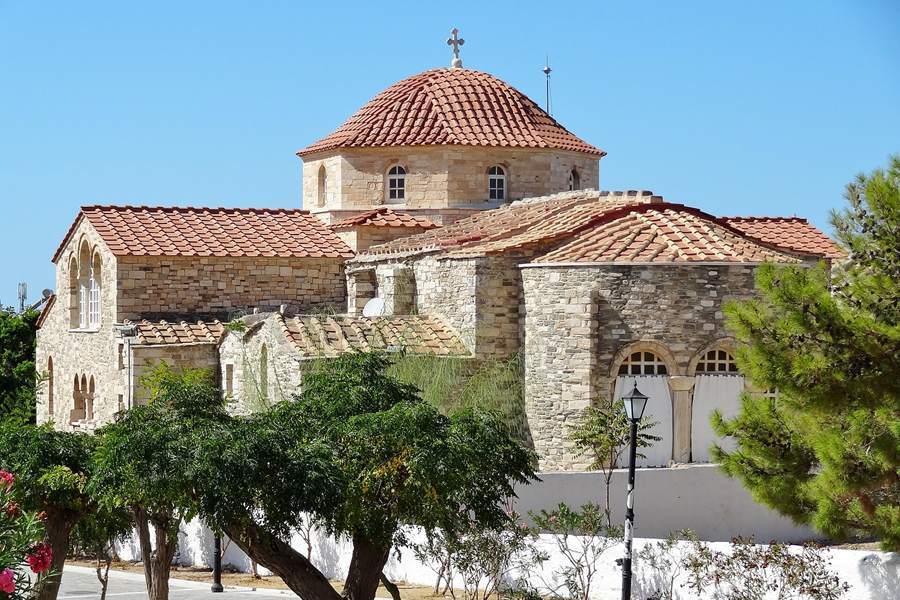
Greek wedding traditions bring a long guest list, and a typical Greek wedding has 250 to 500 guests. A guest list is the record of people invited to an event. Guests whom the couple has never met are common at these celebrations. The couple here means the bride and the groom.
At the wedding party, the guests wait for the newlyweds, who arrive later. A newlywed is a person who has just married. In parts of Greece where families hold a more traditional wedding, only traditional music is played. Guests at such weddings also eat local food. Local food means dishes of the surrounding area.
Greek wedding traditions on the Cyclades, a group of Aegean islands, include pasteli at the wedding table. Pasteli is a solid sweet of honey with sesame seeds. Sesame is a plant whose small seeds are pressed for oil or eaten whole. Honey is the sweet, thick liquid that bees make from flower nectar.
- Bouquets: Before the ceremony starts, the bride and groom exchange bouquets of flowers with each other.
- Invitations: The parents of the bride and groom, not the couple, decide who is invited.
- Whole animals: Traditional weddings bake whole pigs, goats or sheep, just as families do at Easter.
In the past, Greek wedding traditions brought the whole village to a single wedding. A village is a rural community, smaller than a town or a city. Each wedding was therefore a gathering of nearly every family living in that village.
How do the stefana crowns shape Greek wedding traditions?
Greek wedding traditions in the Orthodox Church include the crowning of the couple, known as stefana. Stefana is the Greek word for the wedding crowns of bride and groom. A crown here is a ring-shaped headpiece worn as a sign of honour.
The Mystery of Crowning forms part of the marriage sacrament in Eastern Christianity. A sacrament is a holy rite that, in Christian teaching, carries the grace of God. Eastern Christianity means the Orthodox and related churches of the East. During this rite, both the bride and the groom receive a crown on the head.
In the Byzantine Rite, the priest crowns the bridegroom first and the bride second. The Byzantine Rite is the order of worship that the Greek Orthodox Church follows. Greek wedding traditions then call for the couple to sip wine that has already been blessed. After the sip, the newlyweds exchange a single kiss.
Within Greek wedding traditions of the Byzantine Rite, the crowns stand for authority over a new domestic church. A domestic church is a family seen as a small church inside its own home. Authority here means the right to direct and lead a household. The church in this phrase is the family, not a building of stone.
- Royal titles: The crowns make the groom a king and the bride a queen of their new family.
- Broken glass: The wine glass can then be broken, a sign that the union cannot be undone.
- Lent: The Eastern Orthodox Church has traditionally not allowed a crowning during Lent, the fast before Easter.
In the history behind Greek wedding traditions, John Chrysostom saw the wedding crown as a symbol of victory. John Chrysostom was an early Church Father, a Christian writer whose teaching shaped the faith. The name Chrysostom is Greek for golden-mouthed.
Which story does the bridal veil tell in Greek wedding traditions?
Greek wedding traditions include the bridal veil, one of the oldest parts of a bride’s outfit. The custom reaches back to Greek and Roman times. A veil is a light piece of cloth that covers the head and, at times, the face.
Long before modern Greek wedding traditions, the ancient Greek word for veil was kalyptra. The word comes from a verb that means to cover. A Mycenaean term, a-pu-ko-wo-ko, appears in Linear B writing from about 1300 BC. It possibly meant headband makers or craftsmen of horse veils. Linear B is the early script of Mycenaean Greece.
Classical and Hellenistic statues sometimes show Greek women with both head and face veiled. The Hellenistic period began after Alexander the Great died. Scholars Caroline Galt and Lloyd Llewellyn-Jones studied such statues and old texts. They argued that higher-status women in ancient Greece covered hair and face in public.
In early Greek wedding traditions, Greek and Roman brides alike wore the flammeum, a large yellow veil. This veil wrapped around the whole figure of the bride. The name flammeum comes from the Latin word for flame. Latin was the language spoken in ancient Rome and its empire.
- Spirits: The bridal veil was meant to hide the bride from evil spirits or scare them away.
- Hidden face: The veil also kept the bride’s face hidden from the groom until the wedding.
- Status: Across the Macedonian and Persian empires, veils marked women of high rank and good name.
In the village of Metaxades, Greek wedding traditions included a full veil for the bride. She wore it over her scarf, and it covered her whole head, face included. A scarf is a strip of cloth worn around the head or neck.
What role does the bonbonniere play in Greek wedding traditions?
Greek wedding traditions in the Orthodox Church use koufeta, which are sugar-coated almonds. Koufeta is the Greek name for these sweets. An almond is the oval seed of the almond tree. A coating is a thin outer layer laid over food.
A bonbonniere is a small decorative container that holds sweets. The French name means a container of candies, and the word is used well beyond Greek wedding traditions. A bonbonniere can be a box, a dish or a fabric pouch. A pouch is a small soft bag closed at the top.
Bonbonnieres are given as favours at weddings, baptisms and First Communions. In Greek wedding traditions, a favour is a small gift of thanks from the couple to a guest. The drageoir is seen as the forerunner of the bonbonniere. It was a container for sugared almonds in the Middle Ages and the Renaissance.
A bag-style bonbonniere is made of tulle or satin, tied with ribbons and filled with sugared almonds. Tulle is a light, fine net fabric. Satin is a smooth cloth with a glossy face. A ribbon is a narrow strip of fabric used for tying. Sugared almonds of this kind are the koufeta of Greek wedding traditions.
- White: The almonds inside a bonbonniere are white when the occasion is a wedding.
- Pink and blue: Pink almonds mark a girl’s birthday or baptism, and light-blue ones a boy’s.
- Silver and gold: Silver or gold almonds mark a 25th or a 50th wedding anniversary.
The bag frequently goes inside a little container of silver, crystal or porcelain. Crystal is clear, heavy glass of high quality. Porcelain is a fine white ceramic, fired at high heat. A ceramic is any object made of clay and hardened by heat.
Why does the quince belong in Greek wedding traditions?
Greek wedding traditions include an old Athenian custom about the quince. According to Plutarch, a Greek biographer, the lawgiver Solon made a rule for newlyweds. Bride and bridegroom were to be shut in a chamber and eat a quince together.
Behind Greek wedding traditions, the quince served as a holy emblem of Aphrodite, goddess of love. An emblem is an object that stands for an idea. The poet Callimachus wrote a poem, now lost, about a young man named Acontius. In the tale, Acontius picks a quince in Aphrodite’s orchard.
Acontius writes on the skin of the fruit and rolls it to the feet of the girl’s nurse. The nurse cannot read, so she hands the quince to the girl. Reading the words aloud, the girl swears by Aphrodite that she will marry Acontius. A nurse here is a woman who looks after a young girl.
In the tale, the oath gains its binding force from the temple ground of Aphrodite. A vow spoken inside the goddess’s sacred precinct was unbreakable. Such a precinct is called a temenos in the Greek language. It is ground marked off for a god, with an altar or a temple.
- Family: The quince of Greek wedding traditions is the only species in Cydonia, its plant genus.
- Tree: The quince tree sheds its leaves each year and bears hard, fragrant, golden-yellow fruit like a pear.
- Taste: Even when ripe, quince fruit is hard, tart and astringent, so it dries the mouth.
In the Balkans, a quince tree is planted when a baby is born. The tree stands for fertility, love and life. The Balkans are the peninsula of south-eastern Europe. Greece, home of Greek wedding traditions, lies at its southern end.
Where do Pontic dances fit into Greek wedding traditions?
Greek wedding traditions among Pontic Greeks include dancing at weddings, at wedding receptions and to celebrate upcoming marriages. Pontic Greeks take their name from the Pontus, the Black Sea’s southern coastland. A reception is the party held after a wedding service.
Greek wedding traditions among Pontians include the Isaiah dance. Bride and groom perform it around a small table during the church service. The name recalls Isaiah, a prophet of the Hebrew Bible. A prophet is a person believed to carry a message from God. Pontian is another word for a Pontic Greek.
Pontic Greek folk dance is a group of over ninety dances. Each of these dances is done in a line or a circle. The dancers link hands as they move. Folk dance is the traditional dancing of ordinary people, handed down over generations. A circle dance closes into a ring, while a line dance stays open at both ends.
Greek wedding traditions of the Pontus include To thymisma, a wedding dance from Kromi, Trapezounta and Kars. Trapezounta is the Greek name for Trabzon, a city on the Black Sea coast. Kars is a city in the far north-east of present-day Turkey. The Pontus, or Pontos, is the old Greek name for that coastal region.
- Instruments: Traditional Pontic instruments include the lyra, a bowed fiddle, and the daouli, a large drum.
- Style: Shoulder tremors, abrupt pauses and arm swinging in unison mark the Pontian way of dancing.
- Schools: Pontian dances have entered gym classes at Greek public schools across the country.
Greek wedding traditions of the Pontus also know Trygona, a name meaning turtledove. Besides a dance, Trygona is a folk song telling of a married couple who are unhappy. A turtledove is a small wild dove with a soft, purring call.
What did Skamneli add to Greek wedding traditions?
Greek wedding traditions in the village of Skamneli once set the wedding always on a Sunday. Musicians from Epirus played at the feast that followed. Epirus is the mountainous region of north-western Greece. A feast is a large, festive meal.
After engagement and an exchange of rings, a young man of Skamneli followed an elder abroad. He went there for work or for study. Greek wedding traditions in Skamneli kept his visits home irregular, in line with a local saying. The saying warned against frequent visits home, so that the longing stayed strong.
Under Greek wedding traditions in Skamneli, friends of the bride met every night to knit her dowry. A dowry is the store of goods a bride brings to her marriage. Boys and girls then took the dowry to the groom’s home, on the Thursday ahead of the wedding. Knitting means making cloth by looping yarn with needles.
On leaving her family home, the bride broke a pitcher full of water and wheat grains. The spilled contents kept part of the good fortune inside her parents’ house. A pitcher is a jug with a handle and a lip for pouring. A best man is the friend who stands beside the groom at a wedding.
- White horse: The bride set out on a white horse, in a gilded dress and a golden waistband.
- Secret test: At the groom’s house, she had to overcome a hidden obstacle with grace.
- Vlamis: The best man, called the Vlamis, led the ceremonies and met guests’ requests for food.
Greek wedding traditions in Skamneli closed with words from the bride’s parents. They said, in effect, that they had brought a bride and brightened the groom’s house. To brighten a house here means to fill it with joy and new life.
How did Metaxades celebrate Greek wedding traditions?
Greek wedding traditions in the village of Metaxades gave the newlyweds two things to step on. The couple stepped on a ploughshare for strength and on a red cloth for joy. A ploughshare is the cutting blade of a plough.
Greek wedding traditions in Metaxades were patrilocal, so the new couple settled in the groom’s family home. Patrilocal means living with or near the husband’s family. In midweek, the family told the best man about the wedding, bringing liqueur or ouzo and sweets. Ouzo is an anise-flavoured spirit from Greece, clear like water.
Relatives of the bride folded her clothes and placed basil between them. Basil is a fragrant herb of the mint family. Under Greek wedding traditions in Metaxades, the groom’s relatives danced the gikna on Saturday evening. The gikna is a bread roll holding three candles. Musicians and the groom himself went with them to the bride’s house.
On the Sunday, the bride sat backwards at a window, holding a mirror. In her other hand was a glass of wine with coins inside, called the wine coin. A mirror is a sheet of glass, coated behind, that reflects an image. The coins in the wine gave the custom its name.
- Flagpole: The procession’s flagpole bore a cross, an apple on top and an embroidered handkerchief.
- Apple: The couple ate the apple from the flagpole on the day after their wedding.
- Red dress: In the bridal costume of Metaxades, the colour of the dress was red.
Greek wedding traditions in Metaxades grew in Greek Thrace, where tie-dyed cloth belonged to the local textile tradition. Tie-dyeing means binding cloth with thread before dyeing, so that patterns appear. Thrace is the north-eastern region of Greece, beside Turkey and Bulgaria.
Which ancient rites stand behind Greek wedding traditions?
Greek wedding traditions reach back to an ancient ceremony in three parts. These were the proaulia before the wedding, the gamos or wedding itself, and the epaulia after it. Gamos means a marriage or a wedding in ancient Greek.
The proaulia came first of the three. In it, the bride passed her final days with her mother, the women of her family and friends. This stage took the form of a feast at the house of the bride’s father. A feast is a big shared meal for a special occasion.
Before marriage, adolescent girls dedicated their toys to Artemis. Artemis was the goddess of the hunt and a protector of young girls. To dedicate means to give an object to a god as an offering. Under Athenian Greek wedding traditions, the greater part of the wedding took place at night.
During the epaulia, relatives of the couple presented gifts and carried them formally into the house. A relative is a member of the same family by birth or by marriage. Greek wedding traditions of Athens thus closed with a day of giving. A gift is an object handed over freely, with no payment asked in return.
- Gifts: Common epaulia gifts were jewellery, garments, perfume, pots and pieces of furniture.
- Suitors: In Athens, men seeking a bride competed with gifts, song, dance or games.
- Sparta: Spartan brides were around 18 years old, and Spartan grooms around 25.
Under Greek wedding traditions in Athens, the formal promise of marriage was the engysis. In the engysis, the groom and the bride’s guardian shook hands and said ritual phrases. A guardian is the man legally responsible for a woman, such as her father.
What does the Gortyn code reveal about Greek wedding traditions?
Greek wedding traditions on ancient Crete appear in the Gortyn code, also known as the Great Code. It recorded the civil law of Gortyn, a city-state in southern Crete. Civil law governs private matters such as marriage and property.
The code survives as a boustrophedon text carved on the round walls of a public building. Boustrophedon writing runs one line from left to right and the next from right to left. The Greek name means turning like an ox when ploughing a field. The carving dates from the earlier half of the 5th century BCE.
Greek wedding traditions in Gortyn let either the husband or the wife end the marriage. Divorce is the legal ending of a marriage. When the husband started a divorce, he owed his wife a small payment. Money given to make up for a loss or harm is called compensation.
Divorced women were entitled to the property they had brought into the marriage. Property here means land, goods, animals or money that a person owns. Entitled means having a legal right to claim something. Under Greek wedding traditions in Gortyn, a bride’s goods therefore stayed hers when a marriage ended.
- Length: The surviving columns of the code hold about 600 lines of text.
- Own property: Husband and wife shared joint income, but the wife kept sole control of her own property.
- No children: If a wife died childless, her property went back to her blood relatives.
Under Greek wedding traditions in Gortyn, evidence suggests a bride stayed in her father’s house for a time. She moved once she was able to run her husband’s household. A household is a home together with all the people who live and work in it.
How did the lebes gamikos serve ancient Greek wedding traditions?
Greek wedding traditions of the ancient world used the lebes gamikos, or nuptial lebes. It was a form of Greek pottery made for marriage ceremonies. Nuptial means linked to a wedding. Pottery is the craft of shaping clay vessels and firing them hard.
A lebes is an ancient Greek cauldron, normally made of bronze. A cauldron is a large, deep pot for cooking over a fire. Bronze is a metal made by mixing copper with tin. In classical times, a foot was added to the lebes, and it served as a cooking pot.
Under ancient Greek wedding traditions, the nuptial lebes seems to have formed part of purification rites. Purification means washing away anything thought to be unclean. Scholars think it held water for a ritual sprinkling of the bride before the ceremony. Sprinkling means scattering small drops of water or another liquid over something.
Greek wedding traditions of the period used a vessel with a large, bowl-like body on a stand. The stand can be long or short. A stand is the base that raises a vessel off the ground. The body is the main, rounded part that holds the contents. Bowl-like means shaped like a deep, round dish.
- Name: The words lebes gamikos literally mean marriage vase, from the Greek for marriage.
- Doorway: Scholars suggest that the vessel once stood beside the door of the bride.
- Early piece: One of the earliest known examples was painted around 580–570 by a follower of Sophilos.
For Greek wedding traditions, that early vessel showed the wedding procession of Helen and Menelaus. In Greek myth, Menelaus was a king of Sparta and Helen was his wife. A procession is a group moving forward in order, as part of a ceremony.
How did Pontian weddings shape Greek wedding traditions?
Greek wedding traditions among the Pontians, the Greeks of the Pontos, begin with an arranged marriage. Such a marriage is planned by the two families, not by the couple alone. Pontian marriages were arranged as a rule, so each wedding grew from a family agreement.
Matchmakers played an important part in Pontian Greek wedding traditions, helping arrange marriages between young people. A matchmaker is a go-between who brings two families together for a marriage. The bride’s family gave a large dowry to the groom’s family. A dowry is the wealth or goods that pass with a bride when she marries.
Pontian weddings traditionally took place on Sundays. Yet the festivities began earlier than the service. During the days before the wedding, families prepared, danced and feasted. Feasting means sharing big, rich meals with relatives and neighbours. Under Greek wedding traditions in the Pontos, the Sunday service closed a longer celebration.
In Pontian Greek wedding traditions, bridal dress changed from one region to another. Even so, certain pieces stayed the same. The bride traditionally put on fine clothes and a veil of red or white. On her head sat two headdresses, and she added golden jewellery. A headdress is a decorative covering worn on the head.
- Groom: One custom before a Pontian wedding saw the groom shaved and smartened for the big day.
- Nyfeparman: This name belongs to the custom of fetching the bride from her family home.
- Bridal costume: A married woman was free to wear her wedding outfit at formal events until she had children.
Greek wedding traditions of this kind belong to a people with deep roots. Pontians have been in the Pontos since the 8th century BCE, a span of thousands of years. Their name, Pontian Greeks, comes from that home area, and their culture is called Pontic.
Why does Hera stand at the centre of Greek wedding traditions?
Greek wedding traditions in the ancient world looked to Hera, the patron goddess of lawful marriage. A patron goddess is a deity who protects one field of life. For marriage that is legal and proper, Hera filled this protecting role among the Greek gods.
Within Greek wedding traditions, Hera presides over weddings. She blesses the union of a couple and makes their marriage legal. Legal here means lawful and recognised. Her best-known form was Hera Teleia, the matron goddess. A matron is a respected married woman. The title therefore honoured Hera as a wife.
Like a bride before her wedding, Hera bathed each year in the spring of Kanathos, near Nauplia. This mirrors the bridal bath of Greek wedding traditions. Stymphalia in Arcadia had a triple shrine to her as the Girl, the Adult Woman and the Separated. A shrine is a sacred spot where people pray and leave offerings.
Greek wedding traditions gave wives an active part in worship. In the cults of Hera, young married women performed the dances and rites. A cult here means the organised worship of one god or goddess. A rite is a set religious act, done in a fixed order. These dances and rites took place in honour of Hera.
- Wedding feast: According to Callimachus, the feast for Zeus and Hera lasted three hundred years.
- Chelone: A nymph called Chelone refused to attend, so Zeus turned her into a tortoise.
- Hesperides: Gaia gave the couple the Apples of the Hesperides as a wedding gift.
Greek wedding traditions even reached the coins of ancient Eretria. Those coins show that its people copied the wedding of Zeus and Hera. To copy a wedding in this sense means to act it out again as a public ceremony.
Which Thracian dances belong to Greek wedding traditions?
Greek wedding traditions in Western Thrace come with dances of their own. Thrace is a region spread over southern Bulgaria, northeastern Greece and European Turkey. Western Thrace is the Greek part of that region, so its wedding dances belong to the Greek northeast.
Greek wedding traditions in Thrace move at speed. As a rule, traditional Thracian dances are swift in tempo, meaning the beat runs fast. The gaida, a type of bagpipe, is the instrument that best marks Thracian music. A bagpipe is a wind instrument in which a bag of air feeds its pipes.
Mandilatos is a Thracian couples’ dance named after the mandilia, the handkerchiefs that the dancers hold. Mandilia is the local word for these cloths. Under Greek wedding traditions, guests dance it while taking the best man or the bride to church. The best man is the groom’s chief helper at the wedding.
During the procession, certain guests hold a mirror. In Greek wedding traditions of Thrace, the mirror stands for the purity of the bride. Purity here means innocence and a clean, honest character. A procession is a group that walks together in order toward a set place, here the church.
- Kallinitikos: This dance takes its name from the kalines, the girlfriends who walk the bride to church.
- Sygkathistos: This free-style dance for couples accompanies bride and groom to and from church.
- Gifts: The bridal party also dances while exchanging gifts, above all handkerchiefs and head scarves.
Other guests in the procession carry brooms. Under Greek wedding traditions in Thrace, the broom stands for the bride’s housekeeping ability. Housekeeping means the daily work of running a home, from cleaning to cooking. A broom is a long-handled brush for sweeping floors.
Who was Hymen in ancient Greek wedding traditions?
Greek wedding traditions gave a special place to Hymen, also called Hymenaios. In myth, he presided over a long line of weddings, for all the gods and their children. To preside means to lead a ceremony and keep watch over it.
Hymen’s name comes from an ancient root meaning to sew together, hence the joiner. A root is the oldest form of a word, from which later words grow. To sew means to join two pieces of cloth with thread. In Greek wedding traditions, the joiner is the god who binds two people into a couple.
A later romance in Greek wedding traditions tells a different story. In it, Hymen is a handsome young Athenian of low birth. Low birth means he came from a humble, poor family. To join a women’s procession at Eleusis, he dressed himself as a woman. A romance here means an old tale of love and adventure.
Ancient theatre also put Greek wedding traditions on stage. At the close of Aristophanes’ play Peace, Trygaeus and the Chorus sing the wedding song together. Its repeated cry, “Oh Hymen! Oh Hymenaeus!”, is a standard refrain for such a song. A refrain is a line repeated again and again through a song.
- Parents: In the commonest account, his parents are Apollo and a Muse, one of the goddesses inspiring the arts.
- Another father: In Seneca’s play Medea, Hymen is instead named as a son of Dionysus.
- In art: Since the Italian Renaissance, art shows him as a youth with a flower garland and a lit torch.
Hymen’s marriage was so happy that the Athenians founded festivals in his honour. In this way, Greek wedding traditions came to tie his name to marriage itself. A festival is a public celebration in honour of a god or an event.
What marks Sarakatsani marriage among Greek wedding traditions?
Greek wedding traditions among the Sarakatsani begin with a family decision. The name Sarakatsani belongs to a Greek people of shepherds. Their marriages are arranged as a matter of custom. Relatives choose and plan each match, not the young pair acting alone.
The Sarakatsani are Greek Orthodox Christians, members of the Church of Greece. Orthodox here names the eastern branch of Christianity, followed by the Greek church. As a rule, men and boys protect the family flocks and care for them. Flocks are herds of sheep or goats moved and fed as one group.
Under Greek wedding traditions of the Sarakatsani, family lines set firm limits. Lineage is traced along the father’s line alone. Lineage means a line of descent from one shared ancestor. Two members of the same kindred can never marry each other. A kindred is the whole circle of a person’s recognised relatives.
In Sarakatsani Greek wedding traditions, the bride brings a dowry into the marriage. It consists of household furnishings and clothing. In more recent times, sheep or their cash value have joined it. Cash value means the same worth paid in plain money. Furnishings are the furniture and fittings that fill a family house.
- Husband’s share: The groom contributes his share of the flocks that his father holds.
- First home: The newlywed couple first sets up home near the husband’s family.
- Folk arts: Their folk arts include song, dance and poetry, with wood carving and costume embroidery.
Greek wedding traditions shape one of the Sarakatsani ceremonial events. Weddings and funerals are their ceremonies outside the formal Christian calendar. That calendar lists the fixed church feasts across the whole year. A ceremony is an occasion marked by set rites and gatherings.
Where does hieros gamos fit in Greek wedding traditions?
Greek wedding traditions reach up to the gods themselves through hieros gamos. The term names a sacred marriage joining two gods. Sacred means holy, belonging to the gods. This was a wedding on a divine level, not a human one.
Hieros gamos joins two ancient Greek words. Hieros means holy or sacred, and gamos means marriage. Put together, the phrase reads as holy marriage. In Greek wedding traditions, gamos is therefore the plain word for a wedding union. The same idea also goes by the single word hierogamy, which fuses both parts into one English term.
Greek wedding traditions offer one classic case of this sacred marriage. It is the wedding of Zeus and Hera. People celebrated that union at the Heraion of Samos. A Heraion is a sanctuary, a holy precinct set aside for Hera. A precinct here means the walled ground that surrounds a temple.
In classical Greece, the best-known ritual example took place at the Anthesteria. This festival celebrated the beginning of spring. During it, the wife of the Archon basileus enacted a sacred marriage with Dionysus. The Archon basileus was the Archon King of Athens. His wife was therefore, in origin, the queen of Athens.
- Ritual form: In the ritual version, human participants stand in for the gods being married.
- Fertility: It is described as the prototype, or original pattern, of fertility rituals.
- Evidence: Walter Burkert found the Greek evidence for such rites scanty and unclear.
Greek wedding traditions of this sacred kind also reached Crete. There, a union of Demeter with Iasion was enacted in a thrice-ploughed furrow. A furrow is the narrow trench a plough cuts in a field, and thrice-ploughed means turned three times.
What music from Macedonia accompanies Greek wedding traditions?
Greek wedding traditions in Macedonia, a region of Greece, rest on a mixed musical heritage. Compared with other Greek regions, Macedonian music shows a high degree of diversity. Diversity here means a wide mix of styles, songs and instruments from different sources.
Music behind Greek wedding traditions in Macedonia is notable for brass instruments, called chalkina. Trumpets, tympana and koudounia also stand out in this music. Brass instruments are metal horns sounded by the player’s breath. Tympana are drums, and koudounia are bells. Chalkina is the local Greek name for this group of brass instruments.
Greek wedding traditions in Macedonia keep their own songs. Tzouvanaki, for example, is a wedding song from Thessaloniki. A wedding song is a song sung at the festivities around a marriage. Songs of this kind belong to folk music. Folk music passes down through ordinary people over generations, not through known composers.
In Naoussa, traditional orchestras pair the davul with the zurna. The zurna is a wind instrument with a double reed. A reed is a thin strip that vibrates under the player’s breath. The davul is a big drum with two heads, struck with mallets. Mallets are sticks with heavy, rounded ends.
- Pieria: In mountainous Pieria, the gaida bagpipe was the leading instrument.
- The quiet one: This Macedonian piece is a wedding dance with the English title The quiet one.
- Outdoor music: The zurna has a long history of outdoor play at festive events such as weddings.
Newcomers also shaped the music behind these Greek wedding traditions. Refugees who came in the early 20th century had a strong influence on the music of the region. The word refugee names someone driven from home who seeks shelter abroad.
Why is the wedding of Thetis famous in Greek wedding traditions?
Greek wedding traditions include a famous wedding from Greek myth. Thetis married the hero Peleus, and their wedding was one of the events behind the Trojan War. Here a hero means a mortal of great courage and strength, honoured in legend.
Thetis is one of the 50 Nereids, the daughters of the sea god Nereus. A Nereid is a sea nymph, a minor goddess of the water. Zeus and Poseidon set up her marriage to a mortal man, Peleus, the son of Aeacus. In Greek wedding traditions of myth, the bride was divine and the groom human.
Music also filled this wedding. According to Pindar, the Muses sang while Apollo played the lyre. The lyre has strings stretched on a small frame, held in the arms and plucked by hand. Plucked means pulled and released, so the strings ring out. In these Greek wedding traditions, divine music greeted the couple.
Under these Greek wedding traditions of myth, the divine guests brought gifts. Chiron gave Peleus a spear of ash wood, polished by Athena, with a blade forged by Hephaestus. Ash is a hard, springy timber. Aphrodite gave a bowl decorated with an embossed Eros. Embossed means raised in relief from the surface.
- Athena: The goddess Athena gave a flute as her wedding gift to Peleus.
- Nereus: The bride’s father Nereus gave Peleus a basket of salt that was called divine.
- Poseidon: Poseidon’s gift to Peleus was a pair of immortal horses, Balius and Xanthus.
Under Greek wedding traditions of myth, Eris, goddess of discord, received no invitation. Out of spite, Eris tossed a golden apple among the goddesses. Discord means strife and quarrelling between rivals. Spite is the wish to hurt or annoy someone after a slight.
How did Sappho give a voice to Greek wedding traditions?
Greek wedding traditions found a poet in Sappho. Her surviving works include wedding songs, set beside poems about the family and hymns for worship. Hymns are songs that praise a god. Worship means honouring a god with prayer and rites.
Sappho also wrote choral works, songs for a group of singers. Of these, her epithalamia survive better than her cult hymns. In Greek wedding traditions, epithalamia is the word for wedding songs. Scholars think these were sung in turn by two choirs, one male and one female. Another form paired a single soloist with a choir.
Leslie Kurke contrasts Sappho’s private, informal works with cult hymns and wedding songs. In her view, those two kinds carried a public, ritual nature. A ritual is a fixed ceremony, repeated in the same order each time. Within Greek wedding traditions, a wedding song was therefore a shared public act rather than a private poem.
Her poems also place Greek wedding traditions inside myth. In fragment 44, Trojan women sing at the wedding of Hector and Andromache, with the aulos playing. The aulos is a wind instrument with two pipes. Here a fragment means only part of a poem survives, while the rest is lost. Trojan means from the city of Troy.
- Accompaniment: In Sappho’s time, musical instruments accompanied sung poetry as a rule.
- Pektis: Her poems mention the pektis, a harp from Lydia, alongside the lyre.
- Wedding gifts: Fragment 169A of her poetry is simply one word, which means wedding gifts.
In fragment 111, a line rooted in Greek wedding traditions, Sappho writes that the groom approaches like Ares. Ares is the Greek god of war and battle. A groom, or bridegroom, is the man who marries on the wedding day.
What story does Harmonia add to Greek wedding traditions?
Greek wedding traditions tell of one wedding that every single god attended. The bride was the goddess Harmonia, and her groom was Cadmus. All the gods came to their marriage, which made the whole guest list a divine one.
Harmonia is goddess of concord and harmony. Concord means peaceful agreement between people or groups. Her Greek name literally means harmony. Her name comes from a Greek noun meaning a means of joining, a frame or an agreement. A frame here means a structure that holds parts firmly in place.
In nearly every account, Harmonia marries Cadmus, a legendary hero who founded Thebes. A founder is the person who sets up a new city or state. In one version, Zeus gave Harmonia to Cadmus when he founded Thebes. In this version of Greek wedding traditions, the bride arrives as a gift from Zeus.
Greek wedding traditions of myth fill this marriage with gifts. The couple received gifts in plenty, and the best known was a necklace wrought by Hephaestus. Wrought means shaped and hammered by hand. A necklace is a chain or band of jewels worn around the neck. Hammered work of this kind is the craft of a smith.
- Parents: By tradition, she is the daughter of Aphrodite, goddess of love, and Ares, god of war.
- Samothrace: Another version has Cadmus win her after his initiation into the secret rites, or mysteries, of Samothrace.
- Emeralds: Ancient Greek passages describe the necklace as fine gold, set with jewels such as emeralds.
Greek wedding traditions give this story a dark ending. The necklace was famed for bringing misfortune on all who wore it. Misfortune means bad luck, trouble and sorrow. A gift meant to honour a wedding thus became a source of grief.
What do travellers ask about Greek wedding traditions, and what are the answers?
A Greek wedding traditions term from ancient Athens is gamelia, which names customs around the act of marriage. In its main sense, a new husband made an offering for his recent marriage to his phratry. A phratry was a brotherhood of related Athenian families.
Which rice dish belongs to Greek wedding traditions in Crete?
Gamopilafo means wedding pilaf, and it is served at Cretan weddings and other major celebrations. Pilaf is rice cooked in a seasoned broth. In Northern Greece, the pilaf pot properly goes into the oven. Despite its name, gamopilafo is not a true pilaf but a kind of risotto, a creamy rice dish.
Which dance from Rhodes belongs to Greek wedding traditions?
On the island of Rhodes, sperveri is a dance for weddings. It is sung and danced while the bridal bed is being dressed. The word sperveri names the ornate covering of that bed. Ornate means richly decorated. Dressing a bed means laying out its sheets, covers and hangings for the couple.
Which foods do Greek wedding traditions on Cyprus include?
Pastis are Cypriot cookies of ground almonds, and hosts offer them to wedding guests. Before Cyprus grew urban, fresh meat dishes were sometimes enjoyed en masse at feasts like a wedding. En masse means all together, in a large crowd. Sweet syrups and spreads on the island include soumada, which is made from almonds.
Which goddess besides Hera shaped ancient Greek wedding traditions?
In Thebes, bride and groom made a preliminary sacrifice to Artemis Eucleia before a marriage. Preliminary means coming before the main event. In Sparta, girls old enough to marry sang the partheneia in her honour, choral songs for maidens. Artemis also watched over the step from boyhood or maidenhood to adulthood, and other rites of passage.