
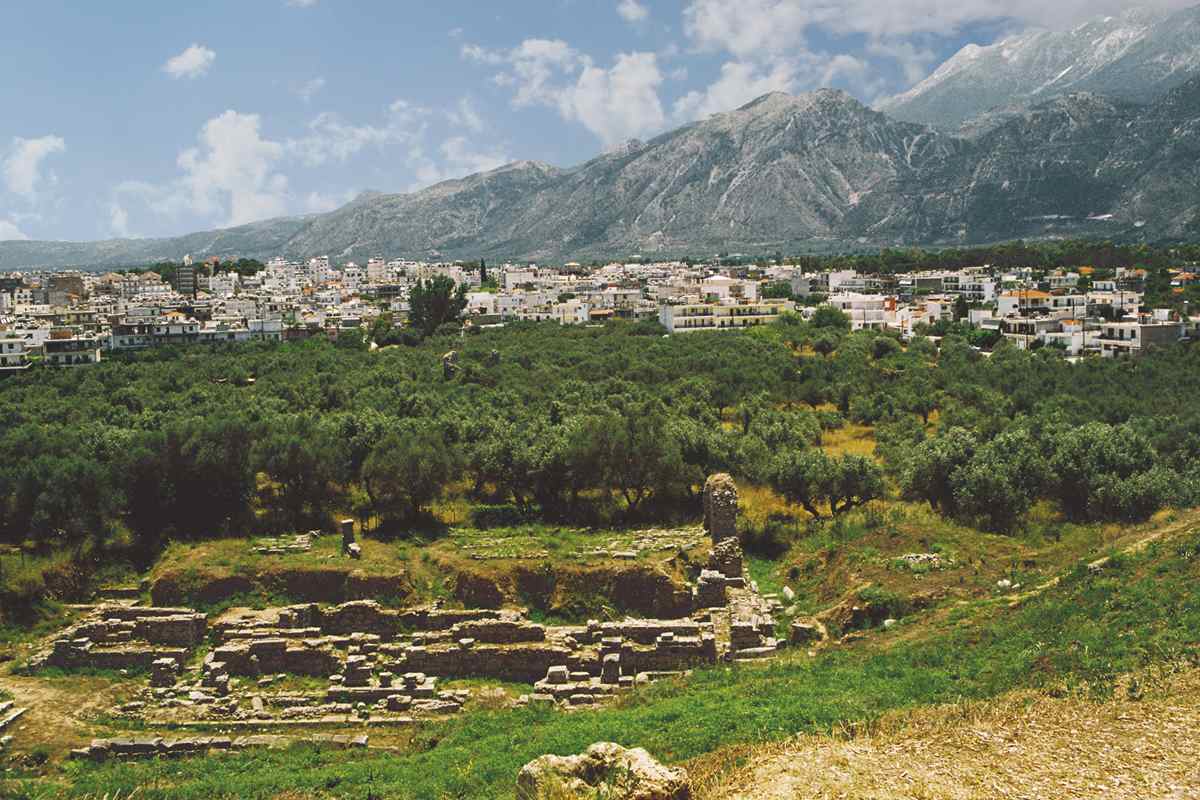
Ancient Sparta stood in Laconia, in the southeastern Peloponnese of Greece. Day trips with a host reach its region from Athens or Kalamata. The Messenian Wars, the Spartan Assembly, Chilon, Tyrtaeus and the Krypteia each get a short answer. So do the 300 Champions, Cleomenes I, Pausanias the Regent, Lysander, Agesilaus II and Sellasia. Related trips appear on the Peloponnese road trip, Battle of Thermopylae and Mani peninsula tour pages. Trips beyond Laconia are gathered under Greece tours.
Bookings made through the GetYourGuide widgets on this page earn Classical Greece Tours a commission, at no extra cost to the traveller.
What was ancient Sparta?
Ancient Sparta was the capital of Lacedaemon, a state in Laconia, in the southeastern Peloponnese. The Peloponnese is the big peninsula that forms the south of the Greek mainland. At its peak around 500 BC, Sparta held about 20,000 to 35,000 citizens.
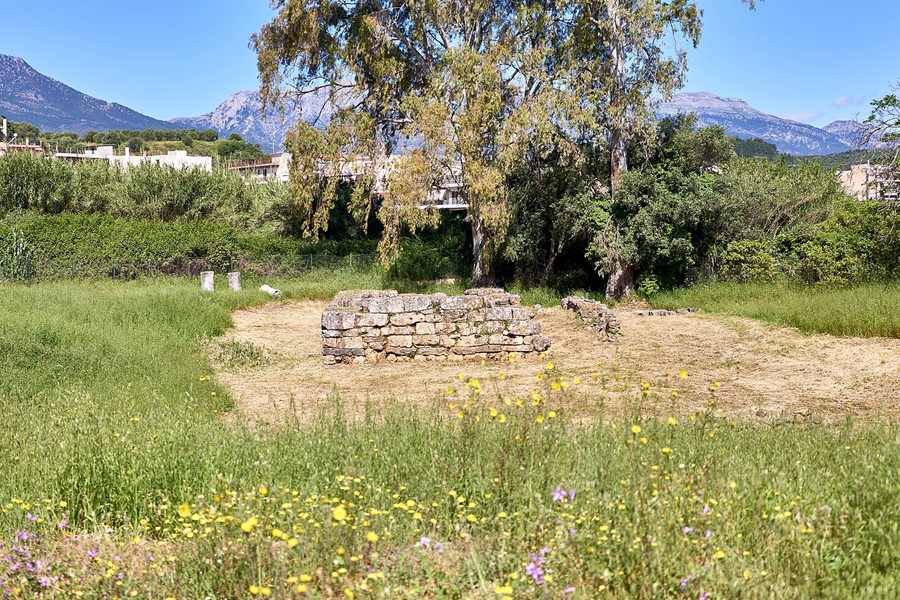
Ancient Sparta took its name, in myth, from a royal wife. Lacedaemon, a king of Laconia, had Zeus as his father and the nymph Taygete as his mother. Nymphs were female nature spirits. He gave his own name to his country. The city bore his wife’s name, Sparta. Homer calls Sparta the country of lovely women.
The oldest written term for Lacedaemon is the Mycenaean Greek ra-ke-da-mi-ni-jo, meaning Lakedaimonian. It appears in Linear B, a script of syllable signs. Mycenaean refers to the Bronze Age Greek world. The city itself was landlocked, with no coastline of its own. Gytheio, on the Laconian Gulf, served it as a vassal harbour, a port under its rule.
The Achaean League annexed ancient Sparta in the early 2nd century BC. Annexed means taken into another state. Rome conquered Greece in 146 BC, and Sparta then won back part of its self-rule. In 396 AD, Alaric, king of the Visigoths, sacked the city. Sacked means looted and wrecked. The Visigoths were a Germanic people.
- Mystras: During the Middle Ages, much of the city’s population moved to nearby Mystras.
- Modern name: Until 2006, Lakedaimona was the name of a province in modern Laconia.
- Laconophilia: The word Laconophilia is the name given to admiration of ancient Sparta.
The earliest certain sign of people living in the region of ancient Sparta is Middle Neolithic pottery. It came to light near Kouphovouno, about two kilometres from the town. The word Neolithic names the New Stone Age, when farming took hold.
How did the Messenian Wars shape ancient Sparta?
Ancient Sparta fought the First Messenian War against its neighbour Messenia for 20 years, and Sparta won. Messenians who did not leave their land became helots, or serfs. A serf is an unfree farm worker tied to the land of a master.
Plutarch reports that Lycurgus divided the land of Laconia into 39,000 equal plots. Spartiates, the full citizens, received 9,000 of them. The other 30,000 went to the perioeci, free locals without citizen rights. After the fighting, Sparta settled refugees from Asine in a new town on the Messenian Gulf, today’s Koroni.
During the war, a group called the Partheniai grew up in ancient Sparta. Their mothers were Spartan, but their fathers were not full citizens. The Partheniai were refused citizenship. The Delphic oracle advised sending them away to found Taras, also known as Tarentum, in Italy. Eusebius dates the founding of Taras to 706 BC.
Only Messenians and Laconians worshipped at the temple of Artemis Limnatis. The temple stood on the border between the two lands. In Greek belief, Artemis ruled over hunting and wild animals. The spark for the first war with ancient Sparta was a theft of cattle. The stolen herd belonged to Polychares of Messenia, an athlete and Olympic victor.
- Land: Thucydides says Sparta came to control two-fifths of the Peloponnese.
- Second war: A second war between Messenia and Sparta broke out around 660–650 BC.
- Allies: Argive and Arcadian forces backed the Messenian helots in their revolt.
The Messenian helots remained in hereditary servitude for centuries. Hereditary servitude means unfree status passed from parents to children. They broke away from the rule of ancient Sparta in 371 BC. The city of Thebes, in central Greece, gave them aid.
Which powers did the Assembly hold in ancient Sparta?
Ancient Sparta had an Assembly of its full citizens, whose main task was to approve proposals. These came from the gerousia, a council of elders, and from the ephors, senior officials. The Assembly voted by acclamation, meaning loud shouts of approval.
Scholars once called this body the Apella. Its official name is now thought to have been the Ekklesia, a Greek word for assembly. In the fifth century BC, it counted at least 3,000 members. The Assembly decided on war and peace. It also named army commanders, chose the elders and had the power to free helots.
The earliest source on the Assembly of ancient Sparta is the Great Rhetra. It is dated to around 700 BC. It split decisions among the kings, the elders and the damos, meaning the people. In legend, the lawgiver Lycurgus banned any written constitution. A constitution is the set of basic laws of a state.
Plutarch describes how the Assembly of ancient Sparta chose its elders. Judges sat shut away in a nearby room. They noted how loud the shouting was for each candidate. In 432 BC, the Assembly voted by division to declare war on Athens. A vote by division means voters moved into separate groups to be counted.
- Aristotle: Aristotle said the Assembly had no power except to confirm by vote what the elders decided.
- Alphabet: The rise of the rhetra matches the arrival of a Greek alphabet based on the Phoenician one.
- Meetings: Under the Rhetra, the Assembly met at a fixed time and in a fixed place.
In the 470s BC, the Assembly of ancient Sparta held a debate. The question was war with Athens for control of the sea. Diodorus Siculus, a Greek historian, says the younger men were eager for war at first. In the end, they were persuaded otherwise.
Why is Chilon remembered as a sage of ancient Sparta?
Ancient Sparta produced Chilon, a 6th-century BC politician whom the Greeks ranked with their Seven Sages. The Seven Sages were a group of early Greek thinkers honoured for wisdom. Chilon is credited with turning Spartan society towards military life.
Chilon was the son of Damagetus. Herodotus places him in the time of Hippocrates, the father of the Athenian ruler Peisistratus. Diogenes Laertius, a later biographer, calls Chilon an old man by 572 BC. He adds that Chilon became an ephor in 556/5 BC. The title ephor means overseer.
Alcidamas, a Greek orator, says Chilon sat in the assembly of ancient Sparta. Diogenes Laertius claims Chilon first made the ephors advisers to the kings. Chilon is also said to have helped end the rule of a tyrant at Sicyon. The Greek word tyrant named a man ruling alone after seizing power. Sicyon then became an ally of Sparta.
Chilon is credited with the change in the policy of ancient Sparta that led to the Peloponnesian League. That league united Peloponnesian states under Spartan leadership. A legend says Chilon died of joy. His son had just won the boxing prize at the Olympic Games. All the Greeks gathered at the festival attended his funeral.
- Poet: Diogenes Laertius calls Chilon a writer of elegiac poems, written in paired verse lines.
- Old age: One saying credited to Chilon tells people to honour old age.
- Self-control: Other sayings urge people to restrain anger and to obey the laws.
One of Chilon’s descendants married King Anaxandridas II of ancient Sparta. A descendant is a person born later in the same family line. The couple had a son, who became King Cleomenes I. A proverb tied to Chilon says brevity is the best path to philosophy.
What did the poet Tyrtaeus give ancient Sparta?
Ancient Sparta had a poet of war in Tyrtaeus, who wrote elegiac verse in the mid-7th century BC. Elegiac verse is poetry set in pairs of lines with a fixed beat. His surviving work holds 250 lines or parts of lines.
Jerome, an early Christian scholar, dates Tyrtaeus to 633–632 BC. Almost all that is known of his life comes from the Suda. The Suda is a Byzantine encyclopedia compiled in the 10th century AD. It calls him the son of Archembrotus. It also names him a Laconian or Milesian poet and pipe-player. Milesian means from Miletus.
His poem Eunomia, meaning Law and Order, recalled a time of unrest among the citizens. In it he urged respect for the kings, the council and the people. In the 4th century BC, armies of ancient Sparta on campaign had to listen to his poetry. A campaign is a military expedition.
Later accounts painted Tyrtaeus as a lame schoolmaster from Athens. Herodotus, however, does not list him among the two foreigners ever granted citizenship of ancient Sparta. One source names Aphidnae as his Athenian deme, or local district. A place of that name also existed in Laconia. Scholars broadly agree he was a native of Laconia.
- Choirs: Pollux says Tyrtaeus gave Sparta three choruses, for boys, young men and old men.
- Guests: Foreign poets such as Terpander of Lesbos and Thaletas of Crete were welcome in Sparta.
- Doubts: In 1899 Eduard Schwartz argued that Tyrtaeus was really a 5th-century Athenian poet.
Ancient commentators named Tyrtaeus as a possible inventor of the elegy. They placed him beside Archilochus and Callinus, two other early poets. Philodemus says the poet of ancient Sparta was honoured above others for his music, not only his verses.
Who served in the Krypteia of ancient Sparta?
Ancient Sparta formed the Krypteia from young upper-class men, thought to be aged between 21 and 30. The name derives from kruptos, a Greek word for hidden or secret. It formed part of the state system for raising boys of the upper class.
Aristotle credits the lawgiver Lycurgus with founding the Krypteia. Each autumn, the ephors of ancient Sparta declared war on the helots. This let the kryptai kill helots without fear of punishment. The chosen young men went into the countryside armed only with daggers. Plato says they went barefoot in winter and slept without shelter.
Plutarch says the kryptai hid by day and moved by night. A member who got caught was whipped. Plutarch doubted that Lycurgus founded the Krypteia. He linked its start to a helot revolt after an earthquake in Sparta in the mid-460s BC. Xenophon’s Constitution of the Lacedaemonians does not mention it at all.
Modern historians translate Krypteia as secret police or secret service. Hermann Köchly and Wilhelm Wachsmuth saw it as military training instead. They compared it with the Athenian ephebia, a period of training for young citizens. The French historian Henri Jeanmaire saw it as a rite of passage. A rite of passage marks the step from youth to adulthood.
- Sellasia: At Sellasia, Cleomenes III sent Damoteles, head of the Krypteia, to scout his army’s rear.
- Training: Members had excelled in the agoge, the state upbringing, and were marked as future leaders.
- Alone: Members of the Krypteia of ancient Sparta acted on their own, unlike hoplites, the armoured infantry.
The Battle of Sellasia offers a possible end date for the Krypteia of ancient Sparta. Before it, Cleomenes III had begun to free helots for money and military service. Its disbanding after that battle remains a matter of speculation, not proof.
How did ancient Sparta win the Battle of the 300 Champions?
Ancient Sparta and Argos fought the Battle of the 300 Champions in roughly 546 BC. Instead of full armies, each side sent 300 of its best men. A champion here means a picked fighter who stands for a whole army.
Herodotus says ancient Sparta had surrounded and seized the plain of Thyrea. When the Argives marched out to defend it, both sides agreed on a duel of 300 men. The winner was to take the land. Both armies then went home. That way, neither side was able to help its champions in the fight.
The two groups were evenly matched and fought on until nightfall. By then only three men were left alive: two Argives and one Spartan. The Argives, Alcenor and Chromius, believed every Spartan was dead. They raced home to Argos to announce their victory. Othryades, a wounded Spartan, had in fact survived on the field.
Plutarch adds that the wounded Othryades raised himself on broken spears. He gathered the shields of the dead and set up a trophy. A trophy was a monument of captured arms left on a battlefield. He wrote on it, in his own blood, the words To Zeus the Guardian of Trophies.
- Outcome: Ancient Sparta then beat the full Argive army and gained control of Thyreatis.
- Delphi: Pausanias says the Argives set up a bronze Trojan horse at Delphi for the victory.
- Rematch: In 420 BC, Argos challenged Sparta to a rematch, and Sparta declined.
Herodotus records that Othryades killed himself on the field rather than return home. By tradition, he felt shame as the only man of his unit left alive. Both cities claimed the victory, and ancient Sparta pointed to its champion holding the field.
Which deeds mark Cleomenes I as a king of ancient Sparta?
Ancient Sparta was ruled by Cleomenes I, an Agiad king, from about 524 to about 490 BC. The Agiads were one of the two royal families of Sparta, beside the Eurypontids. He helped to organise Greek resistance to the Persian Empire of Darius.
The Histories of Herodotus hold the bulk of what is known about Cleomenes. Herodotus calls his reign short, yet he ruled for about 30 years. As heir to the throne, Cleomenes skipped the agoge, the harsh training of Spartan boys. His half-brother Dorieus disputed his claim and later left for ventures in Libya and Sicily.
In 519 BC, the people of Plataea asked ancient Sparta for an alliance. Cleomenes turned them down and urged them to ally with Athens instead. Around 516 BC, Maeandrius of Samos sought his help against a tyrant. With the backing of the ephors, Cleomenes refused. In 499 BC, Aristagoras of Miletus came asking for aid against Persia.
In 494 BC, a fifty-year peace between Sparta and Argos ran out, and war followed. The army of ancient Sparta marched north through Sellasia, a town of the perioeci, and then Tegea. In 491 BC, Cleomenes had his fellow king Demaratus removed. He first bribed the oracle at Delphi to declare this the will of the gods.
- Persia: Cleomenes sent Aristagoras away on learning how far it was to the heart of Persia.
- Arcadia: Around 490 BC, after fleeing Sparta, he set out to unite the Arcadians.
- Wine: Spartans blamed his madness on unmixed wine, a taste he learned from Scythian envoys.
Cleomenes later came back to ancient Sparta, where he was held as insane and put in prison. He died there in mysterious circumstances. The Spartan authorities ruled his death a suicide. Herodotus gives four different versions of the cause of his madness.
Why did Pausanias the Regent fall from favour in ancient Sparta?
Ancient Sparta had Pausanias, a member of the royal Agiad house, as its regent and a general. A regent governs on behalf of a king still under age. He held that role while Pleistarchus, son of Leonidas I, was a minor.
Pausanias was a son of the regent Cleombrotus and a nephew of King Leonidas I. He later fathered Pleistoanax, who became king in his turn. Thucydides and Plutarch say the Athenians and League allies resented his arrogance and high-handed rule. The Hellenic League was the Greek alliance formed to resist Persia.
In 478 BC, ancient Sparta recalled Pausanias on a charge of plotting with the Persians. One claim was that he freed Persian royal kin among his prisoners. That followed his capture of Cyprus and Byzantium. He was also said to dress like a Persian noble. Cleared for lack of evidence, he sailed away from Hermione.
In 477 BC, ancient Sparta called him home once more. The ephors jailed him but later let him go for want of proof. Helots reported that he promised them freedom if they revolted. A messenger led the ephors to the Temple of Poseidon at Tainaron. They hid in a tent and heard Pausanias apologise to him.
- Chalkioikos: Pursued by the ephors, he fled to Athena’s temple of the Brazen House, or bronze house.
- Theano: Diodorus says his mother Theano laid a brick at the temple door.
- Statues: Later the Spartans set up two bronze statues of Pausanias at Athena’s temple.
The people of ancient Sparta walled up the temple doorway with bricks. Pausanias died of starvation inside. The oracle at Delphi then voiced displeasure at this breach of the safety of suppliants. A suppliant is a person who seeks refuge at a holy place.
How did Lysander rise to power in ancient Sparta?
Ancient Sparta found a leading admiral and statesman in Lysander, who lived from about 454 to 395 BC. His father, Aristocritus, claimed descent from the hero Heracles. The family was not royal, and Plutarch says the young Lysander grew up in poverty.
Certain ancient authors record that his mother was a helot. In 408 BC, Lysander was elected admiral, a post in ancient Sparta held for one year. He sailed from Gythium with 30 triremes. Triremes were warships with three tiers of oarsmen. He made Ephesus the main naval base of the Peloponnesian League in the Aegean.
Lysander won the friendship of Cyrus, a young Persian prince who governed Asia Minor. Cyrus raised the pay of the crews from three to four obols. An obol was a small silver coin. Lysander urged oligarchs in the Aegean cities to form political clubs. An oligarch is one of a small group holding power.
The law of ancient Sparta barred an admiral from holding office twice. Lysander therefore returned to command as secretary, or second-in-command, to another admiral. His title was epistoleus. Later he installed ten-man boards called decarchies in Greek cities. Decarchy means rule by ten. A Spartan military governor called a harmost supervised them.
- Money: Owning money had been illegal in Lacedaemonia for centuries before Lysander brought riches home.
- Altars: Duris of Samos says cities raised altars to Lysander as to a god.
- Festival: The Samians renamed their festival of Hera the Lysandreia in his honour.
Lysander was the first Greek to have songs of triumph written about him. A saying of this admiral of ancient Sparta deals with strength and cunning. Where a lion’s skin falls short, he said, a patch of fox’s skin must cover it.
What sets Agesilaus II apart among the kings of ancient Sparta?
Ancient Sparta had Agesilaus II as king from about 400 to about 360 BC. Historians widely rank him first in importance among the kings of Sparta. He led Sparta during its hegemony, or leadership over other Greek states, after the Peloponnesian War.
His father was King Archidamos II of the Eurypontid house. The name Agesilaus was rare and recalled Agesilaus I, an early king of ancient Sparta. The only certain detail of his age is that he died at 84. He was born with a limp. A limp is an uneven way of walking caused by a weak leg.
From the age of 7, Agesilaus went through the agoge, the state education of ancient Sparta. Despite his limp, he completed it brilliantly. Heirs to the throne were spared the agoge, so trained kings were rare. When he claimed the throne, Diopeithes quoted an old oracle. It warned that a Spartan king must not be lame.
The Conspiracy of Cinadon broke out in 399 BC, the first year of his reign. Cinadon was a hypomeion, a Spartan who had lost his citizen rights. His army for Asia held only 30 Spartiates, full citizens. Its bulk was 2,000 neodamodes, or freed helots, and 6,000 Greek allies.
- Xenophon: His friend Xenophon wrote the Hellenica, a history of Greece covering 411 to 362 BC.
- Biography: Xenophon also wrote a biography of Agesilaus full of praise for his friend.
- Marriage: Agesilaus married Kleora in the years between 408 and 400 BC.
Plutarch also wrote a life of Agesilaus in his Parallel Lives. It holds details that Xenophon left out on purpose. A third tradition, far less friendly to the king of ancient Sparta, survives in the Hellenica Oxyrhynchia. Parallel Lives pairs Greek and Roman figures.
What happened to ancient Sparta at the Battle of Sellasia?
Ancient Sparta lost the Battle of Sellasia in the summer of 222 BC. King Cleomenes III led the Spartans against Macedon and the Achaean League under Antigonus III Doson. The fight took place on the northern frontier of Laconia.
In 229 BC, Cleomenes opened hostilities against the Achaean League, then the leading power in the Peloponnese. A string of Spartan victories followed. Aratus of Sicyon, the Achaean chief, then turned to Antigonus for help. Macedon demanded the fortress of Acrocorinth in return. Ptolemy III of Egypt, meanwhile, moved his funding to Sparta.
Antigonus marched on the Peloponnese with 20,000 infantry and 1,300 cavalry, passing through Euboea. He revived the Hellenic League of Philip II of Macedon as the League of Leagues. Polybius puts the full allied army at 29,200 men. Cleomenes gathered 20,650 men for ancient Sparta. He took up a position at the pass of Sellasia.
The forces of ancient Sparta held two hills, Olympus and Euas, with the Oenous River between them. On Euas, the allied right wing came under heavy pressure. Philopoemen, an Arcadian horseman, then charged against orders. His move saved the light troops and opened the way to victory. Antigonus later praised his initiative.
- Losses: Plutarch says only 200 of 6,000 Spartiates survived the battle.
- Exile: Cleomenes sailed from Gythium to Alexandria, where he stayed in exile until his death.
- Occupation: Antigonus became the first non-Spartan general to occupy ancient Sparta.
Before the battle, Cleomenes blocked the passes into Laconia with barricades and trenches. Eucleidas held Euas with the perioeci and the allies. Illyrian and other light troops drove the Spartans from that hill and killed Eucleidas. Illyrians were fighters from the eastern Adriatic coast.
What do travellers ask about ancient Sparta, and what are the answers?
Ancient Sparta was home to the choral poet Alcman and to the mothakes, foster brothers of Spartan boys. Its law of xenelasia expelled foreigners judged harmful. The city also had Nabis, the last king of Sparta while it remained independent.
Who was Alcman, the choral poet of ancient Sparta?
Alcman was a choral lyric poet from Sparta, active in the 7th century BC. A papyrus now in the Louvre holds about 100 verses of a partheneion by him. That is a song for a chorus of unmarried girls. Pausanias says Alcman lies buried in Sparta, beside the shrine of Helen of Troy.
What were the mothakes of ancient Sparta?
Mothax is a Doric Greek word meaning stepbrother. In Sparta, the mothakes were mainly children of Spartiate fathers and helot mothers. Others were children of poor Spartiates. They were free but were not citizens. They grew up alongside Spartan boys as foster brothers. A foster brother shares a home but not parents.
How did ancient Sparta use xenelasia against foreigners?
Xenelasia was the expulsion of foreigners judged harmful to the public good. It was practised in Sparta and in Doric Crete. Foreigners still came for religious festivals and state missions. They were not allowed to settle in the area. Friends of Sparta, such as the writer Xenophon, were open to special exceptions.
Who was the last king of an independent ancient Sparta?
Nabis was the final king of Sparta in its years of independence. Independent here means free of rule by another power. He ruled from 207 BC to 192 BC. In 192 BC, the Aetolian League had him assassinated. That league was an alliance of cities in Aetolia, in western central Greece.
Featured photo: ulrichstill, CC BY-SA 2.0 de, via Wikimedia Commons (File:Sparti in-river-Eurotas-valley flanked-by-Taygetos-mountains.jpg).